Hermann's Tortoise (Testudo hermanni)
The Hermann's Tortoise (Testudo hermanni) is a small, hardy, long-lived Mediterranean tortoise and one of the best species for beginners.
🗓️ Last reviewed: June 2026
Overview
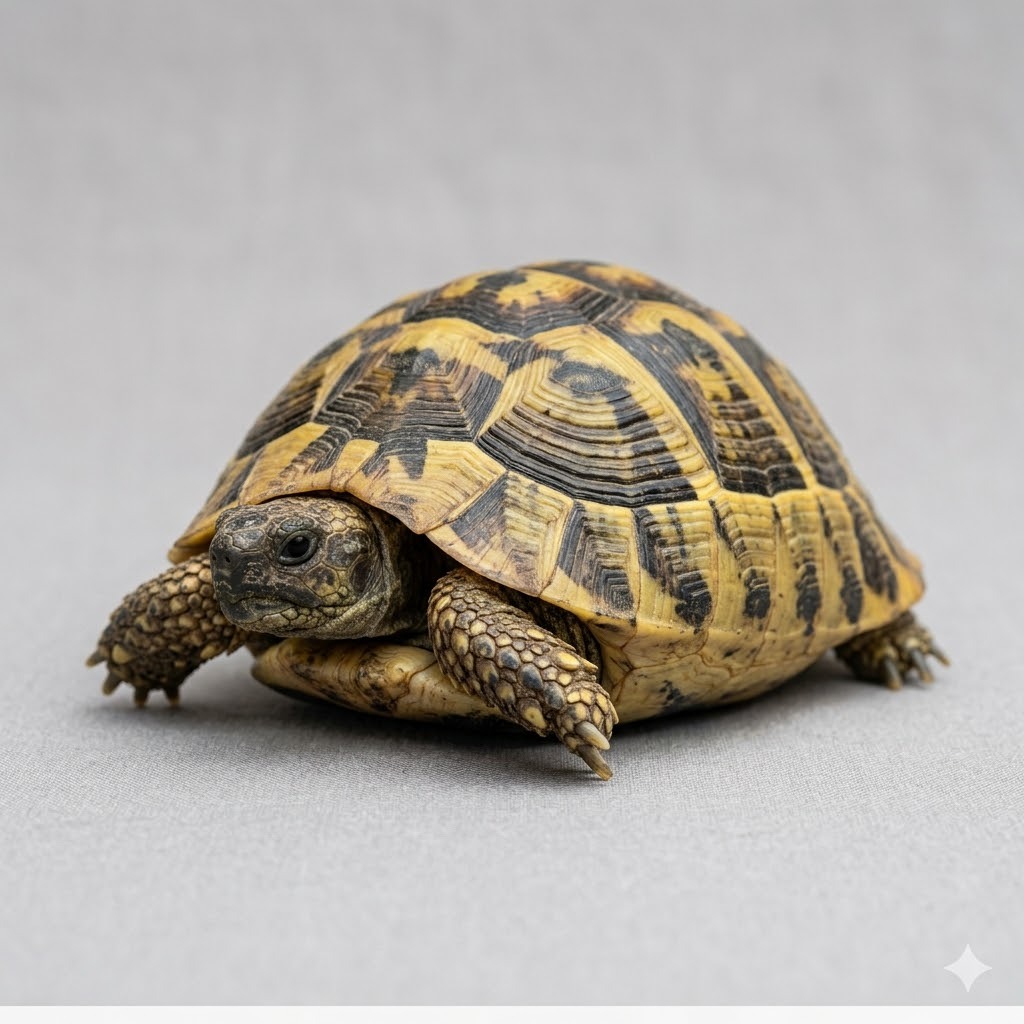
The Hermann's Tortoise (Testudo hermanni) is a small, hardy, long-lived Mediterranean tortoise and one of the best species for beginners. Recognisable by its domed yellow-and-black shell, it thrives in a secure outdoor pen in mild climates, grazes on a simple weeds-and-greens diet, and stays a manageable size. None of that makes it a casual pet: this is a 50 to 90 year commitment, often a lifelong one that outlives its owner, so it deserves serious planning before you take one home.
Natural History
Wild range: the Mediterranean - parts of southern Europe including Italy, the Balkans, Greece, and surrounding regions, in two recognised subspecies (western and eastern). A terrestrial grazer of scrubland, meadows, and open woodland, active by day and sheltering from extreme heat. Hermann's tortoises naturally hibernate (brumate) through the cold months, burrowing down and slowing their metabolism until spring - a genuine part of their biology rather than an optional extra. This temperate, seasonal lifestyle is exactly why they do so well in a mild-climate garden.
Appearance
Adults are roughly 15-20 cm (about 6-8 inches) shell length; the western subspecies tends to stay smaller, the eastern grows a little larger. Weight commonly ranges from around 0.7 to 2 kg depending on subspecies and sex.
The high-domed carapace is yellow to olive with bold black markings that fade and vary with age. A horny tip at the end of the tail and a divided tail-area scute help identify the species. Females are usually larger with a shorter tail; males are smaller with a longer, thicker tail.
Temperament & Handling
Calm, curious, and not aggressive, but a tortoise is a watch-and-graze animal rather than a cuddle pet. They tolerate brief, low handling for health checks and moving between areas, and many become tame enough to approach you at feeding time. Keep handling close to the ground and support the whole shell - a dropped tortoise can be seriously hurt. Frequent handling is stressful, so let them live their slow ground-level life and interact mostly by observing.
Enclosure
Outdoor (preferred): a secure, predator-proof garden pen is the ideal home in a mild climate. Aim for several square metres per adult, the more the better, with a sunny grazing area and shade.
Provide:
- Solid, dig-proof walls the tortoise cannot see through or climb, sunk into the ground to stop burrowing out.
- A secure top or overhang where rats, foxes, dogs, or birds are a risk.
- Varied terrain with grazing plants, basking spots, shade, and hides such as a cool shelter or planted cover.
- A shallow, easy-exit water dish for drinking and soaking.
Indoor: a tortoise table (open-topped) is generally better than a glass tank, which traps stale humid air. Indoor housing is best as a heated, UVB-lit area for cold spells, young tortoises, or climates that are too harsh outdoors year-round.
Heating & Lighting
- Basking spot: a warm zone around 32-35°C under a basking lamp so the tortoise can thermoregulate.
- Ambient: a cooler end around 20-25°C, giving a clear gradient to move between.
- Night: a natural drop to room temperature is fine for healthy adults.
- UVB: essential for any tortoise without regular direct sunlight. Provide a quality reptile UVB lamp indoors; outdoors, unfiltered natural sunlight does the job. UVB drives the vitamin D3 needed to use calcium and build healthy bone and shell.
Humidity
A dry-to-moderate Mediterranean species as an adult, so the enclosure should not be kept wet or stuffy - good airflow matters. Hatchlings and young tortoises benefit from a more humid microclimate and a damp hide to support smooth shell growth. Offer regular shallow soaks in lukewarm water (especially for youngsters) for hydration, and always provide fresh drinking water.
Diet
Herbivore. A high-fibre, low-protein, calcium-rich diet of weeds and greens:
- Staple: broadleaf weeds and leafy greens such as dandelion, plantain, clover, sow thistle, mallow, and similar edible plants, plus suitable garden grazing.
- Supplement: a light dusting of calcium (and a D3 source where sunlight or UVB is limited) supports shell and bone.
- Avoid: all animal protein (no meat, dog or cat food, insects as a regular item), and keep fruit to little or none. Skip cabbage-family and high-oxalate greens as staples, along with processed human food.
Feed mainly varied greens and weeds, not pellets or supermarket lettuce, and never animal protein - the wrong diet causes lumpy "pyramided" shells, bladder stones, and kidney problems. Variety across many plant species is the goal.
Health & Lifespan
50 to 90 years, frequently a lifelong commitment that may outlive the keeper.
Common concerns:
- Shell pyramiding from poor diet, low humidity for young tortoises, or insufficient UVB.
- Metabolic bone disease from inadequate calcium, D3, or UVB.
- Respiratory infection from cold, damp, or stale conditions.
- Bladder stones linked to dehydration and excess protein.
- Parasites, especially in new or wild-origin animals.
- Hibernation problems if brumation is done without proper preparation.
Pros & Cons
Pros:
- Hardy and well suited to beginners.
- Stays a small, manageable size.
- Simple, inexpensive weeds-and-greens diet.
- Thrives outdoors in a mild climate with natural sunlight.
Cons:
- 50 to 90 year (often lifelong) commitment.
- Needs a secure, predator-proof outdoor space.
- Hibernation requires knowledge and preparation.
- Slow, ground-level pet that does not enjoy handling.
Best Suited For
- Patient owners ready for a multi-decade, possibly lifelong commitment.
- Households with a secure garden in a mild climate.
- Keepers who enjoy observing rather than handling a pet.
Not suited for anyone wanting a hands-on, affectionate animal, homes without safe outdoor space, or owners unprepared to plan for a tortoise that may outlive them.
Hermann's Tortoise (Testudo hermanni) - frequently asked questions
Are they good for kids?
They can be a good family reptile with adult oversight, but a tortoise is a long-term responsibility for the household - not a child's solo pet given the decades of care involved. Children should observe more than handle.
Do I need UVB?
Yes, unless the tortoise gets regular direct, unfiltered sunlight. Without natural sun, a proper reptile UVB lamp is essential for healthy bone and shell.
How long do they live?
Commonly 50 to 90 years. Many outlive their original owner, so a long-term plan for their future care is wise.
Do they really hibernate?
Yes. Hermann's tortoises naturally brumate, and many keepers hibernate healthy adults safely each year. It must be done with the right preparation - a vet check, correct weight and temperature, and reliable cool conditions - never on a guess.
Do they bite?
Rarely, and bites are mild - usually a feeding mix-up rather than aggression. They are far more likely to withdraw into the shell than to bite.
🧠 Test yourself: guess the reptile
Three clues from our quiz bank, each about another of our reptiles. Can you name them?
Clue 1.This desert lizard from Australia puffs out and darkens a spiny throat pouch when threatened or displaying, creating the namesake feature.
It's the Bearded Dragon - read the full profile →
Clue 2.This slender egg-laying snake earns farmers' favor by hunting mice in grain stores, and is closely related to the rat snakes.
It's the Corn Snake - read the full profile →
Clue 3.A hardy beginner snake, this powerful squeezer is known for occasionally eating tankmates of its own kind.
It's the King Snake / Milk Snake - read the full profile →