Leopard Tortoise (Stigmochelys pardalis)
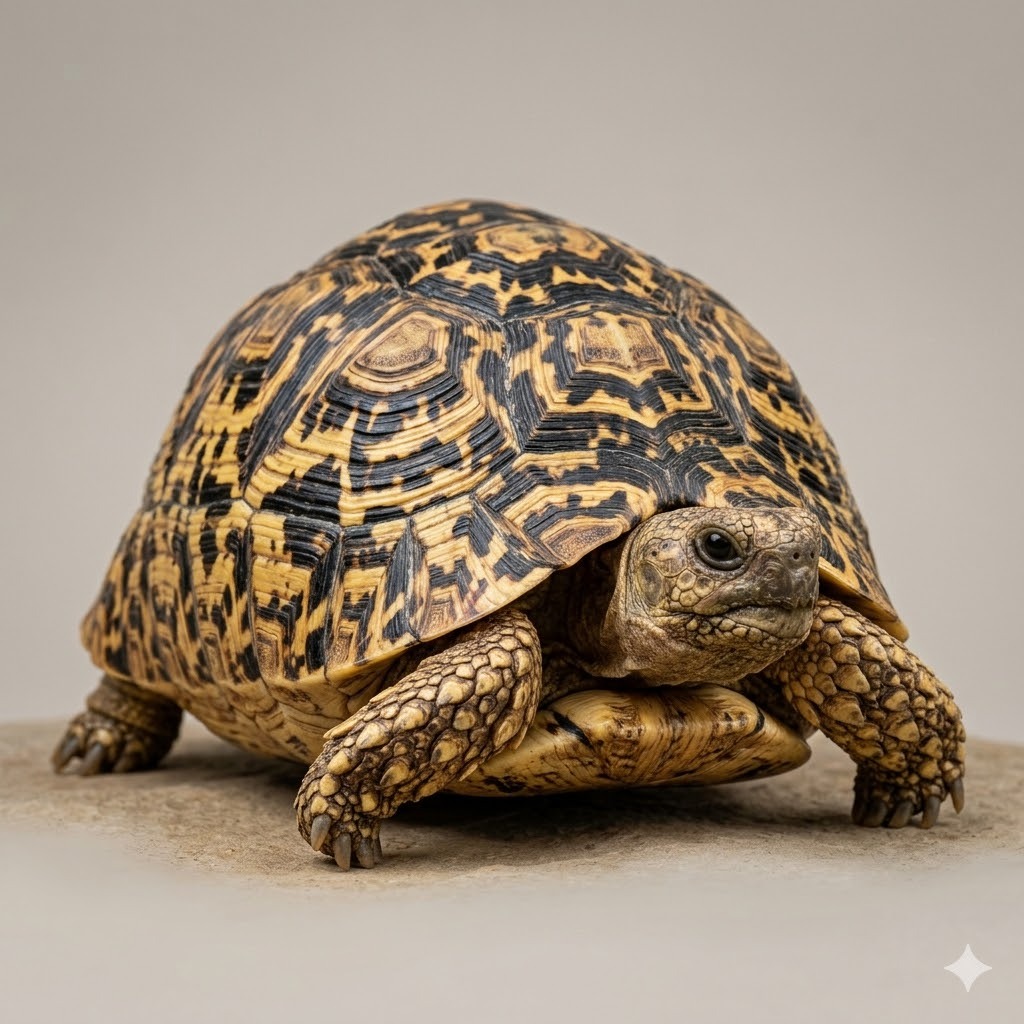
The Leopard Tortoise (Stigmochelys pardalis) is a large, strikingly marked grazing tortoise from the grasslands and savannas of eastern and southern Africa.
🗓️ Last reviewed: June 2026
Overview
The Leopard Tortoise (Stigmochelys pardalis) is a large, strikingly marked grazing tortoise from the grasslands and savannas of eastern and southern Africa. Named for the bold black-on-yellow blotching of its high-domed shell, it is a calm, undemanding-tempered animal that can live for many decades and grow surprisingly large. It is best suited to keepers who can provide real outdoor space in a warm climate, or a large heated indoor setup, and who understand they are taking on a commitment that may outlive them.
Natural History
Wild range: the dry grasslands, savannas, and scrub of eastern and southern Africa, from Sudan and Ethiopia down through to South Africa. Diurnal and terrestrial, grazing on grasses and low vegetation during the cooler parts of the day and sheltering from extreme heat. As a warm-climate species it does not hibernate, instead staying active year-round where temperatures allow. Its grazing lifestyle and large adult size shape almost every aspect of its care in captivity.
Appearance
Adults commonly reach 25-45 cm shell length and 18-32 kg (roughly 40-70+ lb), with some individuals from certain regions growing larger. Females often grow larger than males.
The high, domed carapace is yellow to tan with bold black spots, blotches, and radiating markings - the pattern that gives the leopard tortoise its name. Hatchlings are especially vivid and the markings often soften and darken with age. The shell should grow smooth and rounded; raised, lumpy "pyramided" scutes are a sign of past husbandry problems rather than normal appearance.
Temperament & Handling
Generally calm, steady, and non-aggressive. Leopard tortoises are grazers rather than climbers and spend their days moving slowly and feeding. They are not a "handling" pet - they tolerate brief, low, supported lifting for health checks but do not enjoy being carried around, and adults are heavy and awkward to hold. Interact mostly by observing, feeding, and providing a good environment. Keep handling near the ground so a startled tortoise cannot be dropped.
Enclosure
Minimum: a large, warm, secure space - ideally a spacious outdoor enclosure in a suitable warm, dry climate, or a large indoor enclosure (a tortoise table or room-sized pen) measured in square metres, not a glass tank. Bigger is always better for a species this size.
Provide:
- A predator-proof, escape-proof boundary with a solid base, as tortoises dig and push.
- A dry, well-drained substrate such as a topsoil-and-sand mix or grass, with areas to graze.
- A warm, weatherproof shelter or heated house for cool nights and bad weather.
- A shallow water dish large enough to soak in, plus regular access to fresh water.
- Edible grasses, weeds, and low planting for natural grazing and enrichment.
Heating & Lighting
- Warm basking zone (day): roughly 32-38°C under the basking lamp so the tortoise can warm up and digest.
- Ambient (day): around 26-30°C across the warm part of the enclosure, with cooler retreat areas.
- Night: a mild drop is fine, but provide background heat so it does not get cold - this species does not hibernate and must be kept warm in winter.
- UVB: essential. Provide strong, good-quality UVB across the active area (or genuine unfiltered sunlight outdoors) for vitamin D3 and healthy shell and bone growth.
Humidity
Adults suit a generally dry, well-ventilated environment that reflects their savanna origins, with a humid, hydrated microclimate in the shelter and regular soaking. Hatchlings and young tortoises benefit from somewhat higher humidity and humid hides, which - together with correct diet - helps support smooth shell growth. Avoid prolonged damp, cold, or stagnant conditions, which can lead to respiratory problems.
Diet
Strict herbivore - grass and hay based. Built for a high-fibre, low-protein grazing diet:
- Staple: a wide variety of grasses, hays, and edible weeds and leafy greens, available for steady grazing.
- Occasional: other safe leafy plants and the occasional flower for variety.
- Avoid: all animal protein (no meat, insects, dog or cat food), as well as high-protein, sugary, and fatty foods. Keep fruit very limited or omit it.
A calcium source (such as a cuttlebone) supports shell and bone health, and overall the diet should stay high in fibre and low in protein. Getting this diet right is one of the biggest factors in preventing shell and growth problems.
Health & Lifespan
50-100 years, often outliving the keeper. Plan for lifelong, even multi-generational, care.
Common concerns:
- Shell pyramiding from poor diet, low humidity when young, or other husbandry errors.
- Metabolic bone disease from inadequate UVB or calcium.
- Respiratory infections from cold, damp, or poorly ventilated conditions.
- Being kept too cold - dangerous for this non-hibernating warm-climate species.
- Overgrown beak and nails when grazing and surfaces are inadequate.
- Parasites and digestive upsets from an unsuitable diet.
If anything seems wrong, consult a qualified reptile or exotics veterinarian rather than guessing.
Pros & Cons
Pros:
- Striking, beautiful spotted shell.
- Calm, non-aggressive grazer.
- Long-lived companion for decades.
- Simple, plant-based diet that is easy to source.
Cons:
- Grows large and heavy, needing lots of space.
- Must be kept warm year-round and does not hibernate.
- Demanding UVB and heating requirements.
- A 50-100 year commitment that may outlive you.
Best Suited For
- Keepers in warm, dry climates with real outdoor space.
- Dedicated owners ready for a very long-term commitment.
- People who enjoy observing a grazing animal rather than handling a pet.
Not suited for small homes, cold or damp climates without serious heated indoor space, or anyone wanting a low-cost, short-term, or hands-on handling pet.
Leopard Tortoise (Stigmochelys pardalis) - frequently asked questions
Are they good for kids?
They can be a wonderful family animal to observe and help care for, with adult supervision, but they are not a hands-on handling pet and the long lifespan means parents must plan for decades of care.
Do I need UVB?
Yes. Strong UVB (or genuine outdoor sunlight) is essential for vitamin D3, calcium use, and healthy shell and bone growth.
How long do they live?
Commonly 50-100 years with good care, often outliving the keeper. This is a lifelong, sometimes multi-generational, commitment.
Do they hibernate?
No. Leopard tortoises come from warm climates and must be kept warm through winter rather than hibernated.
Why is the shell lumpy or pyramided?
Raised, bumpy scutes usually reflect past husbandry problems - often diet too high in protein, too little humidity when young, or poor UVB - rather than normal growth. Correct husbandry helps keep new growth smooth.
🧠 Test yourself: guess the reptile
Three clues from our quiz bank, each about another of our reptiles. Can you name them?
Clue 1.This basking turtle slides quickly off logs into the water when startled, giving it part of its name.
It's the Red-Eared Slider Turtle - read the full profile →
Clue 2.This stocky Australian lizard gapes its mouth to flash a startling cobalt-colored mouth-organ at predators when threatened.
It's the Blue-Tongue Skink - read the full profile →
Clue 3.This large arboreal lizard has a third 'eye' on top of its head that senses light and shadow from above.
It's the Green Iguana - read the full profile →