Veiled Chameleon (Chamaeleo calyptratus)
The Veiled Chameleon (Chamaeleo calyptratus) is the most commonly kept chameleon in the pet trade - hardy by chameleon standards, striking in appearance, and widely captive-bred.
🗓️ Last reviewed: June 2026
Overview
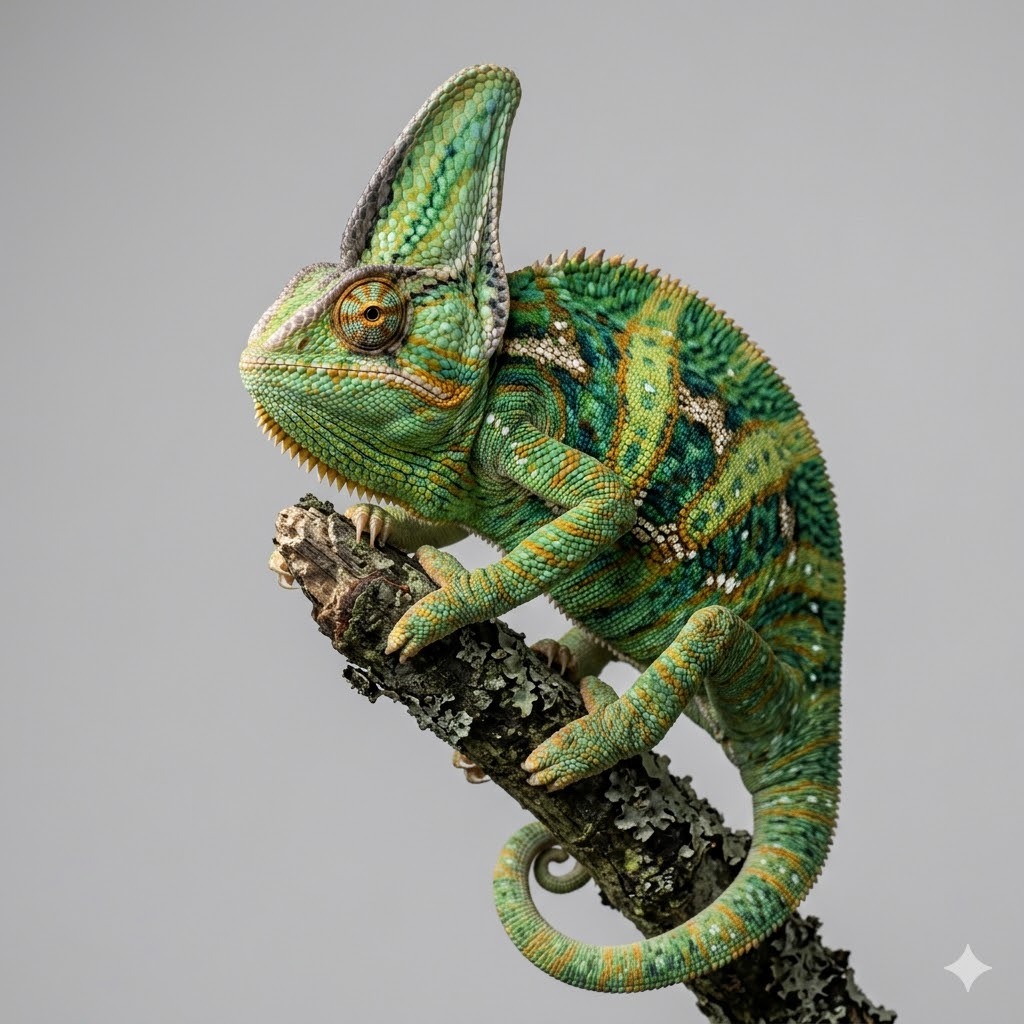
The Veiled Chameleon (Chamaeleo calyptratus) is the most commonly kept chameleon in the pet trade - hardy by chameleon standards, striking in appearance, and widely captive-bred. Named for the tall helmet-like casque on its head, this species is a fascinating display animal but a poor choice for keepers who want a reptile to hold. Veiled chameleons are best understood as look-but-rarely-touch pets that demand precise husbandry.
Natural History
Wild range: the mountains and coastal plains of Yemen and southwestern Saudi Arabia. Occupies a wide variety of habitats from humid valleys to drier plateaus, which contributes to its adaptability in captivity. Arboreal and largely solitary; chameleons are territorial and stressed by the sight of other chameleons. Diurnal, using independently rotating eyes and a ballistic projectile tongue to hunt insects.
Appearance
Adult males 35-60 cm total length including tail; females smaller at 25-35 cm. Males are heavier-bodied with a much taller casque and a small spur (tarsal spur) on each back heel.
Base colour is banded green, gold, and cream, shifting with mood, temperature, and health. Stressed or gravid females display dark, high-contrast colours. Chameleons change colour for communication and thermoregulation, not to match backgrounds.
Temperament & Handling
Not a handling pet. Veiled chameleons are easily stressed and often defensive - hissing, gaping, and lunging when approached. They tolerate observation far better than touch. Handling should be limited to necessary transport and health checks, allowing the animal to walk onto your hand rather than grabbing it. Frequent handling shortens lifespan through chronic stress.
Enclosure
Minimum: 60 × 60 × 120 cm tall for an adult, larger for males. Screen or hybrid mesh enclosures are strongly preferred over glass for the ventilation chameleons require.
Provide:
- Dense climbing network of horizontal and diagonal branches at varied heights.
- Heavy foliage cover, live or artificial, for security and hydration surfaces.
- No loose substrate; bare floor or paper is safest to prevent impaction.
- A drainage plan for the heavy misting these animals need.
Heating & Lighting
- Basking spot: 30-32°C surface for adults, lower for juveniles, placed safely below the lamp so the animal cannot contact it.
- Ambient: 24-28°C with a clear gradient down the enclosure.
- Night: a natural drop to 18-22°C is healthy.
- UVB: mandatory. A linear T5 UVB tube (around 6%) mounted above the screen is essential to prevent metabolic bone disease.
Humidity
Ambient 40-60%, with brief spikes higher after misting. Mist heavily once or twice daily to allow the chameleon to drink droplets, and provide a dripper or automated misting system. Allow the enclosure to dry between sessions to prevent respiratory infection.
Diet
Insectivorous. Live insects:
- Staple: crickets, dubia roaches, black soldier fly larvae.
- Occasional: silkworms, hornworms (treats, high moisture).
- Avoid: wild-caught insects (pesticides, parasites) and fireflies (toxic).
Insects must be gut-loaded and dusted with calcium without D3 at most feedings, calcium with D3 lightly once or twice weekly, and a multivitamin sparingly. Veiled chameleons will also nibble plant matter, so all enclosure plants must be non-toxic.
Juveniles eat daily; adults every other day. Reduce feeding for females to limit egg production.
Health & Lifespan
Males 6-8 years; females often shorter at 4-6 years due to the demands of egg-laying.
Common concerns:
- Metabolic bone disease from inadequate UVB or calcium.
- Dehydration and kidney disease from insufficient misting.
- Egg binding in females, even unmated ones, who lay infertile clutches.
- Respiratory infections from cold, damp, stagnant air.
- Mouth rot (stomatitis).
- Thermal burns from unguarded basking bulbs.
Pros & Cons
Pros:
- Striking, dynamic display animal.
- Widely captive-bred and available.
- Fascinating natural behaviours to observe.
- Hardiest of the commonly kept chameleons.
Cons:
- Not a handling pet; stress-prone.
- Demanding husbandry (UVB, gradients, daily misting).
- Females face serious egg-laying risks.
- Relatively short-lived for the effort involved.
Best Suited For
- Dedicated keepers who want a display reptile.
- Hobbyists comfortable with precise climate control.
- Owners who enjoy observation over interaction.
Not suited for anyone wanting a reptile to handle regularly or a low-maintenance beginner pet.
Veiled Chameleon (Chamaeleo calyptratus) - frequently asked questions
Are they good for kids?
No. They are stress-prone display animals, not pets for children to hold.
Do I need UVB?
Yes, always. UVB is non-negotiable for this species to prevent metabolic bone disease.
How long do they live?
Males 6-8 years, females often less. Plan for the difference.
Do they change colour to camouflage?
No. Colour change reflects mood, temperature, and health, not background matching.
Do they bite?
They can. A defensive veiled chameleon will gape and may deliver a firm bite if cornered.
🧠 Test yourself: guess the reptile
Three clues from our quiz bank, each about another of our reptiles. Can you name them?
Clue 1.Long thought extinct, this lizard has eyelash-like fringes over its eyes and cannot regrow its tail once dropped.
It's the Crested Gecko - read the full profile →
Clue 2.A harmless rodent-eating colubrid, it is often confused with the venomous copperhead but kills prey by squeezing.
It's the Corn Snake - read the full profile →
Clue 3.This large arboreal lizard has a third 'eye' on top of its head that senses light and shadow from above.
It's the Green Iguana - read the full profile →