Sulcata Tortoise (Centrochelys sulcata)
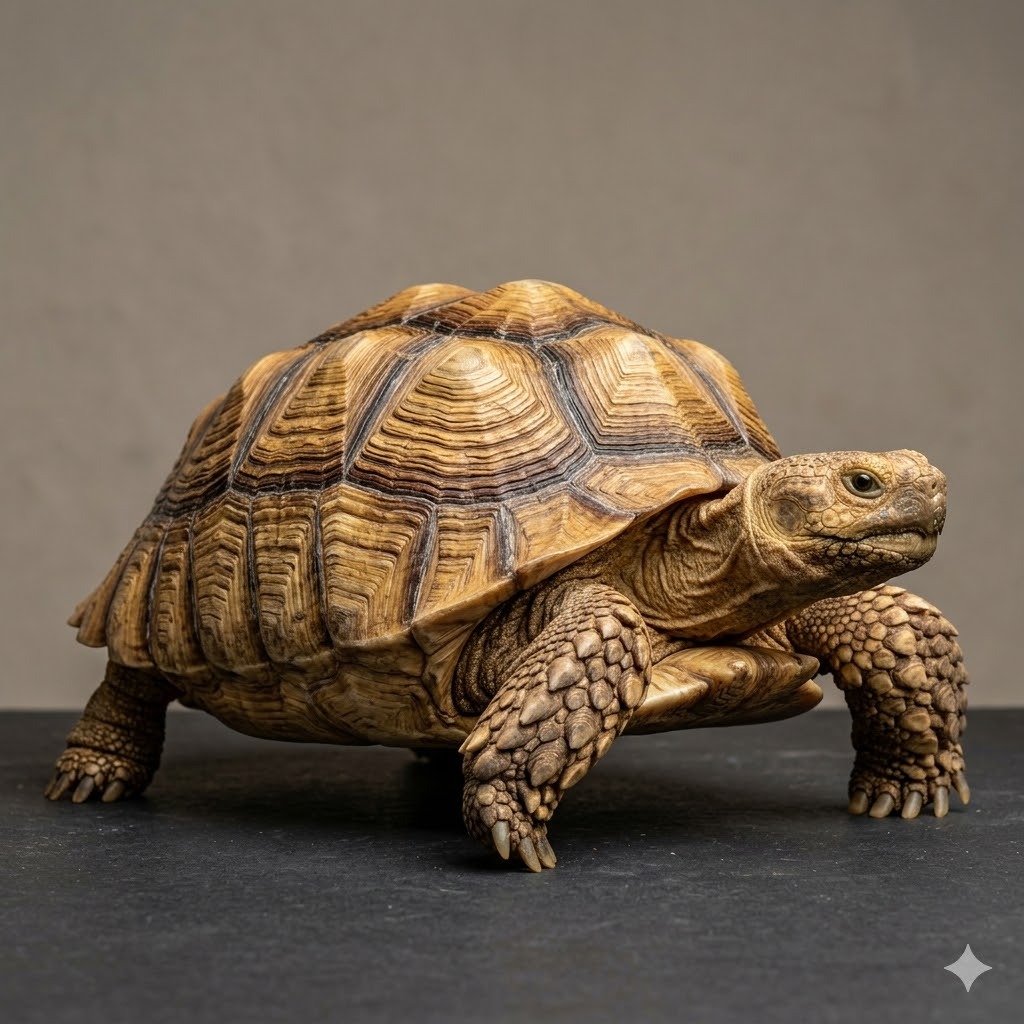
The Sulcata Tortoise (Centrochelys sulcata), also called the African spurred tortoise, is the third-largest tortoise species in the world and the largest mainland tortoise.
🗓️ Last reviewed: June 2026
Overview
The Sulcata Tortoise (Centrochelys sulcata), also called the African spurred tortoise, is the third-largest tortoise species in the world and the largest mainland tortoise. Often sold as an adorable palm-sized hatchling, a sulcata grows into a powerful animal that can exceed 45 kg and live for many decades. This is one of the biggest commitments in the entire pet trade - a wonderful animal for the right owner with land, but a heartbreak for those who buy on impulse.
Natural History
Wild range: the southern edge of the Sahara across the Sahel region of Africa. Inhabits hot, arid grasslands and semi-desert. A prolific digger, excavating extensive burrows to escape extreme heat and conserve moisture. Diurnal and grazing, spending its days foraging on grasses and drought-tolerant vegetation.
Appearance
Adults commonly 45-70 cm shell length and 40-70 kg, with exceptional individuals larger. Hatchlings are only a few centimetres across.
Colour is uniform tan to golden brown. The species is named for the prominent spurs on the back legs and the deep grooves between the broad scutes of the carapace.
Temperament & Handling
Calm, curious, and surprisingly interactive grazers. Sulcatas often recognise their keepers and approach for food. They are too large and heavy to be a handling pet as adults - an adult is moved, not held. They are strong and determined: fences, walls, and gates must be sulcata-proof, as they push through, dig under, and climb obstacles.
Enclosure
Minimum: a securely fenced outdoor area, the larger the better, for any climate that allows year-round or seasonal outdoor living. Indoor-only housing is not viable long term for an adult.
Provide:
- A large, predator-proof, escape-proof enclosure with buried fencing to stop digging.
- A heated, insulated shelter or shed the animal can enter and turn around in.
- A shallow, easy-exit water area for soaking and drinking.
- Shade and a wallow for hot weather.
In cold climates a heated indoor space or heated shed is essential for the months the tortoise cannot be outside.
Heating & Lighting
- Basking spot: 35-38°C surface under the lamp for indoor or shelter heating.
- Ambient (warm): 28-32°C.
- Cool area: 24-27°C.
- Night: can drop to around 18-22°C if a warm retreat is available.
- UVB: mandatory for indoor housing. Outdoor tortoises get natural sunlight; indoors a strong UVB source is essential to prevent shell deformity.
Humidity
Adults thrive in dry, warm conditions matching the Sahel. Hatchlings and juveniles need higher humidity and a humid hide to prevent pyramiding (abnormal bumpy shell growth). Provide regular soaking, especially for young animals, and always offer drinking water.
Diet
Herbivorous grazer. A high-fibre, low-protein, grass-based diet:
- Staple: grasses and grass hay (the bulk of the diet), plus edible weeds like dandelion and plantain.
- Occasional: leafy greens such as collard, mustard, and turnip greens.
- Avoid: fruit, high-protein foods, dog or cat food, and most pellet diets; these cause shell pyramiding, kidney damage, and rapid unhealthy growth.
Sulcatas should graze on appropriate plants for much of the day. A grazing-based diet with proper calcium supplementation is critical to healthy shell development.
Health & Lifespan
70 years or more; commonly 50-70+ with good care, sometimes much longer.
Common concerns:
- Shell pyramiding from low humidity for juveniles and improper diet.
- Metabolic bone disease from inadequate UVB or calcium.
- Respiratory infections from cold, damp housing.
- Bladder stones from dehydration and improper diet.
- Overgrown beak and nails.
- Trauma and obesity from improper management.
Pros & Cons
Pros:
- Hardy, long-lived, and impressive.
- Interactive, food-motivated, and personable.
- Thrives outdoors in suitable climates.
- A genuine lifelong companion.
Cons:
- Reaches enormous size and weight.
- Needs significant secure outdoor land and a heated shelter.
- Powerful digger and escape artist.
- Decades-long commitment that often outlives plans.
Best Suited For
- Owners with secure outdoor space and a warm or manageable climate.
- Keepers prepared for a 50+ year, large-animal commitment.
- People who want an interactive grazing tortoise.
Not suited for apartment dwellers, anyone without substantial secure outdoor land, or impulse buyers charmed by the tiny hatchling.
Sulcata Tortoise (Centrochelys sulcata) - frequently asked questions
Are they good for kids?
Children can enjoy them under supervision, but this is a lifelong family-scale commitment, not a child's pet. The animal will likely outlive the child's time at home.
Do I need UVB?
Outdoors, natural sunlight suffices. Indoors, strong UVB is mandatory to prevent shell and bone disease.
How long do they live?
Often 50-70 years or more. Plan for an animal that may outlive you and require a care plan.
How big do they really get?
Very big - commonly 40-70 kg. The cute hatchling becomes one of the world's largest tortoises.
Can they live indoors?
Only temporarily or seasonally. Adults need secure outdoor space; indoor-only housing is not viable long term.
🧠 Test yourself: guess the reptile
Three clues from our quiz bank, each about another of our reptiles. Can you name them?
Clue 1.A calm, easily tamed reptile that basks under heat lamps, it is one of the most beginner-friendly lizards kept as a pet.
It's the Bearded Dragon - read the full profile →
Clue 2.Native to the grasslands of west and central Africa, this constrictor is a favorite of breeders who have produced hundreds of color and pattern morphs.
It's the Ball Python - read the full profile →
Clue 3.A popular small pet tortoise from arid Asia, this round-shelled grazer rarely exceeds eight inches long.
It's the Russian Tortoise - read the full profile →