Panther Chameleon (Furcifer pardalis)
The Panther Chameleon (Furcifer pardalis) is a stunning, color-changing arboreal lizard from Madagascar, prized for the brilliant colors of adult males that vary by region of origin, or locale.
🗓️ Last reviewed: June 2026
Overview
The Panther Chameleon (Furcifer pardalis) is a stunning, color-changing arboreal lizard from Madagascar, prized for the brilliant colors of adult males that vary by region of origin, or locale. This is a hands-off display animal, not a pet to be handled, and it demands a tall screen enclosure, strong UVB, careful hydration through misting and a dripper, and a varied diet of gut-loaded insects. With a lifespan of only about 5-7 years and exacting needs, the panther chameleon suits intermediate-to-advanced keepers rather than first-timers.
Natural History
Wild range: the warm, humid coastal forests and edges of northern and eastern Madagascar, with established populations on nearby islands. Arboreal and diurnal, panther chameleons live alone in trees and shrubs, moving slowly through the branches and hunting insects with a long, projectile tongue. Independently rotating eyes give near-360-degree vision. They are highly territorial and intolerant of other chameleons, which shapes both their wild solitude and their care in captivity.
Appearance
Adult males 38-53 cm total length including tail; females smaller at roughly 23-33 cm. Males are noticeably larger and far more colorful.
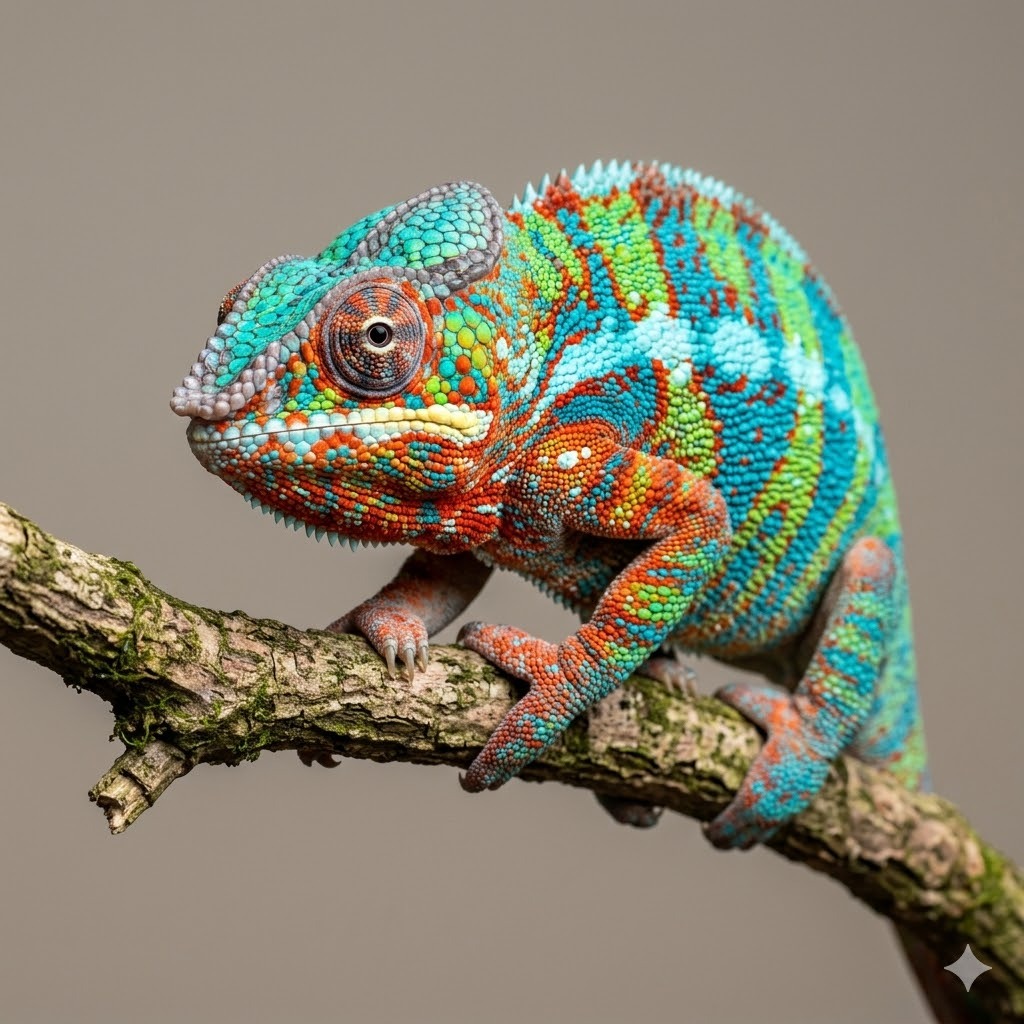
Color is the species' signature feature and depends heavily on locale - the geographic population an animal comes from. Ambilobe males may show bands of red, blue, and green; Nosy Be males a vivid turquoise-blue; others run through oranges, reds, and yellows. Females are generally tan, peach, or brown with subtler patterning. Color change is driven by mood, temperature, and social signaling rather than simple camouflage. A prehensile tail and gripping, mitten-like feet make them superb climbers.
Temperament & Handling
A display animal, not a handling pet. Panther chameleons are solitary and easily stressed, and most do not enjoy being held. Frequent handling can cause chronic stress, darkened stress colors, gaping, hissing, and hiding. Keep handling to the minimum needed for health checks or moving the animal, let it walk onto your hand rather than grabbing it, and otherwise enjoy it as a living ornament. House only one chameleon per enclosure; they must not be kept together.
Enclosure
Minimum: 60 × 60 × 120 cm tall for one adult male; females can use slightly smaller. Larger is always better. A well-ventilated screen or hybrid enclosure suits this arboreal species far better than a sealed glass tank, which traps stale, stagnant air.
Provide:
- A dense network of climbing branches and vines at varied heights and angles.
- Live or sturdy artificial plants for cover, humidity, and visual security (pothos and ficus are common live choices).
- A basking branch positioned under the heat lamp near the top.
- A drainage-friendly or bioactive base; many keepers use bare or easily cleaned floors to avoid impaction.
- A dripper or misting system as the main water source, since chameleons rarely drink from a standing dish.
Heating & Lighting
- Basking spot: 28-32°C directly under the lamp at the top branch.
- Ambient (day): 24-28°C through the rest of the enclosure, with a cooler gradient lower down.
- Night: a natural drop to around 18-22°C is fine and beneficial.
- UVB: essential. Provide a quality linear UVB tube (commonly T5 5.0-6.0) running the length of the enclosure, replaced on the manufacturer's schedule, so the chameleon can synthesize vitamin D3 and absorb calcium.
Always confirm temperatures with thermometers rather than guessing, and ensure the animal can move between warm and cool zones.
Humidity
Ambient 50-75%, peaking higher after misting and drying out between. Mist two or more times daily, or run an automated mister, to keep humidity up and supply drinking droplets. Good airflow between mistings is critical: a screen enclosure that dries between cycles prevents the stagnant, soggy conditions that lead to respiratory infections.
Diet
Insectivorous. Fed a varied, well-supplemented insect diet:
- Staple: gut-loaded crickets, dubia roaches, and similar feeder insects, sized no larger than the space between the chameleon's eyes.
- Variety: rotate feeders such as silkworms, hornworms, and black soldier fly larvae to broaden nutrition.
- Supplements: dust insects with calcium (without D3 at most feedings, with D3 less often) and a reptile multivitamin on the schedule your exotics vet advises.
- Avoid: wild-caught insects, which may carry pesticides or parasites, and oversized prey.
Feed younger animals daily and adults every other day or so, adjusting to body condition. Gut-loading feeders with fresh greens and vegetables before offering them is what turns a simple insect into a nutritious meal.
Health & Lifespan
5-7 years, with females often shorter-lived than males because of the demands of egg production.
Common concerns:
- Metabolic bone disease from inadequate UVB, calcium, or D3.
- Dehydration from insufficient misting or a missing dripper.
- Respiratory infections from cold, stagnant, or overly wet conditions.
- Egg-binding (dystocia) in females, even without a male present.
- Stress from handling, poor placement, or seeing other chameleons.
- Mouth rot and eye problems linked to husbandry or vitamin imbalances.
If anything seems wrong, consult a reptile or exotics vet promptly rather than self-treating.
Pros & Cons
Pros:
- Spectacular, ever-changing color, especially in males.
- Fascinating to observe - eyes, tongue, and slow deliberate movement.
- A striking living display centerpiece.
- Solitary by nature, so only one animal to house.
Cons:
- Not a handling pet; stresses easily.
- Demanding setup: tall screen cage, strong UVB, misting and dripper.
- Short lifespan of about 5-7 years.
- Best for intermediate-to-advanced keepers.
Best Suited For
- Intermediate-to-advanced keepers wanting a display animal.
- People who enjoy watching rather than handling a reptile.
- Owners able to maintain precise heat, UVB, and hydration.
Not suited for beginners, young children, or anyone wanting a reptile to hold regularly.
Panther Chameleon (Furcifer pardalis) - frequently asked questions
Are they good for kids?
Not really. Panther chameleons are delicate, easily stressed display animals that dislike handling, so they are a poor match for children who want to interact with a pet.
Do I need UVB?
Yes. Strong UVB is essential for vitamin D3 synthesis and calcium absorption; without it the chameleon will develop metabolic bone disease.
How long do they live?
About 5-7 years with good care, with males generally living longer than females.
Can I keep two together?
No. They are solitary and territorial and must be housed individually; even seeing another chameleon can cause chronic stress.
Why won't my chameleon drink from its water dish?
Chameleons rarely recognize still water. They drink moving droplets, so hydration relies on regular misting and a dripper rather than a standing bowl.
🧠 Test yourself: guess the reptile
Three clues from our quiz bank, each about another of our reptiles. Can you name them?
Clue 1.Native to Australia's arid interior, this omnivorous lizard flattens its body and flares spiny scales to look larger to predators.
It's the Bearded Dragon - read the full profile →
Clue 2.Adapted to harsh steppe extremes, this hardy little reptile can spend most of the year dormant underground.
It's the Russian Tortoise - read the full profile →
Clue 3.This large arboreal lizard has a third 'eye' on top of its head that senses light and shadow from above.
It's the Green Iguana - read the full profile →