African Pygmy Dormouse
The African Pygmy Dormouse (Graphiurus murinus) is a tiny arboreal rodent, roughly 3 inches long including the tail, sometimes sold under the nickname "micro squirrel".
🗓️ Last reviewed: June 2026
Overview
The African Pygmy Dormouse (Graphiurus murinus) is a tiny arboreal rodent, roughly 3 inches long including the tail, sometimes sold under the nickname "micro squirrel". They are social, nocturnal, and astonishingly fast - more a fascinating creature to watch than a pet to handle. They live in same-sex pairs or small groups, never alone, and they are fragile, short-lived, and firmly in exotic-vet territory. Charming, but not a beginner pocket pet.
Natural History & Origin
Wild African pygmy dormice live across sub-Saharan Africa, from woodland and savanna to rocky outcrops and scrub. They are agile climbers that spend their lives off the ground in trees, shrubs, and crevices, sleeping by day in nests of bark and leaves and foraging at night for insects, fruit, seeds, and nectar. They are naturally gregarious, sharing nests in small family groups.
Appearance
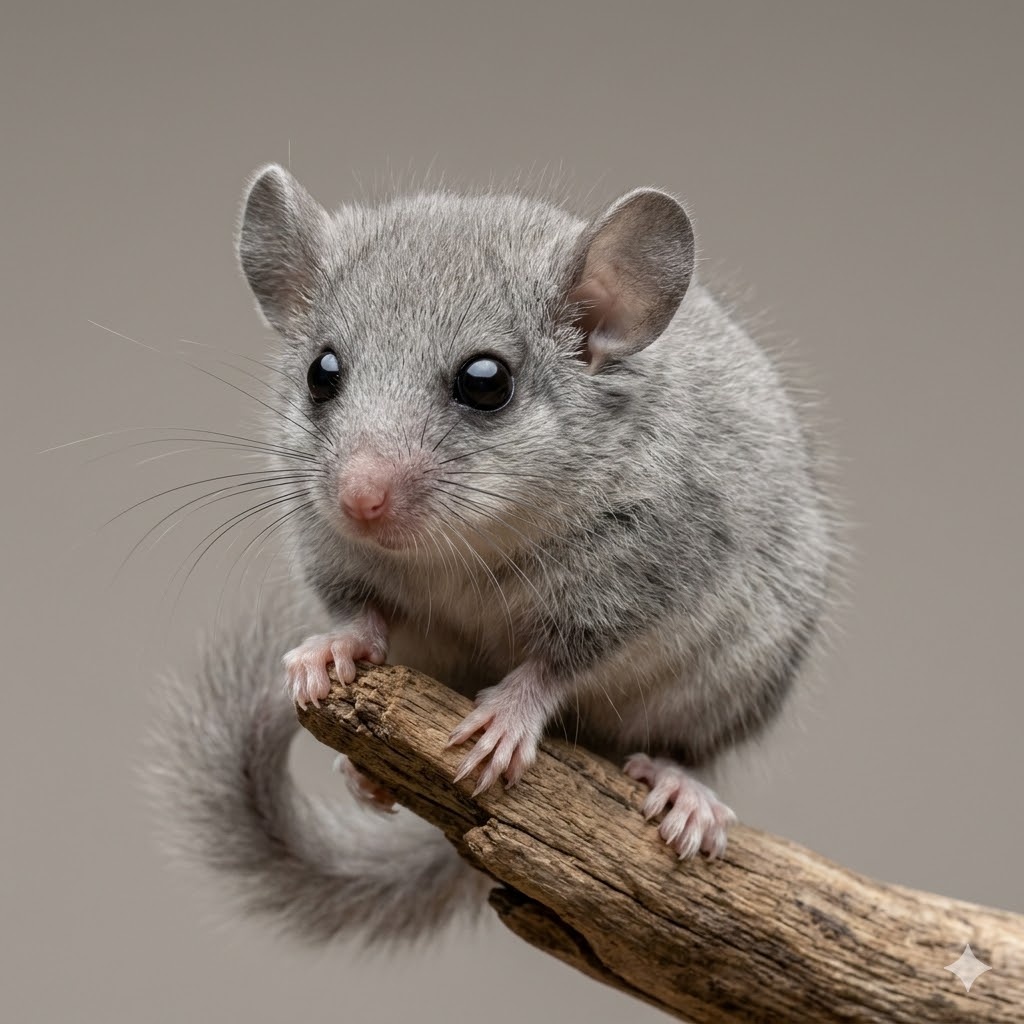
Adults are very small - body around 6-8 cm plus a furry tail of similar length, weighing roughly 18-30 g.
Soft grey to brownish-grey fur on top, paler underneath, with large dark eyes suited to night vision and a bushy tail used for balance.
The combination of squirrel-like agility at mouse-like size is the species' defining feature.
Temperament & Handling
Social, strictly nocturnal, and extremely fast. African pygmy dormice are watching pets, not handling pets. They rarely settle in the hand, they are quick enough to escape in a blink, and a startled dormouse can shed the skin of its tail if grabbed by it - so the tail must never be held.
They are skittish by nature and most active after dark, when groups become lively, chase along branches, and forage. Bonded groups may grow used to a keeper's presence over time, but they remain creatures to observe rather than cuddle.
Housing
Minimum enclosure: a tall, fully escape-proof glass tank or vivarium with a secure fine-mesh lid - vertical orientation matters far more than floor space because these are climbing animals. They are small enough to squeeze through tiny gaps and quick enough to bolt, so the enclosure must be genuinely escape-proof.
Provide:
- Plenty of climbing branches, cork bark, and twigs.
- Several hides and nest boxes (they sleep huddled together).
- Soft nesting material to shred.
- Foliage or plants for cover and security.
- A shallow heavy dish and a water source.
Keep the tank warm and away from draughts; these small tropical-origin rodents chill easily.
Diet
An insect-and-fruit mix that reflects their wild omnivorous foraging.
- Live insects - small crickets, mealworms, and similar, as a core protein source.
- Fruit - small pieces of soft fruit offered in moderation.
- Seeds and a quality small-rodent or insectivore mix - for variety.
- Occasional extras - a little nectar substitute or flower pollen mirrors the wild diet.
Offer food at night when they are active. Keep portions tiny and remove uneaten fresh food before it spoils. Provide clean water at all times.
Health & Lifespan
Typically 3-5 years.
Major concerns:
- Stress and fright - they are delicate and easily frightened; chronic stress shortens lives.
- Tail-skin loss - the tail can degloved if grabbed; never handle by the tail.
- Chilling - sensitive to cold and draughts.
- Obesity or poor condition from an unbalanced diet.
- Dental issues common to rodents.
Find an exotics vet experienced with very small mammals before acquisition - many general clinics are not equipped for an animal this tiny and fragile.
Pros & Cons
Pros:
- Tiny, charming, and endlessly entertaining to watch.
- Active and social in a group.
- Quiet and low-odour compared with many small rodents.
Cons:
- Not a handling pet - too fast and easily stressed.
- Fragile and short-lived.
- Nocturnal - most active when humans sleep.
- Must be kept in same-sex pairs or groups, never alone.
- Need a tall, genuinely escape-proof setup.
- Exotic-vet species; specialist care can be hard to find.
Best Suited For
- Experienced keepers who want an animal to observe rather than hold.
- People who can provide a tall, secure, enriched tank.
- Households comfortable keeping a small group.
- Those willing to feed live insects and find an exotics vet.
Not suited for first-time small-pet owners, young children wanting a cuddly pet, anyone expecting a hands-on companion, or keepers unwilling to house them socially.
African Pygmy Dormouse - frequently asked questions
Can I keep just one?
No. They are social and should be kept in same-sex pairs or small groups; a lone dormouse is prone to stress.
Can I hold them like a hamster?
Not really. They are extremely fast and skittish, and the tail can be injured if grabbed. They are best enjoyed as a watching pet.
Are they good for kids?
Not as a hands-on pet. They are fragile, nocturnal, and quick to escape - better suited to patient observation under supervision.
How long do they live?
About 3-5 years - short compared with many exotic mammals.
Are they a good beginner pet?
No. Between the social requirement, escape-proof tall housing, live-food diet, fragility, and need for an exotics vet, they suit experienced keepers.
🧠 Test yourself: guess the small mammal
Three clues from our quiz bank, each about another of our small mammals. Can you name them?
Clue 1.A pocket-sized Australian and New Guinean pet that glides on a stretchy flap of skin and bonds intensely with its colony.
It's the Sugar Glider - read the full profile →
Clue 2.Friendly and curious, this tufted-tailed burrower loves to dig tunnels and rarely bites, making it a great first pet.
It's the Gerbil - read the full profile →
Clue 3.Nearly all pet members of this species descend from a single family captured in the 1930s near a Middle Eastern city.
It's the Syrian Hamster - read the full profile →
Social Needs
Social. A single African pygmy dormouse is not appropriate - they are group-living animals that huddle and forage together. Keep same-sex pairs or small same-sex groups. Lone dormice tend to become stressed and withdrawn. Introductions are best done carefully and ideally with young animals from the same source.