Chinese Hamster
The Chinese hamster is a small, mouse-like hamster that stands apart from the more familiar Syrian and dwarf species.
🗓️ Last reviewed: July 2026
Overview
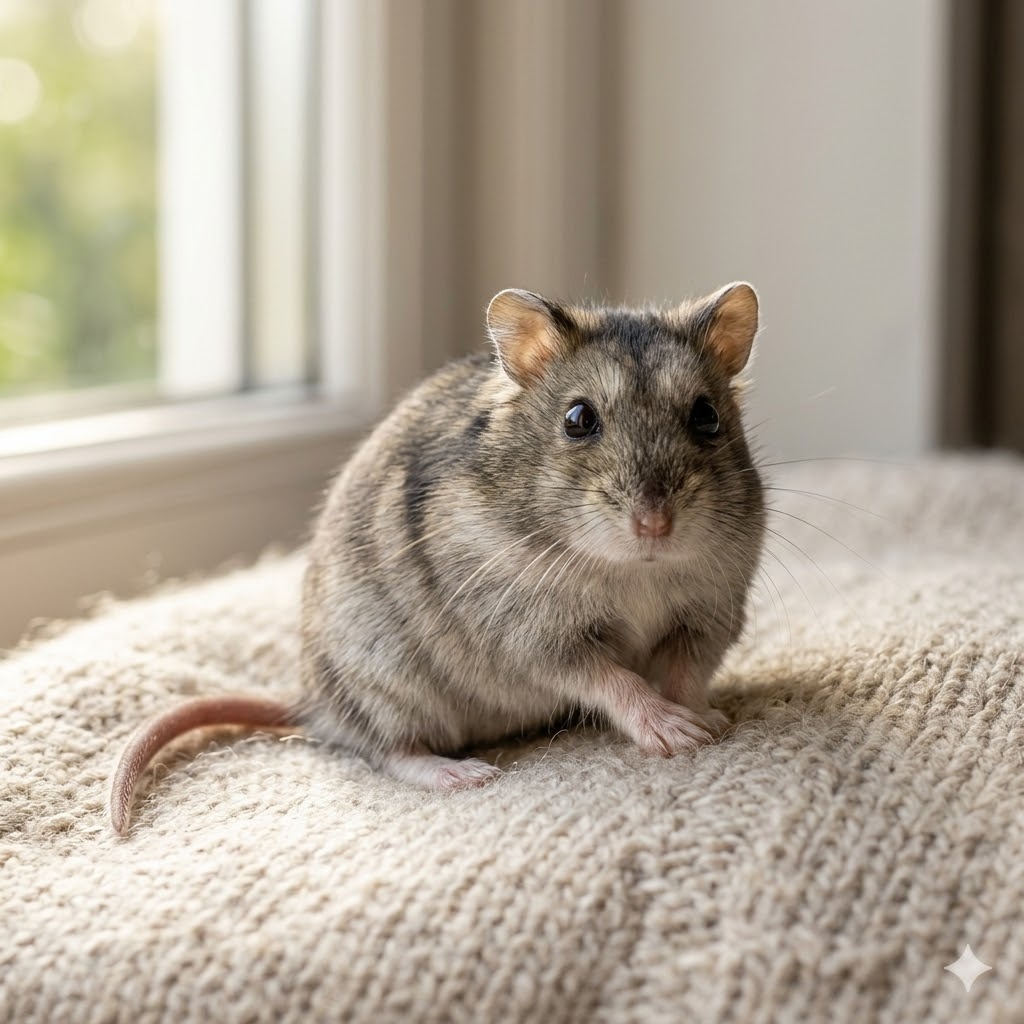
The Chinese hamster is a small, mouse-like hamster that stands apart from the more familiar Syrian and dwarf species. Slender rather than round, with a noticeably longer body and a short prehensile tail, it looks more like a tiny rodent from the wild than a typical pet-shop hamster. What makes it especially appealing is its temperament: Chinese hamsters are generally calmer, gentler, and more willing to be handled than the fidgety dwarf species. They are agile climbers, curious, and quiet, making them a good choice for a patient owner who wants a small, handleable, single-kept companion.
Natural History & Origin
The Chinese hamster (Cricetulus griseus) originates from the deserts and arid grasslands of northern China and Mongolia. In its native range it lives in burrows dug into dry soil, foraging at night for seeds, grains, and insects. Unlike the true dwarf hamsters of the Phodopus genus, the Chinese hamster belongs to a separate group of rat-like hamsters, which is reflected in its slimmer build and longer tail.
The species has a long history in scientific research, where it was valued for its genetics, and this is how many were first bred in captivity. Wild Chinese hamsters remain solitary and territorial, coming together only to breed - behaviour that carries directly into how they should be kept as pets.
Appearance
The Chinese hamster has a distinctive elongated, mouse-like shape rather than the compact roundness of other hamsters. Adults measure around 8-12 cm in body length including the tail and weigh roughly 30-45 grams. The most notable feature is the short, functional prehensile tail - longer than any other pet hamster's - which the animal uses for balance while climbing.
The wild-type coat is greyish-brown with a dark dorsal stripe running down the spine and a lighter belly. A "dominant spot" variety, which is patchy white with coloured markings, also appears in the pet trade. The eyes are large and dark, the muzzle is pointed, and the overall impression is of a sleek, agile little creature rather than a plump ball of fur.
Temperament & Handling
Chinese hamsters are among the calmer and more handleable of the small hamster species. They tend to be less nippy and less frantic than dwarf hamsters, and once tamed they will often sit contentedly in cupped hands and climb gently over their owner. They are curious and enjoy exploring, and their prehensile tail and strong grip make them accomplished climbers.
Taming still requires patience and consistency - a new hamster should be given time to settle, then slowly introduced to hand-feeding and gentle scooping. Because they are agile and can be quick when startled, handling low over a soft surface is wise. On the whole, they reward a gentle keeper with a friendly, interactive little pet that is easier to hold than most dwarfs.
Housing
Chinese hamsters need a secure enclosure with plenty of floor space and opportunities to climb. Because they are slim and remarkably good at squeezing through gaps, a barred cage with narrow spacing or, better yet, a glass or acrylic tank with a secure mesh lid is ideal. A minimum floor area of around 3,000-4,000 cm² is a sensible target, with more always welcome.
Provide:
- A deep layer of paper-based or aspen bedding for burrowing.
- A solid-surface exercise wheel at least 20 cm across.
- Climbing enrichment - branches, ropes, ledges, and tunnels - to use their agility.
- Hides and chew items.
- A water bottle or dish and a food bowl.
- A small sand bath for grooming.
Avoid wire-floored cages, cedar and pine shavings, and any enclosure with bar gaps wide enough to escape through, as these hamsters are notorious escape artists.
Diet
The Chinese hamster does well on a good-quality dry hamster mix of seeds, grains, and dried vegetables. As a desert forager, it benefits from a varied diet:
- A staple dry seed-and-grain mix as the daily base.
- Small portions of fresh vegetables such as cucumber, carrot, broccoli, or leafy greens.
- Occasional animal protein such as a mealworm or a little cooked egg once or twice a week.
Fresh water must always be available. Avoid sugary treats, citrus fruit, onion, garlic, chocolate, and processed human foods. Chinese hamsters are prone to diabetes, so keep sugary and starchy items to a minimum and favour a balanced, moderate diet. Scattering some food in the bedding encourages natural foraging.
Health & Lifespan
Chinese hamsters usually live around 2-3 years.
Common health concerns include:
- Diabetes, to which this species is particularly prone - keep sugar low.
- Wet tail and other digestive upsets, often triggered by stress.
- Overgrown teeth without enough to chew.
- Respiratory infections in dusty or damp conditions.
- Injuries from falls if handled carelessly.
Watch for changes in appetite, activity, coat condition, weight, and droppings, as small rodents hide illness well. Because they are prone to diabetes, monitoring diet and weight is especially important. Locate an exotic-savvy vet before any problem develops, as not all vets are experienced with small rodents.
Pros & Cons
Pros:
- Calmer and more handleable than dwarf hamsters.
- Distinctive mouse-like look with a prehensile tail.
- Agile, curious, and fun to watch climb.
- Quiet and low-odour.
- Happy kept alone - no bonding stress.
Cons:
- Solitary - cannot be housed with others.
- Escape artist that squeezes through small gaps.
- Prone to diabetes; diet must be watched.
- Short lifespan of 2-3 years.
- Still needs patient taming before it will sit still.
Best Suited For
- Patient owners wanting a handleable small hamster.
- Adults and older children under supervision.
- Those who prefer a single, low-maintenance pet.
- People who enjoy watching an agile, climbing rodent.
Not suited for those wanting to keep multiple hamsters together, keepers unable to secure a tight enclosure, or anyone unwilling to manage a diabetes-prone diet.
Chinese Hamster - frequently asked questions
Are Chinese hamsters easy to handle?
Yes, relatively. They are calmer and less nippy than dwarf hamsters and, once tamed, will often sit in cupped hands and climb gently over their owner.
How big do they get?
Around 8-12 cm including the tail and roughly 30-45 grams as adults, with a slim, mouse-like build.
How long do they live?
Usually 2-3 years.
Can I keep two together?
No. They are solitary and territorial and should be housed alone to avoid fighting.
Do they really have a tail?
Yes - a short prehensile tail longer than any other pet hamster's, which they use for balance while climbing.
🧠 Test yourself: guess the small mammal
Three clues from our quiz bank, each about another of our small mammals. Can you name them?
Clue 1.Friendly and curious, this tufted-tailed burrower loves to dig tunnels and rarely bites, making it a great first pet.
It's the Gerbil - read the full profile →
Clue 2.A pocket-sized Australian and New Guinean pet that glides on a stretchy flap of skin and bonds intensely with its colony.
It's the Sugar Glider - read the full profile →
Clue 3.This social herbivore is born fully furred with open eyes and can run within hours of birth.
It's the Guinea Pig - read the full profile →
Social Needs
Chinese hamsters are solitary and territorial by nature. Adults kept together will usually fight, sometimes seriously, so the safe and recommended approach is to house each hamster alone. A single Chinese hamster is a content Chinese hamster and does not suffer from loneliness the way a social herd animal would.
Their social interaction comes from their keeper. Because they are more handleable than most small hamsters, a patient owner can build a genuine bond through regular gentle handling. If breeding is ever intended, males and females are introduced only briefly and under supervision, but for a pet keeper, solo housing is the clear and simple rule.