Duprasi (Fat-tailed Gerbil)
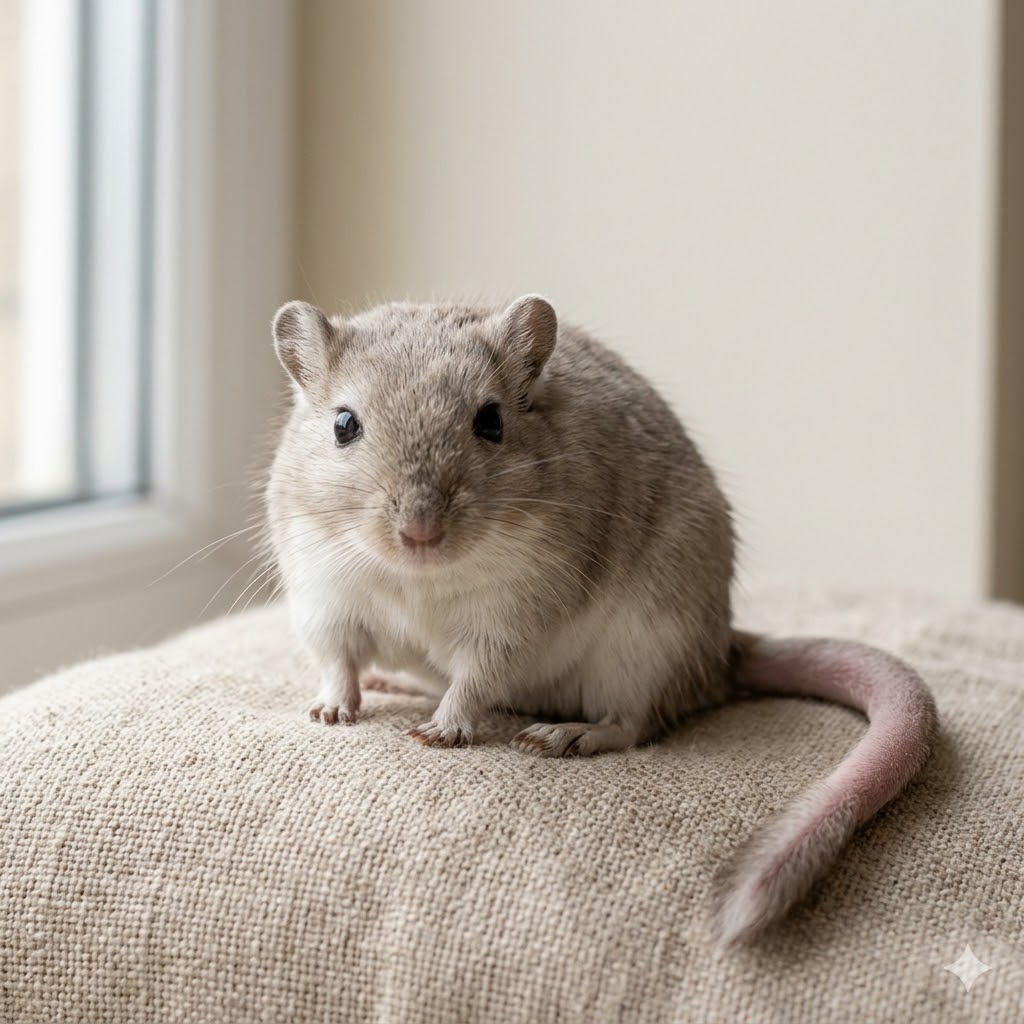
The Duprasi, or fat-tailed gerbil, is a small, placid desert rodent instantly recognisable by its plump, club-shaped tail, where it stores fat much as a camel uses its hump.
🗓️ Last reviewed: July 2026
Overview
The Duprasi, or fat-tailed gerbil, is a small, placid desert rodent instantly recognisable by its plump, club-shaped tail, where it stores fat much as a camel uses its hump. Calm, slow-moving, and remarkably tame, the Duprasi is one of the gentlest small mammals a keeper can choose. It rarely bites, tolerates handling well, and has an almost teddy-bear appearance with its soft coat and rounded body. Kept singly in a dry, sandy setup and fed a diet leaning toward insects, the fat-tailed gerbil makes a quiet, undemanding, and endearing companion for a patient owner.
Natural History & Origin
The Duprasi (Pachyuromys duprasi) is native to the sandy and stony deserts of North Africa, ranging across parts of Egypt, Libya, Algeria, and Morocco. It lives in arid, sparsely vegetated terrain, sheltering in burrows during the harsh heat of the day and emerging at night to hunt for insects and forage for seeds. The distinctive fat-storing tail is an adaptation to this unpredictable desert environment, allowing the animal to draw on reserves when food and water are scarce.
Unlike the familiar Mongolian gerbil, the Duprasi is a more solitary and slow-paced animal in the wild. Its calm disposition and insect-leaning diet both reflect the demands of desert life, and both carry directly into how it should be cared for in captivity.
Appearance
The Duprasi is a small, rounded rodent, with adults measuring around 10-13 cm in body length and weighing roughly 30-55 grams. Its most famous feature is the short, thick, club-shaped tail, which becomes plump when the animal is well fed and stores fat as an energy reserve - a healthy tail is a sign of good condition, while a thin one signals a problem.
The coat is exceptionally soft, long, and dense, typically sandy-grey or buff on top with a pale, almost white belly. The face is rounded with large dark eyes and prominent ears, giving the Duprasi a gentle, wide-eyed expression often compared to a tiny hedgehog or teddy bear. The overall look is plush, cuddly, and quite distinct from the sleeker Mongolian gerbil.
Temperament & Handling
Duprasi are among the calmest and most docile of all small pet rodents. They are slow-moving, curious, and very tolerant of handling, rarely biting and often content to sit quietly in a warm hand. This placid nature makes them one of the easier small mammals to tame, and with a little patience most will become confidently hand-tame.
Handling should still be gentle and low over a soft surface, and the tail should never be squeezed or pulled, as it is an important fat store rather than a handle. Because they move slowly and calmly, Duprasi are far less likely to leap or bolt than skittish species, which makes them well suited to owners who want an interactive pet they can genuinely hold.
Housing
Duprasi need a dry, sandy, well-ventilated enclosure that reflects their desert origins. A glass or acrylic tank with a secure mesh lid works best, both to hold a deep substrate and to maintain a warm, draught-free environment. A minimum floor area of around 3,000-4,000 cm² suits a single animal, with more space always welcome.
Provide:
- A deep layer of dry substrate - a mix of paper-based bedding and children's play sand supports natural digging.
- A sand bath, which is essential for keeping their dense coat clean.
- Hides, tunnels, and a nest area for burrowing.
- A solid-surface exercise wheel large enough to prevent a bent back.
- Chew items to keep teeth trim.
- A water bottle or shallow dish and a food bowl.
Keep the setup dry and warm, and avoid damp bedding, wire flooring, and cedar or pine shavings. As desert animals, Duprasi are sensitive to cold and humidity.
Diet
The Duprasi is an insectivore-leaning omnivore, and its diet should reflect this more than a typical seed-based gerbil menu. A good diet combines:
- A quality gerbil or hamster seed-and-grain mix as a modest base.
- Regular animal protein - mealworms, crickets, and other insects - offered several times a week as a genuine staple, not an occasional treat.
- Small amounts of fresh vegetables and the occasional seed-rich treat.
Fresh water should always be available, though desert animals drink relatively little. Avoid sugary and fatty processed foods, citrus, onion, garlic, and chocolate. Because insects are central to their natural diet, live or dried insects should feature regularly. Monitor the tail - a plump tail means good condition, while a thin tail can indicate the diet needs adjusting.
Health & Lifespan
Duprasi typically live around 5-7 years, which is notably long for a small rodent and one of their appealing traits.
Common health concerns include:
- A thinning tail, which signals poor condition or inadequate diet.
- Respiratory infections in damp, dusty, or cold conditions.
- Overgrown teeth without enough to chew.
- Obesity if fed too much fatty food with too little exercise.
- Skin and coat problems if no sand bath is provided.
Watch for changes in tail plumpness, weight, appetite, coat condition, and breathing. Their long lifespan means a genuine multi-year commitment. As with all uncommon small mammals, identify an exotic-savvy vet familiar with desert rodents before any problem develops.
Pros & Cons
Pros:
- Exceptionally calm, tame, and easy to handle.
- Rarely bites; gentle and slow-moving.
- Long-lived for a small rodent.
- Charming teddy-bear appearance and unique fat tail.
- Happy kept alone - no bonding stress.
Cons:
- Solitary - cannot be housed with others.
- Needs a regular insect-based diet, not just seeds.
- Requires a warm, dry, sandy setup and a sand bath.
- Uncommon pet, so exotic vets can be harder to find.
- Sensitive to cold and damp.
Best Suited For
- Owners wanting a calm, handleable, single small pet.
- Adults and older children under supervision.
- Keepers willing to feed insects regularly.
- Those seeking a long-lived, low-drama rodent companion.
Not suited for those wanting to keep several gerbils together, keepers uncomfortable feeding insects, or anyone unable to maintain a warm, dry, sandy enclosure.
Duprasi (Fat-tailed Gerbil) - frequently asked questions
Why is the tail so fat?
The Duprasi stores fat in its club-shaped tail as an energy reserve for desert life. A plump tail signals good health, while a thin tail suggests a problem with diet or condition.
Are Duprasi easy to handle?
Yes. They are among the calmest and most docile small rodents, rarely bite, and tolerate gentle handling very well.
Can I keep two together?
No. They are solitary and territorial and should be kept alone to avoid fighting.
What do they eat?
An insect-leaning diet - regular mealworms and crickets alongside a modest seed-and-grain mix and some vegetables.
How long do they live?
Around 5-7 years, long for such a small rodent.
🧠 Test yourself: guess the small mammal
Three clues from our quiz bank, each about another of our small mammals. Can you name them?
Clue 1.This solitary golden rodent is the most common pet of its kind and must be housed alone to avoid deadly fights.
It's the Syrian Hamster - read the full profile →
Clue 2.When startled, this small spiny mammal kept as an exotic pet curls into a tight, prickly ball.
It's the African Pygmy Hedgehog - read the full profile →
Clue 3.Like humans, this stout cavy cannot make its own vitamin C and must get it from food.
It's the Guinea Pig - read the full profile →
Social Needs
Duprasi are naturally solitary and are best kept alone. Unlike the highly social Mongolian gerbil, adult fat-tailed gerbils are territorial and will often fight if housed together, sometimes seriously. A single Duprasi is perfectly content on its own and does not suffer from loneliness the way a herd animal would.
This solitary nature is actually convenient for keepers, since there is no need to manage bonded pairs or groups. The animal's social interaction comes from its owner, and because Duprasi are so calm and tame, a patient keeper can build a strong bond through regular gentle handling. If breeding is ever intended, introductions are done carefully and temporarily, but for a pet keeper, solo housing is the simple rule.