African Pygmy Hedgehog
The African Pygmy Hedgehog is a small spiny mammal native to central Africa, popular as an exotic pet over recent decades.
🗓️ Last reviewed: June 2026
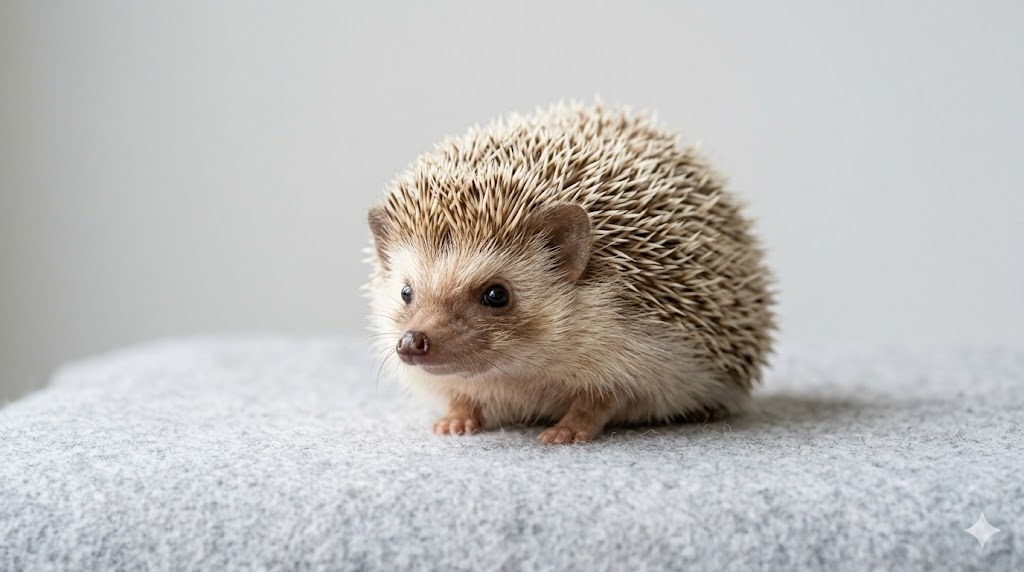
Overview
The African Pygmy Hedgehog is a small spiny mammal native to central Africa, popular as an exotic pet over recent decades. Solitary, nocturnal, and prickly (literally), hedgehogs are observation pets that require specific temperature, diet, and handling care. They are not the small mammal version of a hamster - ownership is significantly more complex.
Natural History & Origin
The African Pygmy Hedgehog (Atelerix albiventris) is a hybrid of two African species (white-bellied hedgehog and Algerian hedgehog) developed in the US in the 1980s for the pet trade. Wild hedgehogs are insectivorous and live in burrows.
Appearance
Adults weigh 250-600 g, body length 15-25 cm.
Colours: salt and pepper, chocolate, cinnamon, snowflake, albino, pinto, and many others. The spines are not quills - they are modified hairs.
Temperament & Handling
Solitary, mostly nocturnal, prickly. Handling requires patient daily socialisation; many hedgehogs roll into a defensive ball ("huffing") when picked up by an unfamiliar person.
Hedgehogs anoint themselves - when they encounter new smells, they froth saliva and apply it to their spines (this is normal, not illness).
Housing
Minimum enclosure: 0.6 m² (1 × 0.5 m). Larger preferred. Glass aquariums, plastic storage bins (40+ gallons), or large pet enclosures work.
Provide:
- Solid-bottom wheel (28+ cm) - hedgehogs run several kilometres per night.
- Hideout / igloo.
- Paper-based bedding or fleece liners.
- Heavy ceramic dish, water bottle or dish.
- Heat source - ambient temperature must be 22-27°C continuously. Below 22°C triggers attempts to hibernate, which can be fatal in captive hedgehogs. Ceramic heat emitter with thermostat is standard.
Diet
Insectivorous. Wild diet is primarily insects.
- Quality cat food (high protein, low fat) as staple - many "hedgehog food" brands are inadequate.
- Live or freeze-dried insects - mealworms, crickets, dubia roaches.
- Limited vegetables and fruit as occasional treats.
Avoid: avocado, citrus, grapes/raisins, onion, milk, sugary or fatty foods, raw meat.
Health & Lifespan
3-6 years.
Common concerns:
- Wobbly Hedgehog Syndrome (WHS) - neurological degenerative disease, eventually fatal. Genetic; no cure.
- Obesity - major issue with rich diet.
- Cancer - extremely common; up to 75% of older hedgehogs develop tumours.
- Dental disease.
- Mites.
- Heart disease.
- Fatty liver disease.
Find a vet experienced with exotic mammals before acquisition.
Pros & Cons
Pros:
- Quiet apartment pets.
- Unique appearance.
- Don't require companions.
- Don't bark or vocalise much.
Cons:
- Nocturnal - active when humans sleep.
- Specific heat requirement.
- WHS and cancer risks shorten lifespan.
- Not cuddly.
- Banned in some jurisdictions (California, Hawaii, New York City, Pennsylvania, others).
- Need exotic vet.
Best Suited For
- Owners who want an unusual observation pet.
- Households able to maintain stable warm temperature.
- Adults and older children.
Not suited for young children expecting a cuddly pet, households in cold homes, or those expecting a daytime-active pet.
African Pygmy Hedgehog - frequently asked questions
Are hedgehogs legal?
Varies. Banned in California, Hawaii, NYC, Pennsylvania, Georgia, parts of Canada and Europe. Check local regulations before considering.
Are they good with kids?
Older children only. Hedgehog spines and defensive balling discourage rough handling.
Why do they need heat?
Below 22°C they attempt hibernation, which captive hedgehogs are poorly adapted for and often fatal. Stable 24-27°C ambient is ideal.
How long do they live?
3-6 years. Cancer and WHS are the main lifespan limiters.
Do they smell?
Mild musky odour; cage hygiene controls.
🧠 Test yourself: guess the small mammal
Three clues from our quiz bank, each about another of our small mammals. Can you name them?
Clue 1.Curious and quick, this little nocturnal animal navigates largely by smell and whisker-touch, having poor eyesight.
It's the Fancy Mouse - read the full profile →
Clue 2.Unlike its larger solitary cousin, this tiny pocket-sized rodent can sometimes be kept in same-sex pairs.
It's the Dwarf Hamster - read the full profile →
Clue 3.This solitary golden rodent is the most common pet of its kind and must be housed alone to avoid deadly fights.
It's the Syrian Hamster - read the full profile →
Social Needs
Strictly solitary. Two hedgehogs together will fight.