Brazilian Short-Tailed Opossum
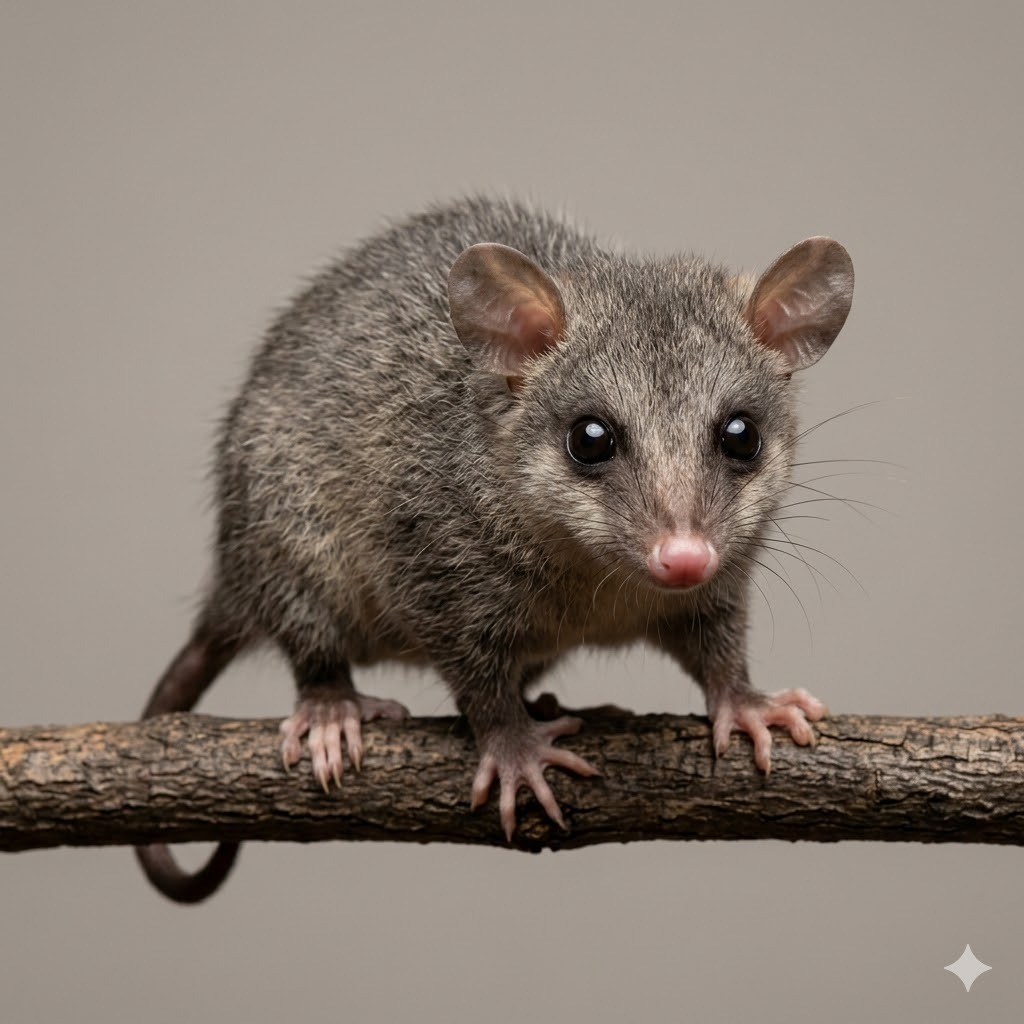
The Brazilian Short-Tailed Opossum (Monodelphis domestica) is a tiny pouchless marsupial from South America, roughly mouse to rat sized.
🗓️ Last reviewed: June 2026
Overview
The Brazilian Short-Tailed Opossum (Monodelphis domestica) is a tiny pouchless marsupial from South America, roughly mouse to rat sized. Unlike the better-known sugar glider, this species is strictly solitary - it lives alone in the wild and must be housed alone in captivity, because two together will fight. It is nocturnal, surprisingly clean, low-odour, and with gentle daily handling from a young age it can become genuinely tame and hand-friendly. It is an unusual pet, but a rewarding one for the right owner.
Natural History & Origin
Wild Brazilian short-tailed opossums live across Brazil, Bolivia, Paraguay, and northern Argentina, in dry forest, scrub, and around human dwellings. They are ground-dwelling and partly climbing, sheltering in crevices, leaf litter, and hollows. They are solitary animals that come together only to breed, then separate again. Females have no pouch - the defining trait of this group - and the young cling to teats on the open belly until they are large enough to be left in a nest. The species is well known in laboratories as a model marsupial, which is part of why it entered the pet trade.
Appearance
Adults weigh roughly 60-150 g, body about 12-18 cm, with a short, sparsely furred tail noticeably shorter than the body - the source of the name.
Coats: soft grey-brown fur, paler underneath, with large dark protruding eyes and a long pointed snout. Some captive lines show slightly darker or lighter tones, but they are not bred for colour the way some rodents are.
The short tail and the absence of a pouch are the breed's defining features.
Temperament & Handling
Strictly solitary, nocturnal, and capable of becoming tame and hand-friendly with patient, gentle daily handling started young. A well-socialised opossum will climb onto a hand, explore an owner calmly, and tolerate being held. An unhandled or wild-caught animal stays skittish and may nip.
These are not cuddly lap pets and they will not bond as a colony animal does - the relationship is one of curiosity and trust built slowly through routine, calm interaction.
Housing
Minimum enclosure: a tall, secure glass tank - think 90 litres or larger - with a tight, well-ventilated lid. Vertical height matters because they climb. Glass holds heat and contains their small size better than wire.
Provide:
- Several hides at different heights (small nest boxes, cork tubes).
- Sturdy climbing branches and ropes.
- A solid running wheel (a safe, closed-surface model - open-rung wheels catch the tail).
- Deep, paper-based or aspen substrate for burrowing.
- Heavy ceramic food dish and a water bottle or shallow dish.
A secure lid is non-negotiable - they are small, agile escape artists.
Diet
Insectivore-leaning omnivore. In the wild they eat mostly insects and other invertebrates, plus small amounts of fruit and small vertebrates. A captive diet should mirror that:
- Live or prepared insects - crickets, mealworms, roaches, dubia - as the protein base.
- A quality insectivore or ferret base - a balanced commercial insectivore diet or a high-quality ferret/cat food used in moderation.
- Small amounts of fruit and vegetables - as a minor supplement, not the bulk.
Dust insects with a calcium/vitamin supplement. Keep sugary fruit limited - too much causes obesity and poor nutrition. Fresh water at all times.
Avoid relying on seed mixes or sweet treats; this is a meat-and-insect eater, not a hamster.
Health & Lifespan
About 4-5 years.
Major concerns:
- Obesity from too much fruit or fatty food - common and preventable with a lean, insect-based diet.
- Tail and limb injuries from unsafe wheels or falls.
- Dental and oral problems.
- Stress from being kept too cold, handled roughly, or housed with another opossum.
- Cancer in older animals.
Find an exotic vet experienced with marsupials or small exotics before you acquire one - general-practice vets often have little experience with this species.
Pros & Cons
Pros:
- Low odour and surprisingly clean.
- Can become tame and hand-friendly with daily handling.
- Housed singly - no need to buy or manage a group.
- Quiet and compact.
- Unusual and genuinely interesting.
Cons:
- Strictly solitary - cannot be kept in pairs or groups.
- Nocturnal - most active when humans sleep.
- Short lifespan (about 4-5 years).
- Insect-based diet some owners find off-putting.
- Needs an exotic vet, which can be hard to find.
- Not a cuddly or beginner-friendly pet.
Best Suited For
- Owners wanting a single, low-odour exotic.
- People comfortable feeding live or prepared insects.
- Patient handlers willing to socialise an animal slowly.
- Households where a nocturnal pet fits the routine.
Not suited for young children expecting a cuddly pet, anyone wanting a daytime-active animal, owners unwilling to feed insects, or households without access to an exotic vet.
Brazilian Short-Tailed Opossum - frequently asked questions
Can I keep two together for company?
No. They are solitary and will fight. Keep one per enclosure.
Are they good for kids?
Not as a typical hands-on family pet. They are nocturnal, small, and need gentle, experienced handling.
Do they smell?
Notably less than many small mammals - they are low-odour and clean if the enclosure is maintained.
How long do they live?
About 4-5 years - shorter than a sugar glider.
What do they eat?
Mostly insects, with a quality insectivore or ferret base and small amounts of fruit. They are not seed eaters.
🧠 Test yourself: guess the small mammal
Three clues from our quiz bank, each about another of our small mammals. Can you name them?
Clue 1.Nearly all pet members of this species descend from a single family captured in the 1930s near a Middle Eastern city.
It's the Syrian Hamster - read the full profile →
Clue 2.This intelligent pet laughs with ultrasonic chirps when tickled and grooms its human companions affectionately.
It's the Fancy Rat - read the full profile →
Clue 3.This nocturnal insectivore performs 'self-anointing,' frothing saliva and spreading it over its quills.
It's the African Pygmy Hedgehog - read the full profile →
Social Needs
Strictly solitary. This is the key difference from sugar gliders. A Brazilian short-tailed opossum should be housed completely alone - adults are intolerant of each other outside of brief breeding and will fight, sometimes fatally. The "company" this animal needs comes from calm daily interaction with its owner, not from a cagemate. Never pair them for "company."