Southern Flying Squirrel
The Southern Flying Squirrel (Glaucomys volans) is a tiny, wide-eyed, nocturnal gliding squirrel native to North America - and one of the most affectionate exotic pets a dedicated keeper can own.
🗓️ Last reviewed: July 2026
Overview
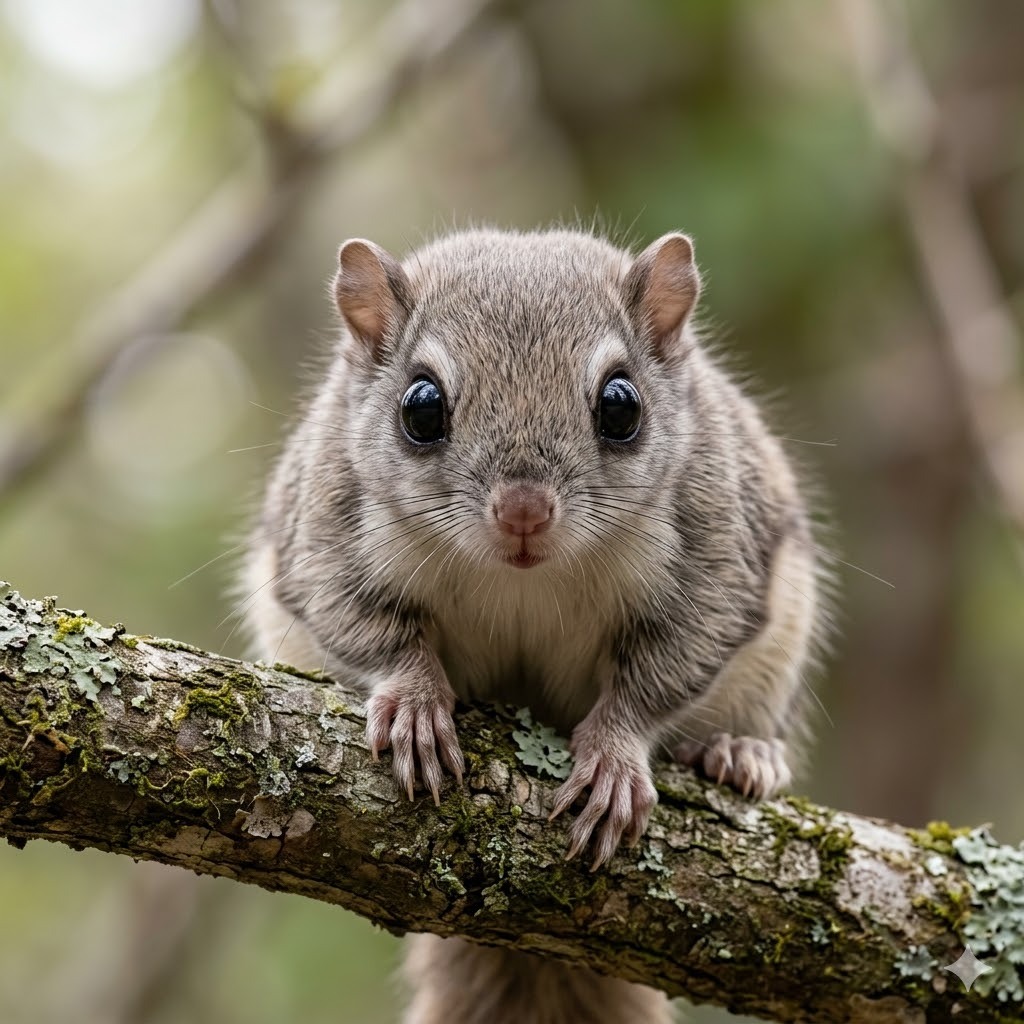
The Southern Flying Squirrel (Glaucomys volans) is a tiny, wide-eyed, nocturnal gliding squirrel native to North America - and one of the most affectionate exotic pets a dedicated keeper can own. It does not truly fly; it glides between trees on a stretched membrane of skin called the patagium. Kept properly, a hand-raised flying squirrel bonds intensely with its owner, riding in a shirt pocket or fabric pouch and treating the person as part of its colony. This is not a beginner pet. It is a long-term, high-commitment, legally restricted exotic that demands a tall flight cage, specialist diet, companionship, and a keeper willing to be active at night. Check your local laws before considering one - many regions ban or heavily regulate keeping native squirrels.
Natural History & Origin
Southern Flying Squirrels range across the eastern United States, southeastern Canada, and into parts of Mexico and Central America. They inhabit deciduous and mixed woodlands, nesting in tree cavities, old woodpecker holes, and leaf nests high in the canopy. They are strictly nocturnal, with enormous dark eyes adapted to gathering the faintest light.
In the wild they are highly social, huddling in communal nests of a dozen or more animals during cold weather to share warmth. This deep social instinct is exactly why captive flying squirrels crave constant companionship. Unlike hamsters, they are not solitary. They are not domesticated animals - captive flying squirrels are only a few generations removed from wild stock, and the bond they form depends almost entirely on being hand-raised from a very young age (ideally taken as pinkies and bottle-raised, which is why sourcing an ethical, captive-bred, hand-raised baby matters so much).
Appearance
Small and delicate. Body length is roughly 13-15 cm, plus a broad flattened tail of similar length, and adults weigh only about 45-85 grams - lighter than a golf ball with tail included.
The coat is silky and soft, greyish-brown above and creamy white below, with a sharp line dividing the two colours along the flank where the gliding membrane folds. The patagium is the loose flap of furred skin running from wrist to ankle on each side; stretched taut in a glide it turns the animal into a living kite. The tail is flattened top-to-bottom and acts as a rudder and airbrake. The eyes are huge, round, and black - the classic feature of a night-active animal.
Temperament & Handling
When hand-raised, Southern Flying Squirrels are among the most bonding of all exotic pets. A young squirrel carried against the body in a bonding pouch imprints on its owner and considers that person part of the family colony. Bonded animals seek out their person, sleep in a pocket during the day, and come when called by a familiar voice.
Handling is gentle and pocket-based rather than restraint-based. These are fast, light, agile animals that can leap and glide across a room in an instant, so handling is usually done in a small enclosed space at first. They rarely bite once bonded, but an un-bonded or frightened adult can nip. Because they are nocturnal, the best bonding and play sessions happen in the evening and at night - this is not a pet for someone who wants an active daytime companion. Children are generally not suitable handlers; the animal is too small and fast, and the bond is too fragile.
Housing
Height matters more than floor space. Flying squirrels are arboreal gliders, so the cage should be tall - a minimum of around 90 cm to 1.2 m of height, and taller is far better, to allow short glides and climbing. A large parrot flight cage with narrow bar spacing (no more than about 1.3 cm so they cannot squeeze through or get their heads stuck) works well.
Provide:
- Multiple branches, ropes, and climbing platforms at varying heights.
- A nest box or hanging fabric pouch high in the cage for daytime sleeping.
- An exercise wheel that is solid-surface and enclosed (open rungs and wire wheels cause tail and limb injuries).
- Chew items and untreated wood branches.
- A location in a quiet room, since daytime disturbance disrupts their sleep.
The cage must be escape-proof and kept away from other pets. A room for supervised out-of-cage gliding, fully closed off and hazard-proofed (no open water, no cables, no gaps), enriches their lives enormously.
Diet
A varied, calcium-conscious diet is essential, and poor diet is the leading cause of illness in captive flying squirrels. A balanced approach:
- A staple of a formulated insectivore or flying-squirrel diet where available.
- Live or dried insects - mealworms, crickets, and similar - as an important protein source.
- A rotation of fresh vegetables and small amounts of fruit.
- Nuts and seeds in strict moderation, offered as treats rather than staples.
- A dependable source of calcium, because these animals are highly prone to metabolic bone disease from calcium deficiency and calcium-to-phosphorus imbalance.
Avoid feeding large quantities of nuts, seeds, or sunflower alone - a nut-heavy diet looks natural but causes crippling bone disease. Fresh water must always be available.
Health & Lifespan
With excellent care a Southern Flying Squirrel can live around 10-12 years in captivity, far longer than most small rodents - which is part of why they are such a serious commitment.
Major concerns:
- Metabolic bone disease - the single most common and most preventable killer, caused by insufficient dietary calcium; signs include weakness, tremors, and fractures.
- Obesity and fatty liver - from too many nuts and seeds.
- Stress and self-mutilation - lonely, understimulated, or isolated animals can decline rapidly.
- Injuries - from unsafe wheels, falls, or escapes.
- Dental issues - as with all rodents, teeth grow continuously.
Find an exotic veterinarian experienced with small exotic mammals before acquiring one. Many general vets have never treated a flying squirrel.
Pros & Cons
Pros:
- Bonds deeply and rides in a pocket or pouch.
- Long-lived for such a small animal.
- Fascinating gliding behaviour.
- Quiet compared to many exotics.
- Small physical footprint (though tall cage needed).
Cons:
- Strictly nocturnal - active when you sleep.
- Legally restricted or banned in many areas (exotic permit often required).
- Specialist diet; prone to metabolic bone disease.
- Needs companionship and heavy time investment.
- Fast and fragile - not for children.
- Hard to find an experienced exotic vet.
Best Suited For
- Experienced, dedicated exotic keepers.
- Night owls able to bond in the evening.
- Owners committed to a decade-long, high-interaction relationship.
- Homes able to provide a tall flight cage and companions.
Not suited for first-time pet owners, families wanting a daytime pet for children, anyone unwilling to verify legality and obtain permits, or keepers unable to source a hand-raised, ethically bred baby.
Southern Flying Squirrel - frequently asked questions
Are flying squirrels legal to own?
It varies enormously. Many regions ban keeping native squirrels, and others require an exotic-pet permit. Always confirm local and national law before acquiring one.
Can they really fly?
No - they glide. Stretching the membrane between their limbs, they can sail from a high point across a room, steering with the flattened tail. They cannot gain height.
Do they bond with people?
Yes, remarkably so - if hand-raised from a baby and carried in a bonding pouch. That early imprinting is what makes the pocket-pet relationship possible.
Do they need a companion?
Ideally yes. They are colony animals and do best with a same-sex partner plus daily human interaction.
How long do they live?
Around 10-12 years with excellent diet and care, which makes them a long-term commitment.
🧠 Test yourself: guess the small mammal
Three clues from our quiz bank, each about another of our small mammals. Can you name them?
Clue 1.This palm-sized nocturnal hoarder stuffs food into stretchy cheek pouches to carry back to its nest.
It's the Dwarf Hamster - read the full profile →
Clue 2.Closely related to chinchillas, this animal must avoid sugary food because it is highly prone to diabetes.
It's the Degu - read the full profile →
Clue 3.Unlike most small cage rodents, this animal is diurnal and its furred tail ends in a small tassel.
It's the Gerbil - read the full profile →
Social Needs
Flying squirrels are colony animals and should never be kept truly alone unless the owner can genuinely act as a near-constant companion. The gold standard is keeping a same-sex pair or small group of hand-raised animals so they can huddle and socialise, combined with daily human bonding time.
A single flying squirrel with an absentee owner is a lonely, stressed animal. If you cannot dedicate significant nightly interaction, keep two or more so they always have company. Introductions between unfamiliar adults must be done carefully, as with any social exotic.