Spiny Mouse
The spiny mouse is an unusual and sociable small rodent named for the coarse, stiff, spiny hairs that cover its back.
🗓️ Last reviewed: July 2026
Overview
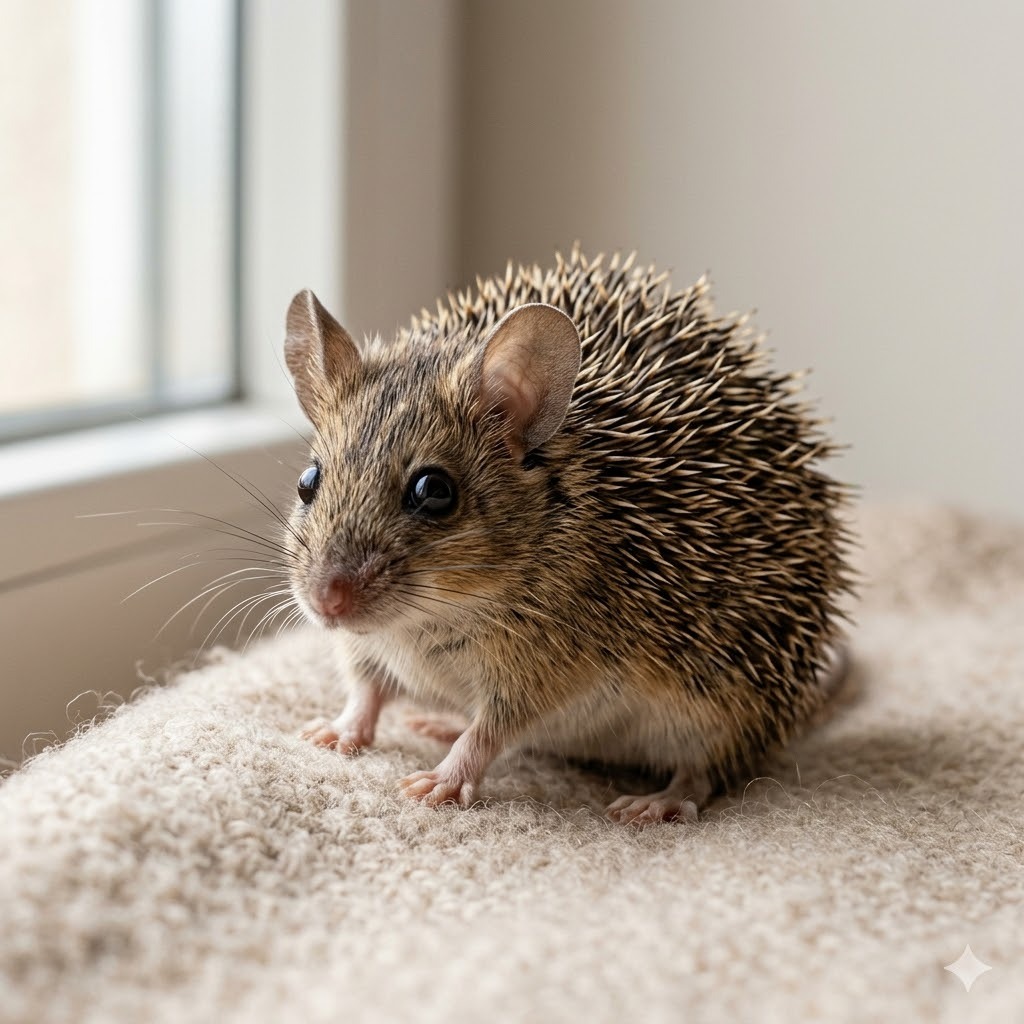
The spiny mouse is an unusual and sociable small rodent named for the coarse, stiff, spiny hairs that cover its back. Members of the genus Acomys, these mice are active, inquisitive, and highly social, living in family groups where companionship is essential rather than optional. They are engaging to watch and can become quite tame with regular gentle contact, but they come with two important quirks: they must be kept in groups, and their tail is extremely fragile and will shed its skin if grabbed. For a keeper prepared to house a small colony and handle them carefully, spiny mice are a rewarding and fascinating pet.
Natural History & Origin
Spiny mice (genus Acomys) are native to dry, rocky regions of Africa and the Middle East, including parts of Egypt, the Sinai, and the Arabian Peninsula. They inhabit arid scrubland and rocky outcrops, sheltering in crevices and burrows and foraging for seeds, plant matter, and insects. The common Egyptian and Cairo spiny mice are the types most often seen in the pet trade.
These mice are remarkable in the scientific world for their unusual biology, including a famous ability to regenerate damaged skin and tissue - an adaptation linked to their fragile, easily shed skin, which helps them escape predators. In the wild they live communally, and their strong social bonds and constant chatter are central to their natural behaviour.
Appearance
Spiny mice are small rodents, with adults measuring roughly 7-12 cm in body length plus a tail of similar length, weighing around 30-90 grams depending on the species. The defining feature is the coat: the fur along the back is coarse and bristly, studded with stiff, spine-like guard hairs that give the animal its name and a slightly prickly texture. The belly fur is soft and pale by contrast.
Coat colours range from sandy and golden-brown to grey, usually with a lighter underside. They have large eyes and ears suited to a nocturnal, alert lifestyle, and a long, thin, scaly tail. That tail is delicate and must never be handled - a critical point covered below. Overall they look like alert, wide-eyed little mice with an unmistakably rough-textured back.
Temperament & Handling
Spiny mice are lively, curious, and social, and with regular gentle interaction they can become quite tame and comfortable being handled. They are fast and agile, so handling should always take place low over a soft surface or inside a contained space to prevent injury from falls or escapes.
The single most important handling rule is never to grab a spiny mouse by the tail. Their tail skin is extremely fragile and will tear or shed if pulled, an injury that does not heal well and can lead to loss of the tail. Always scoop the whole body in cupped hands rather than catching the tail. Handled correctly and often, spiny mice reward their keeper with confident, engaging, interactive behaviour.
Housing
Because they are active climbers and diggers, spiny mice need a spacious, secure enclosure - ideally a glass or acrylic tank with a tight mesh lid, since they are small enough to escape barred cages. A group needs a generous floor area, with a minimum of around 4,000-5,000 cm² for a small colony and more for larger groups, plus vertical space for climbing.
Provide:
- A deep layer of paper-based or aspen bedding for digging.
- Plenty of climbing enrichment - branches, ledges, ropes, and multiple levels.
- Several hides and tunnels so each mouse can find shelter.
- A solid-surface exercise wheel large enough to avoid a bent back.
- A sand bath for grooming.
- A water bottle or dish and food bowls.
Avoid wire flooring, cedar and pine shavings, and damp conditions. Keep the enclosure warm, as these are desert animals sensitive to cold.
Diet
Spiny mice are omnivores with a notably high protein requirement compared with other pet rodents. A good diet combines:
- A quality grain-and-seed base mix suitable for mice or rats.
- Regular animal protein - mealworms, crickets, a little cooked egg or lean meat - offered several times a week to meet their high-protein needs.
- Small amounts of fresh vegetables and occasional fruit.
Fresh water must always be available. Avoid sugary and fatty processed foods, citrus, onion, garlic, and chocolate. Because they lean toward an insectivorous, high-protein diet, skimping on protein leads to poor condition, so live or dried insects should be a regular part of the menu rather than a rare treat.
Health & Lifespan
Spiny mice typically live around 3-5 years, which is long for such a small rodent.
Common health concerns include:
- Tail skin injuries from improper handling - the most common and preventable problem.
- Respiratory infections in dusty, damp, or cold conditions.
- Overgrown teeth without adequate chewing material.
- Obesity if fed too much fatty food and too little exercise.
- Stress-related illness if kept alone or in cramped housing.
Watch for changes in activity, appetite, coat, weight, and breathing. Their skin heals unusually well, but tail loss is permanent. Because they are uncommon pets, find an exotic-savvy vet familiar with small rodents before any issue arises.
Pros & Cons
Pros:
- Highly social and fascinating to watch in a group.
- Can become tame and handleable with gentle contact.
- Long-lived for a small rodent.
- Unique spiny coat and remarkable biology.
- Active, agile, and full of personality.
Cons:
- Must be kept in groups - never alone.
- Fragile tail that sheds if grabbed.
- High-protein diet needs live or dried insects.
- Fast and agile - escape-prone and tricky to handle.
- Uncommon pet, so exotic vets can be harder to find.
Best Suited For
- Keepers willing to house a small colony.
- Owners who can provide a high-protein, insect-inclusive diet.
- Adults and older children taught careful, no-tail handling.
- Those who enjoy watching social, active rodents.
Not suited for anyone wanting a single pet, keepers uncomfortable feeding insects, or households with young children likely to grab the fragile tail.
Spiny Mouse - frequently asked questions
Can spiny mice be kept alone?
No. They are highly social and must live in a group. A solitary spiny mouse becomes stressed and unhealthy.
Why should I never grab the tail?
Their tail skin is extremely fragile and will tear or shed if pulled, causing a permanent injury. Always scoop the whole body in cupped hands.
What do they eat?
A grain-and-seed base plus regular animal protein such as insects or cooked egg, with some vegetables. They have high protein needs.
How long do they live?
Around 3-5 years, which is long for such a small rodent.
Are they good for children?
Only older children under supervision who can be trusted to handle gently and never grab the tail.
🧠 Test yourself: guess the small mammal
Three clues from our quiz bank, each about another of our small mammals. Can you name them?
Clue 1.Used for centuries to bolt rabbits from burrows, this weasel relative sleeps up to 18 hours a day.
It's the Ferret - read the full profile →
Clue 2.Like humans, this stout cavy cannot make its own vitamin C and must get it from food.
It's the Guinea Pig - read the full profile →
Clue 3.Friendly and curious, this tufted-tailed burrower loves to dig tunnels and rarely bites, making it a great first pet.
It's the Gerbil - read the full profile →
Social Needs
Spiny mice are highly social and must live in groups - this is not negotiable. A solitary spiny mouse becomes stressed, withdrawn, and unhealthy. The best arrangement is a same-sex group or a family colony, kept together from a young age so bonds form naturally.
Same-sex groups of females are usually the most harmonious; groups of males can work if raised together but should be watched for conflict. Mixing males and females will result in rapid and continual breeding, since spiny mice reproduce readily, so keep single-sex groups unless breeding is intended. Companionship from their own kind is essential to their wellbeing.