Caecilian
The Caecilian is one of the strangest pets in the amphibian world - a limbless, eel-like or worm-like animal that is neither a snake nor a true worm, but a genuine amphibian.
🗓️ Last reviewed: July 2026
Overview
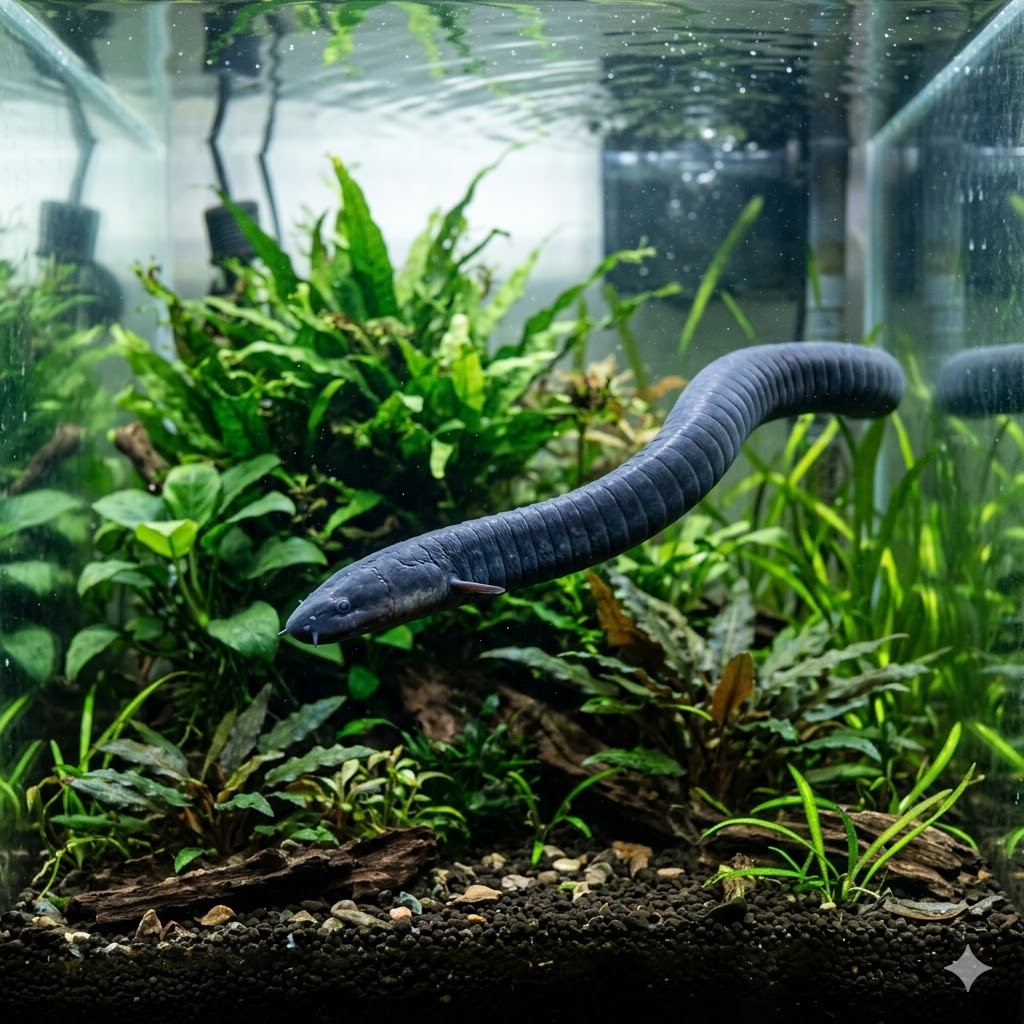
The Caecilian is one of the strangest pets in the amphibian world - a limbless, eel-like or worm-like animal that is neither a snake nor a true worm, but a genuine amphibian. The species most often kept, the aquatic caecilian (Typhlonectes natans and relatives), spends its life in water, gliding and burrowing like a living ribbon. Nearly blind, ringed along its body, and surprisingly gentle, it is a fascinating, low-drama display animal for keepers who want something truly unusual and are happy to watch rather than handle.
Natural History
Caecilians are an ancient and little-known group of amphibians found across the tropics of South America, Africa, and Asia. Many species are burrowers that live hidden in soil, but the ones in the pet trade are usually the aquatic South American species, native to slow rivers, ponds, and flooded areas of the Amazon and Orinoco basins.
Evolution stripped away their legs long ago and left them relying on smell, touch, and tiny sensory tentacles near the mouth rather than sight. Many caecilian species even show unusual parental care, and some feed their young on a specially produced layer of skin, a reminder of how little most keepers know about these animals. Because their biology and needs are still poorly understood by many keepers, it is important to buy captive-bred or responsibly-sourced animals and to research the exact species before purchase, since aquatic and burrowing terrestrial types need completely different setups.
Appearance
Aquatic caecilians typically reach around 40-55 cm in length as adults, though they stay slender - roughly the thickness of a finger - which is why they are so often mistaken for eels or giant worms.
The body is dark slate-grey to bluish-black or brownish, smooth and slightly slimy, and ringed with faint grooves (annuli) along its whole length that add to the worm-like look. The eyes are tiny and covered by skin, so they are nearly blind, and a pair of small sensory tentacles sit near the snout.
Temperament & Handling
This is a calm but shy animal and firmly a look-don't-handle pet. Its skin is delicate and permeable and absorbs oils, salts, and residues from human hands, and a stressed caecilian may twist or musk. Handle only when truly necessary, briefly, with clean wet hands, and support the whole body.
Most of the time a caecilian burrows into substrate or hides among plants and roots, emerging to glide slowly around the tank, often more active in the evening. Nervous new animals may hide for days while settling in. Give them cover and quiet, and let them come out on their own terms. With time and a stable, dimly lit tank many individuals become more confident and can be seen cruising the tank at feeding time, which is when their strange, ribbon-like movement is most rewarding to watch.
Enclosure
Minimum: a filtered aquarium of around 75 litres (20 gallons) for one aquatic adult, with more length preferred so it has room to move.
Provide:
- A filtered aquatic tank with gentle flow - strong currents stress them.
- A soft sand or fine smooth substrate they can burrow into, plus plenty of hiding spots such as caves, PVC pipes, driftwood, and dense planting.
- Only fully dechlorinated water, kept clean and well cycled.
- A tight, secure lid - they are strong and can push through gaps.
Keep the water clean with regular partial water changes, and avoid small tank mates that might be eaten or large or nippy fish that might harass the caecilian. A well-cycled, mature tank with stable parameters is far safer than a brand-new setup, so establish the biological filter before adding your animal.
Heating, Lighting, Humidity
- Water temperature: warm and tropical, around 22-27°C, kept stable with an aquarium heater and guard. Avoid sudden swings.
- Lighting: dim and indirect. Being nearly blind, they neither need nor enjoy bright light, and no UVB is required. Subdued lighting also encourages them to venture out.
- Humidity: not applicable for the fully aquatic species, since they live underwater. Water quality takes the place of humidity management, so filtration and clean, dechlorinated water are essential.
Diet
Carnivore.
- Earthworms and nightcrawlers (an excellent staple).
- Blackworms and bloodworms.
- Frozen or live aquatic invertebrates.
- Occasional small pieces of fish or shrimp.
They hunt by smell and touch rather than sight, so drop food near their hides or feed after dark when they are most active. Feed adults every 2-3 days, offering pieces they can swallow whole, and always remove uneaten food promptly to protect water quality.
Health & Lifespan
Aquatic caecilians can be long-lived, commonly reaching around 10 years and sometimes more in good care, though lifespans vary by species.
Common concerns:
- Poor water quality - the single biggest killer. Ammonia and nitrite from an uncycled or dirty tank are dangerous.
- Chemical poisoning - their permeable skin is very sensitive to chlorine and chloramine, so always use dechlorinated water.
- Skin (fungal or bacterial) infections, often following stress or water problems.
- Temperature stress from water that is too cold or unstable.
- Injury or nipping from unsuitable tank mates.
Because caecilians are unusual and rarely seen in clinics, seek out an exotics vet with genuine amphibian experience, and watch for early warning signs such as clouded skin, loss of appetite, or listless floating so problems can be caught before they become serious.
Pros & Cons
Pros:
- Genuinely unusual - an amphibian that looks like a worm or eel.
- Quiet, odd, and hypnotic to watch.
- Reasonably long-lived when kept well.
- Compact for such a long animal.
Cons:
- Shy and often hidden.
- Cannot be handled routinely.
- Demands stable, clean, warm water.
- Care details are poorly documented and species-specific.
Best Suited For
- Keepers who love the truly unusual and enjoy watching over handling.
- Aquarists comfortable maintaining a stable, cycled tropical tank.
- Older children and adults.
Not suited for anyone wanting a handleable or showy pet, beginners unfamiliar with aquarium water management, or keepers unwilling to research their exact species.
Caecilian - frequently asked questions
Is a caecilian a snake or a worm?
Neither. It is a legless amphibian - more closely related to frogs and salamanders than to any reptile or worm, despite the resemblance.
Can it see me?
Barely. Its eyes are tiny and skin-covered, so it is nearly blind and relies on smell and touch, using small sensory tentacles near its snout.
Can I hold it?
Only when truly necessary, briefly, with clean wet hands. Its permeable skin absorbs residues, so it is a look-don't-handle animal.
What does it eat?
Mostly worms - earthworms, blackworms, and similar - dropped near its hide, since it hunts by scent rather than sight.
Does it need land?
The commonly kept species are fully aquatic and live in a filtered water tank. Always confirm whether the exact species you have is aquatic or terrestrial before setting up.
🧠 Test yourself: guess the amphibian
Three clues from our quiz bank, each about another of our amphibians. Can you name them?
Clue 1.A common aquarium amphibian only a couple of inches long, it has four webbed feet and is often kept underwater rather than in a terrarium.
It's the African Dwarf Frog - read the full profile →
Clue 2.Despite its name, this semi-aquatic creature has a slightly bumpy skin and bright belly that warns predators of its toxic secretions.
It's the Fire-Bellied Toad - read the full profile →
Clue 3.A robust North American amphibian named for its bold striped or spotted markings, it spends much of its life hidden underground.
It's the Tiger Salamander - read the full profile →