Poison Dart Frog
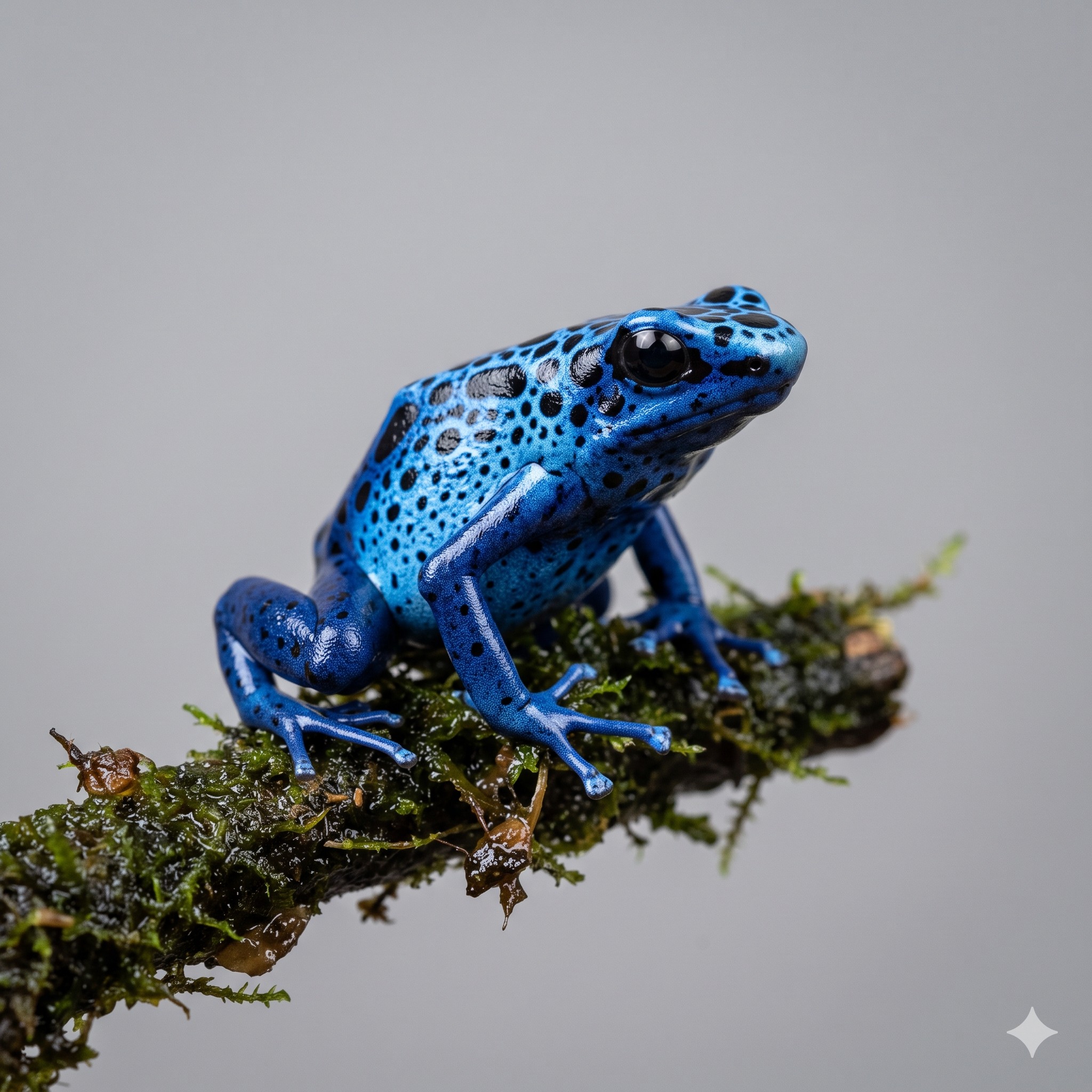
Poison Dart Frogs (Dendrobates spp.) are tiny, jewel-bright, diurnal frogs from Central and South American rainforests, famous for their vivid warning colours.
🗓️ Last reviewed: June 2026
Overview
Poison Dart Frogs (Dendrobates spp.) are tiny, jewel-bright, diurnal frogs from Central and South American rainforests, famous for their vivid warning colours. Crucially, captive-bred poison dart frogs are not toxic - their toxicity in the wild comes from a diet of specific ants, mites, and other arthropods, and frogs raised on cultured feeder insects never accumulate these toxins. Active by day and endlessly watchable, they are a rewarding bioactive-vivarium species.
Natural History
Native to the humid lowland rainforests of Central and South America, including Costa Rica, Panama, Colombia, and the Guianas. They live on the forest floor among leaf litter, where it is warm, shaded, and constantly humid. Unusually for amphibians they are active in daylight, relying on bold aposematic (warning) colouration rather than camouflage. Many species show dedicated parental care, ferrying tadpoles to small water pockets in plants.
Appearance
Adults are small, typically 1.5-5 cm depending on species. Colours are vivid and species-specific - electric blue, yellow-and-black, orange, green, and red among them. The skin is smooth and glossy. Sexes look similar, though females are often slightly larger.
Temperament & Handling
Bold, active, hands-off display animal. Despite being non-toxic in captivity, dart frogs are tiny and have extremely delicate, permeable skin, so they should not be handled except when strictly necessary. They are confident and visible by day, which makes them an excellent observation species.
Enclosure
Minimum: 45 x 45 x 45 cm bioactive vivarium for a small group; larger is better and allows more frogs.
Provide:
- A bioactive setup with live plants, a drainage layer, and leaf litter.
- Cork bark, branches, and broad leaves for cover.
- Small water features such as film canisters or bromeliad axils for some species.
- A clean-up crew of springtails and isopods.
- A secure, well-sealed lid that maintains humidity.
Heating, Lighting, Humidity
- Day: 22-26°C. Avoid heat above the high 20s, which is dangerous.
- Night: a few degrees cooler is fine.
- Humidity: 80-100%, maintained by misting and a sealed vivarium.
- Lighting: a bright planted-vivarium light on a day/night cycle; low-level UVB supports health.
Diet
Insectivore (micro-prey specialist).
- Flightless fruit flies (the staple).
- Springtails (especially for froglets).
- Pinhead crickets and other tiny feeders.
Dust feeders with calcium and a multivitamin at most feedings. Feed daily or near-daily, as their small size means frequent small meals.
Avoid: prey that is too large, and wild-caught insects.
Health & Lifespan
8-15 years (varies by species), often longer in excellent care.
Common concerns:
- Chytrid fungus.
- Metabolic bone disease and nutritional deficiency from under-supplemented feeders.
- Dehydration if humidity drops.
- Bacterial and fungal infections from poor hygiene.
- Chemical poisoning - extremely sensitive to chlorine and chloramine; use only dechlorinated or RO water.
Pros & Cons
Pros:
- Active and visible by day.
- Stunning colours.
- Non-toxic when captive-bred.
- Thrive in beautiful bioactive vivaria.
Cons:
- Very small and fragile; not for handling.
- Require constant high humidity and a culture of tiny feeder insects.
- Sensitive to water and air quality.
Best Suited For
- Bioactive-vivarium enthusiasts.
- Keepers who enjoy day-active display animals.
- Patient hobbyists willing to culture fruit flies and springtails.
Not suited for keepers wanting to handle their frog, dry homes without humidity control, or anyone unwilling to maintain live feeder cultures.
Poison Dart Frog - frequently asked questions
Are pet poison dart frogs poisonous?
No. Captive-bred dart frogs raised on cultured insects are not toxic, because their wild toxicity comes from eating specific rainforest arthropods. Without that diet, they never accumulate toxins.
Can I handle them?
Best not to. They are tiny with very delicate skin. Treat them as a hands-off observation species.
Are they active during the day?
Yes, unusually so for amphibians. They are diurnal and rely on warning colours rather than hiding, making them very watchable.
How long do they live?
Commonly 8-15 years depending on species, sometimes longer with excellent care.
🧠 Test yourself: guess the amphibian
Three clues from our quiz bank, each about another of our amphibians. Can you name them?
Clue 1.This plump, placid green tree frog from Australia has loose folds of skin and a famously calm, docile temperament for a pet amphibian.
It's the White's Tree Frog - read the full profile →
Clue 2.A robust North American amphibian named for its bold striped or spotted markings, it spends much of its life hidden underground.
It's the Tiger Salamander - read the full profile →
Clue 3.Native to the rivers of central Africa, this little webbed-footed swimmer lacks a tongue and tiny teeth, sweeping food into its mouth with its hands.
It's the African Dwarf Frog - read the full profile →