Red-Eyed Tree Frog
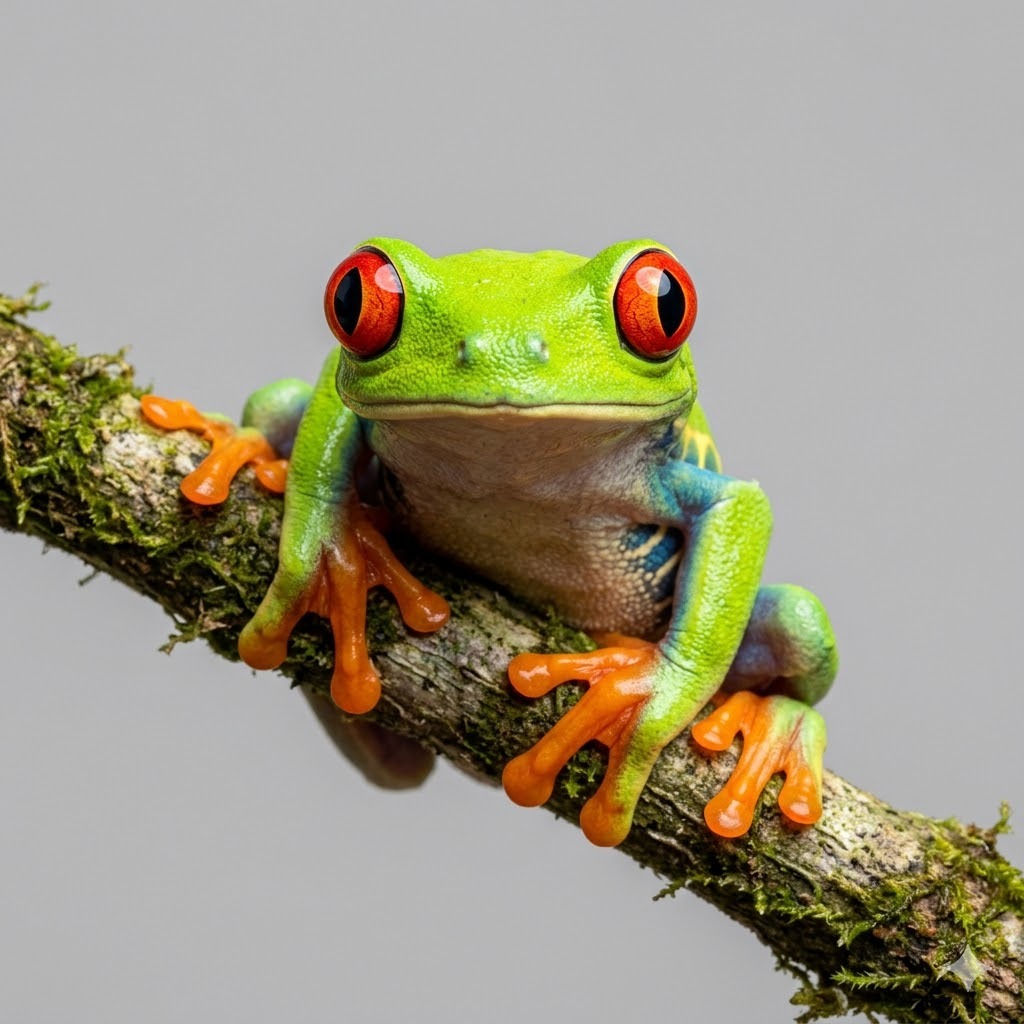
The Red-Eyed Tree Frog (Agalychnis callidryas) is a striking nocturnal rainforest frog famous for its brilliant red eyes, neon-green body, orange feet, and blue-and-yellow flanks.
🗓️ Last reviewed: June 2026
Overview
The Red-Eyed Tree Frog (Agalychnis callidryas) is a striking nocturnal rainforest frog famous for its brilliant red eyes, neon-green body, orange feet, and blue-and-yellow flanks. The vivid colours are thought to startle predators when the sleeping frog suddenly opens its eyes (deimatic display). It is a beautiful display animal but a delicate, hands-off species best suited to keepers who enjoy watching rather than handling.
Natural History
Native to the humid lowland rainforests of Central America, from southern Mexico through Costa Rica and Panama. It is arboreal and nocturnal, spending the day asleep on the undersides of leaves with its colours tucked away, and active at night in the canopy near water. Females lay eggs on leaves overhanging pools, into which the tadpoles drop after hatching.
Appearance
Adult females reach 6-7.5 cm; males are smaller at 5-6 cm. The body is vivid leaf-green with white underside, large red eyes with vertical pupils, blue-and-yellow barred flanks, and orange toes with sticky pads.
Temperament & Handling
Calm but delicate display animal. This is a look-but-rarely-touch species - the permeable skin readily absorbs oils, lotions, and salts from human hands. Handle only when necessary, with clean wet hands and brief sessions, and otherwise enjoy them as a nocturnal observation pet.
Enclosure
Minimum: 45 x 45 x 60 cm tall vertical vivarium for 1-2 adults; larger for groups.
Provide:
- Sturdy branches, cork bark, and vines for climbing.
- Broad-leaved live or artificial plants for daytime resting and hiding.
- A shallow, easily cleaned water area.
- Moisture-retaining substrate such as coconut fibre or a bioactive mix.
- A secure, ventilated lid.
Heating, Lighting, Humidity
- Day: 24-28°C.
- Night: 20-24°C (a natural night drop is fine).
- Humidity: 60-80%, raised by daily misting.
- Lighting: a gentle day/night cycle; low-level UVB is beneficial. Avoid intense heat or drying lamps.
Diet
Insectivore.
- Crickets (staple).
- Dubia roaches.
- Other appropriately sized insects such as flies and hornworms.
Dust feeders with calcium and a multivitamin. Adults eat every 2-3 days; juveniles eat more often. Feed at night when the frog is active.
Avoid: oversized prey, wild-caught insects (pesticide risk), and fatty feeders like waxworms as a staple.
Health & Lifespan
5-8 years.
Common concerns:
- Chytrid fungus.
- Metabolic bone disease from inadequate calcium or UVB.
- Dehydration from low humidity.
- Bacterial and fungal skin infections from poor hygiene.
- Chemical poisoning - very sensitive to chlorine and chloramine; always use dechlorinated water.
Pros & Cons
Pros:
- Spectacular colours and red eyes.
- Fascinating nocturnal behaviour.
- Quiet display animal.
- Manageable adult size.
Cons:
- Nocturnal, so often hidden by day.
- Delicate skin; not for handling.
- Requires steady warmth and high humidity.
- Sensitive to water and air quality.
Best Suited For
- Display-focused keepers.
- Those who enjoy night-active animals.
- Older children and adults (for observation).
Not suited for keepers wanting a frog to handle, very dry homes without humidity control, or households expecting daytime activity.
Red-Eyed Tree Frog - frequently asked questions
Why are their eyes red?
The sudden flash of red eyes when a sleeping frog is disturbed is thought to startle predators, giving the frog a moment to leap away.
Can I handle them?
Only briefly and rarely, with clean wet hands. Their skin absorbs chemicals, so they are best treated as observation pets.
Are they active during the day?
No. They sleep on leaves by day and become active at night, which is when you will see and feed them.
How long do they live?
Around 5-8 years with good care.
🧠 Test yourself: guess the amphibian
Three clues from our quiz bank, each about another of our amphibians. Can you name them?
Clue 1.This tiny fully aquatic amphibian spends its whole life underwater, surfacing only to gulp air, and is a popular tank companion for small fish.
It's the African Dwarf Frog - read the full profile →
Clue 2.This plump, placid green tree frog from Australia has loose folds of skin and a famously calm, docile temperament for a pet amphibian.
It's the White's Tree Frog - read the full profile →
Clue 3.When threatened, this small green amphibian arches its back to flash a vivid red-and-black warning pattern on its underside.
It's the Fire-Bellied Toad - read the full profile →