Fire Salamander
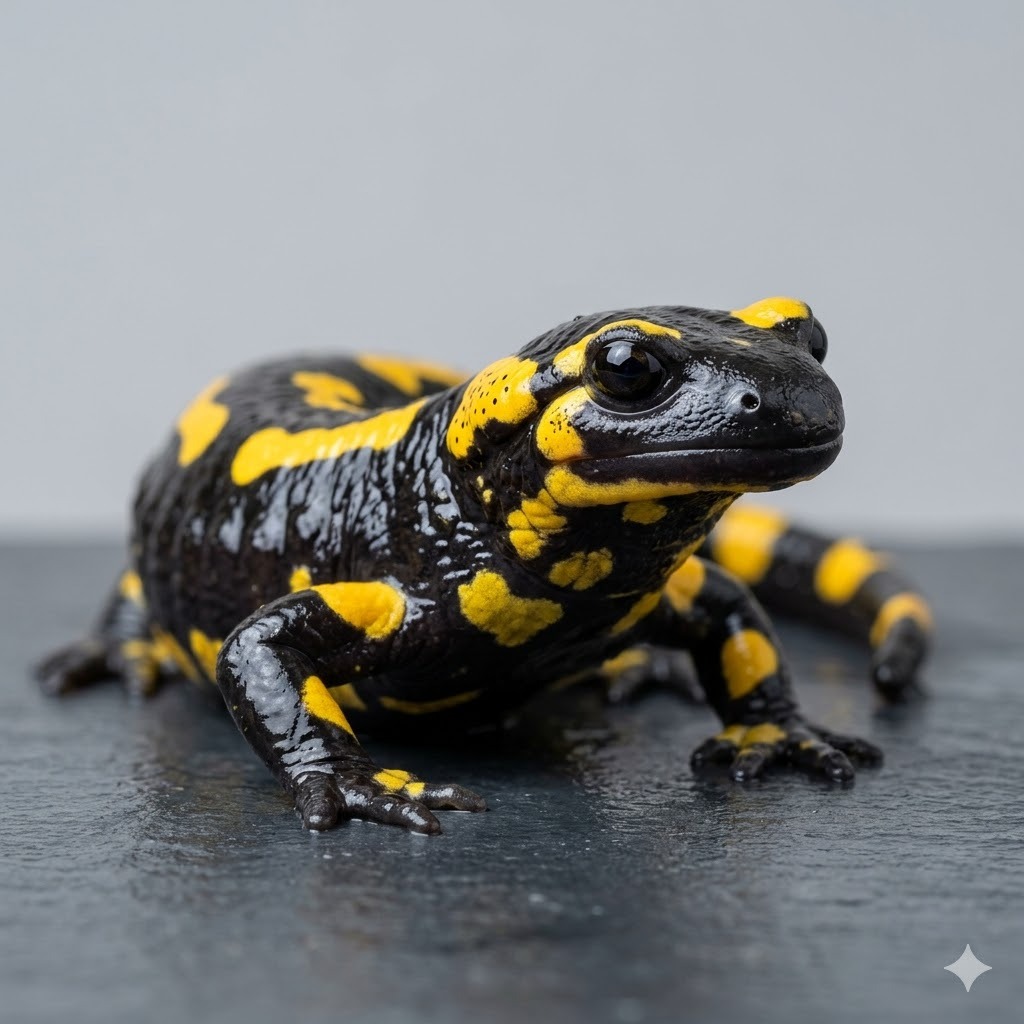
The Fire Salamander (Salamandra salamandra) is a robust, terrestrial European amphibian marked with bold black-and-yellow (sometimes orange) patterning that warns predators of the toxic secretions in its skin.
🗓️ Last reviewed: June 2026
Overview
The Fire Salamander (Salamandra salamandra) is a robust, terrestrial European amphibian marked with bold black-and-yellow (sometimes orange) patterning that warns predators of the toxic secretions in its skin. It is a hardy, long-lived, cool-climate species, largely nocturnal and crepuscular, and makes a fascinating hands-off display animal for keepers who can provide a cool, damp woodland setup.
Natural History
Native to the moist deciduous woodlands and hilly forests of central and southern Europe, the Middle East, and North Africa. It shelters by day under logs, stones, and leaf litter near streams and springs, emerging on damp or rainy nights to hunt. Many populations give birth to aquatic larvae in cool, clean streams rather than laying eggs. It favours cool, humid, shaded conditions year-round.
Appearance
Adults typically reach 15-25 cm including the tail. The glossy black body carries bright yellow blotches, bands, or spots, with orange tones in some populations. The build is stout with a rounded head, short limbs, and prominent paratoid glands behind the eyes that produce defensive secretions.
Temperament & Handling
Calm, slow-moving, hands-off display animal. The skin secretes mild toxins that can irritate eyes, mouth, and broken skin, so handling should be minimal. If you must move the salamander, use clean wet hands or a soft container and wash thoroughly afterward, keeping the secretions away from your face. Otherwise enjoy it as an observation pet.
Enclosure
Minimum: 60 x 45 x 45 cm horizontal terrestrial setup for 1-2 adults; larger is better.
Provide:
- A deep, moisture-retaining substrate such as a soil and coco-fibre mix with leaf litter.
- Plenty of hides: cork bark, logs, flat stones, and cork rounds.
- Live or artificial plants and moss for cover and humidity.
- A shallow, easily cleaned water dish.
- A secure, ventilated lid.
Heating, Lighting, Humidity
- Day: cool, ideally 15-20°C. Sustained warmth above the low 20s is stressful and dangerous.
- Night: a few degrees cooler is welcome.
- Humidity: 70-90%, kept up with misting and a damp substrate.
- Lighting: dim and indirect; no basking lamp. Low-level UVB is optional and never intense heat. Many homes need cooling in summer to keep temperatures down.
Diet
Carnivore/insectivore.
- Earthworms (an excellent staple).
- Crickets and dubia roaches.
- Slugs, and other appropriately sized invertebrates.
Dust feeders with calcium and a multivitamin. Adults eat every 2-3 days; growing animals more often. Feed in the evening when the salamander is active.
Avoid: oversized prey and wild-caught invertebrates that may carry pesticides or parasites.
Health & Lifespan
10-20 years, sometimes longer in excellent care.
Common concerns:
- Heat stress - a leading cause of decline; keep them cool.
- Chytrid fungus, including the salamander-specific Bsal.
- Bacterial and fungal skin infections from poor hygiene.
- Dehydration if the substrate dries out.
- Chemical poisoning - sensitive to chlorine and chloramine; use only dechlorinated water.
Pros & Cons
Pros:
- Striking black-and-yellow colours.
- Very long-lived.
- Hardy in a cool, damp setup.
- Quiet observation pet.
Cons:
- Needs consistently cool temperatures (cooling in many homes).
- Mild skin toxins; not for handling.
- Nocturnal, so often hidden by day.
- Sensitive to water quality and heat.
Best Suited For
- Cool-climate or air-conditioned homes.
- Keepers who enjoy long-term, hands-off amphibians.
- Older children and adults (for observation).
Not suited for warm homes without cooling, keepers wanting to handle their pet, or households with very young children.
Fire Salamander - frequently asked questions
Are fire salamanders poisonous?
Their skin secretes mild toxins that deter predators and can irritate human eyes, mouth, and broken skin. They are not dangerous to look at, but you should handle minimally and wash your hands afterward.
Do they need it cold?
They need it cool. Aim for roughly 15-20°C and avoid sustained warmth above the low 20s, which stresses them. Many homes require summer cooling.
Can I handle them?
Only when necessary, with clean wet hands, kept away from your face. They are best treated as observation animals.
How long do they live?
Commonly 10-20 years, and they can live longer with excellent care.
🧠 Test yourself: guess the amphibian
Three clues from our quiz bank, each about another of our amphibians. Can you name them?
Clue 1.Named after a naturalist, this chubby green climber has sticky toe pads and can change shade from green to brownish.
It's the White's Tree Frog - read the full profile →
Clue 2.Native to the rivers of central Africa, this little webbed-footed swimmer lacks a tongue and tiny teeth, sweeping food into its mouth with its hands.
It's the African Dwarf Frog - read the full profile →
Clue 3.With horn-like skin flaps over its eyes, this burrowing creature mimics a fallen leaf to ambush prey on the forest floor.
It's the Pacman Frog (Horned Frog) - read the full profile →