Japanese Fire-belly Newt
The Japanese Fire-belly Newt (Cynops pyrrhogaster) is a small, hardy, mostly aquatic newt named for the vivid red-orange belly it flashes as a warning.
🗓️ Last reviewed: July 2026
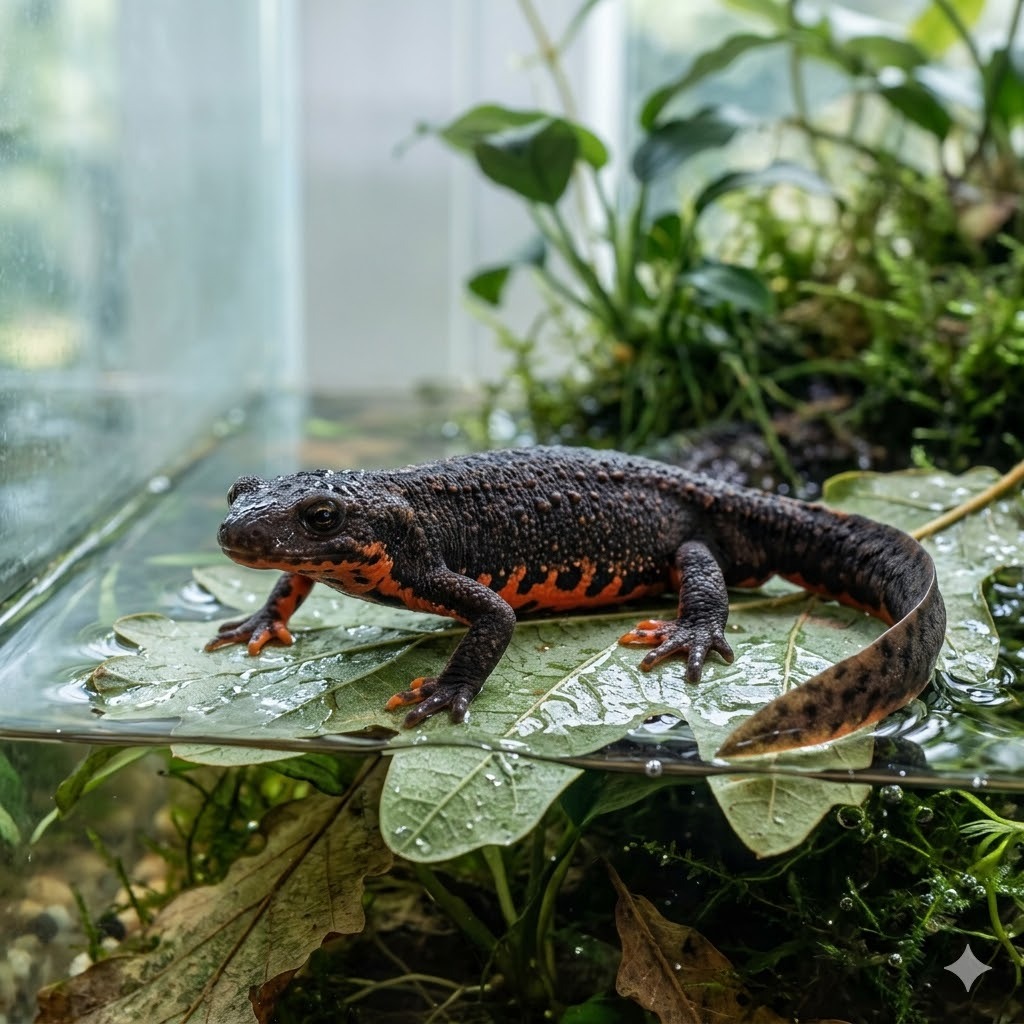
Overview
The Japanese Fire-belly Newt (Cynops pyrrhogaster) is a small, hardy, mostly aquatic newt named for the vivid red-orange belly it flashes as a warning. That warning is real - its skin secretes tetrodotoxin, a potent toxin, so this is a strictly look-don't-handle animal, and hands must be washed thoroughly after any contact with it or its water. Undemanding of heat, tolerant of ordinary cool room temperatures, and remarkably long-lived, it is a rewarding display amphibian for keepers who want an aquatic newt rather than a frog. Give it clean, cool, dechlorinated water with an easy exit to land and it will thrive for many years.
Natural History
Cynops pyrrhogaster is endemic to Japan, found across much of the main islands in still and slow-moving water - ponds, ditches, rice paddies, and quiet stream margins - usually at cooler elevations. Adults are largely aquatic through the breeding season but will leave the water and spend time on land at other times, so they are best described as semi-aquatic.
They are temperate animals adapted to cool conditions and seasonal change, and they can live for a very long time. In spring, males court females underwater with a fanning display of the tail before depositing sperm packets, and females then fold single eggs individually into aquatic plant leaves for protection. This cool-water, seasonal biology is why the newt wants clean, cool, oxygenated water rather than tropical warmth. Wild populations face pressure from habitat loss and over-collection, so it is especially important to buy captive-bred newts and never wild-caught animals, which are stressed, disease-prone, and taken from declining natural populations.
Appearance
Adults reach roughly 8-13 cm (3-5 inches) in total length including the tail, with a slim, slightly flattened body and a paddle-like swimming tail.
The back and sides are dark - blackish, deep brown, or charcoal, sometimes granular in texture - which makes the underside all the more striking: a bold red to orange belly marked with irregular black blotches, unique to each individual. This bright belly is aposematic, advertising the newt's toxicity. Males and females look similar out of season, but breeding males develop a swollen vent and a bluish sheen along the tail.
Temperament & Handling
Calm, slow-moving, and undemanding, spending its days drifting through the water and resting on plants or land. It is a display animal only. Two rules matter here: first, like all amphibians its skin absorbs oils and residues, so handling is stressful and harmful; second, and more importantly, its skin secretes tetrodotoxin - a genuine toxin - so you must not handle it casually and must wash your hands thoroughly with soap and water after any contact with the newt or its tank water, and never touch your eyes, mouth, or an open cut before washing. If a newt must be moved, use a soft net or clean, wet, dechlorinated hands briefly, then wash immediately. It is not dangerous to simply keep and observe, but respect the toxin.
Enclosure
Minimum: an aquarium of about 40-60 litres (10-15 gallons) suits a small group, with more water for more newts.
Set it up as a semi-aquatic tank:
- Mostly clean, cool, dechlorinated water at a shallow-to-moderate depth (these are modest swimmers, not deep divers).
- An easy-to-reach land area or floating platform, plus emergent plants or cork bark, so the newt can leave the water at will.
- Gentle filtration - they dislike strong current.
- Live or silk aquatic plants and hides.
- A tight-fitting lid; newts climb and squeeze out of surprisingly small gaps.
Keep the water spotless; poor water quality is the main killer of aquatic newts.
Heating, Lighting, Humidity
- Temperature: cool - ideally 15-22°C. These are temperate newts and do not want tropical warmth; sustained temperatures above the low twenties are stressful and dangerous, so no heater is needed and a cool room or, in hot climates, a chiller or fan is better.
- Water quality: always dechlorinated; chlorine and chloramine are toxic. Regular partial water changes keep ammonia and nitrite down.
- Lighting: dim to moderate on a normal 12-hour cycle; no UVB requirement, though gentle light supports live plants. Keep out of direct sun, which overheats the water.
Diet
Carnivore.
- Live or frozen bloodworms and blackworms as a staple.
- Small earthworms and chopped nightcrawlers.
- Brine shrimp, daphnia, and small aquatic invertebrates.
- Occasional prepared newt or aquatic-carnivore pellets if accepted.
Feed a few times a week, offering only what is eaten in a short time, and remove leftovers to protect water quality. Newts recognise feeding routines and will approach at meal times.
Health & Lifespan
Very long-lived - commonly 15-25 years in good captive care, sometimes more.
Common concerns:
- Poor water quality - the leading cause of illness; keep water clean and dechlorinated.
- Overheating - warm water stresses these cool-adapted newts and invites infection.
- Bacterial and fungal skin infections, often secondary to stress or bad water.
- Chytrid and ranavirus - quarantine new arrivals and buy captive-bred.
- Chemical poisoning from chlorine, metals, or aerosols near the tank.
- Escape and drying out - a secure lid is essential.
Seek an amphibian-experienced exotics vet when needed.
Pros & Cons
Pros:
- Hardy and extremely long-lived - often 15-25 years.
- Cool-tolerant, so no heater needed in most homes.
- Striking red-orange warning belly.
- Calm, easy-to-observe aquatic display animal.
Cons:
- Toxic skin secretions - must not be handled casually; wash hands after contact.
- Cannot tolerate warm water.
- Sensitive to water quality.
- Not a handleable or interactive pet.
Best Suited For
- Keepers wanting a long-lived aquatic newt as a display animal.
- Cooler homes, or homes that can keep water cool in summer.
- Responsible older children and adults who will respect the toxin and the wash-your-hands rule.
Not suited for anyone wanting a handleable pet, hot homes without a way to cool the water, or households with young children who might touch the newt or its water.
Japanese Fire-belly Newt - frequently asked questions
Is it dangerous to keep because it is toxic?
It is safe to keep and observe. The toxin is only a problem if it enters your body - so never handle the newt casually, keep it away from your face and any cuts, and always wash your hands thoroughly after touching the newt or its water.
Do they need a heater?
No. They are cool-water newts and prefer 15-22°C. In hot climates you may need to cool the water rather than warm it.
Can I keep several together?
Yes - they are peaceful and can be kept in small groups, as long as the tank is large enough and the water stays clean.
Do they live on land or in water?
Both - they are semi-aquatic. Give mostly clean cool water plus an easy land area or platform so they can leave the water when they choose.
How long do they live?
Commonly 15-25 years, and sometimes longer with excellent care.
🧠 Test yourself: guess the amphibian
Three clues from our quiz bank, each about another of our amphibians. Can you name them?
Clue 1.A robust North American amphibian named for its bold striped or spotted markings, it spends much of its life hidden underground.
It's the Tiger Salamander - read the full profile →
Clue 2.A popular beginner amphibian, this little green-and-black hopper spends much of its time floating in shallow water.
It's the Fire-Bellied Toad - read the full profile →
Clue 3.Critically endangered in the wild, this Mexican amphibian is native to just a single lake system near a major capital city.
It's the Axolotl - read the full profile →