Tomato Frog (Dyscophus guineti)
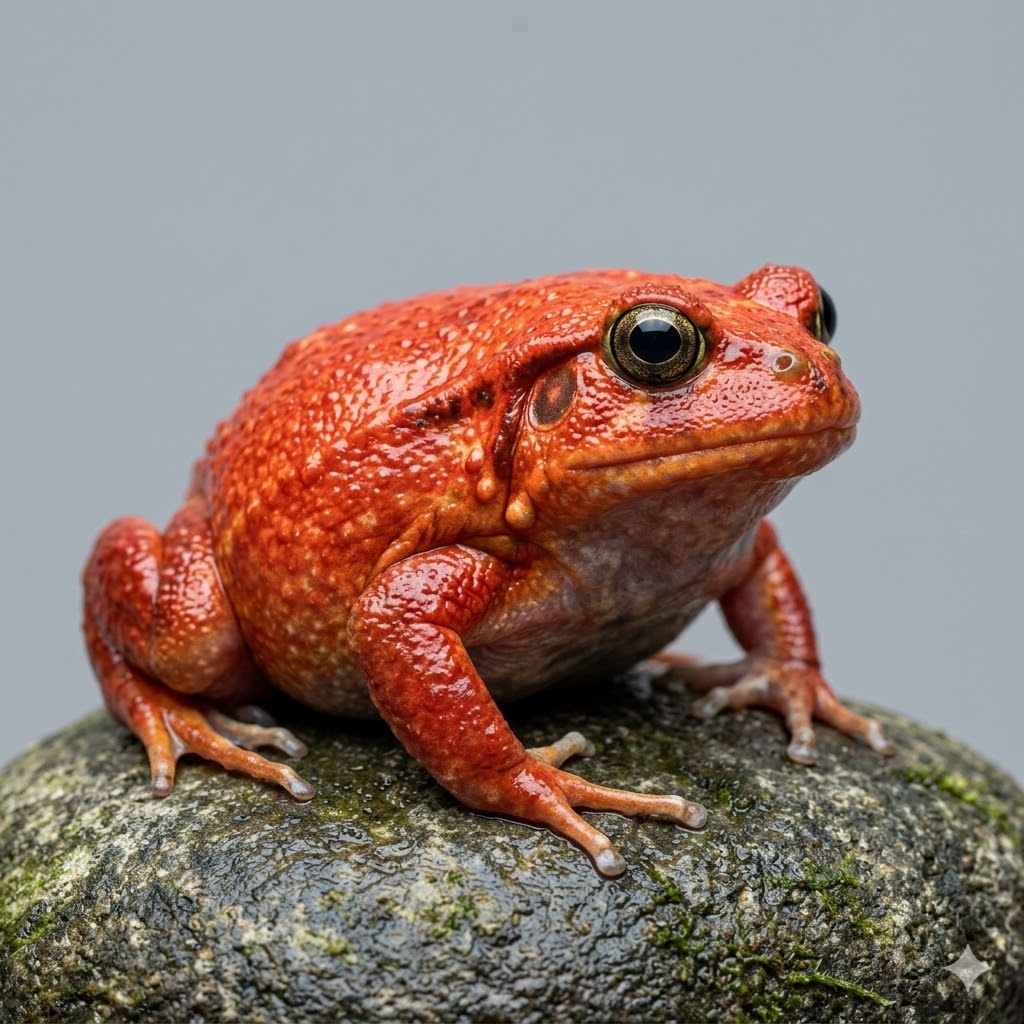
The Tomato Frog (Dyscophus guineti) is a chunky, brightly coloured frog from Madagascar, named for the rounded body and rich red-orange skin of the adults.
🗓️ Last reviewed: June 2026
Overview
The Tomato Frog (Dyscophus guineti) is a chunky, brightly coloured frog from Madagascar, named for the rounded body and rich red-orange skin of the adults. It is one of the more forgiving amphibians to keep, which makes it a popular beginner species, but it is firmly a hands-off display animal rather than a pet to handle. A natural burrower, it spends much of its time dug into moist substrate, surfacing to sit-and-wait for food. Calm to care for and striking to look at, it rewards keepers who enjoy watching rather than touching.
Natural History
Native to the humid lowlands and forest margins of eastern Madagascar, where it lives in and around slow water, marshy ground, and damp leaf litter. It is an ambush predator that buries itself with only the eyes showing and waits for prey to pass. The bold colour is a warning: when threatened, the frog can puff up and secrete a sticky white defensive mucus from its skin. Dyscophus guineti is the more commonly kept of the tomato frog group and is widely captive-bred, which is the responsible source to choose.
Appearance
A stout, almost circular frog. Females are the larger and more vividly coloured sex, reaching about 8-10 cm and showing the deepest red-orange, while males are smaller, around 6 cm, and tend toward a more yellow-orange or brownish tone. The skin is smooth, the body rounded, and the belly paler. Juveniles start out duller and brownish, deepening in colour as they mature. The vivid adult colouring is the source of the common name.
Temperament & Handling
Placid, slow-moving, and best treated as a look-but-do-not-touch animal. Tomato frogs spend long stretches burrowed and are not interactive in the way a more active species might be. Their skin secretes a sticky white mucus when stressed that can irritate skin and is unpleasant if it reaches the eyes or mouth, which is another reason to keep handling to a minimum. If you must move the frog, do so briefly and only with clean, wet hands, then wash thoroughly and keep your hands away from your face. They are easily stressed by frequent handling.
Enclosure
Minimum: a 40-60 L (10-15 gallon) terrestrial setup for one adult; a little larger for a pair.
Provide:
- A deep layer of moist, burrowable substrate such as coconut fibre or a soil mix, kept damp so the frog can dig in.
- A shallow water dish large enough to sit in but shallow enough to climb out of easily, with clean dechlorinated water.
- Hides, sturdy plants (live or artificial), and leaf litter for cover and a secure, buried feeling.
- A secure, ventilated lid to hold humidity while allowing fresh air.
Floor space matters more than height, since this is a ground-dwelling burrower rather than a climber.
Heating, Lighting, Humidity
- Temperature: a gentle 22-26°C by day, slightly cooler at night. Avoid extreme heat.
- Humidity: moderate to high, roughly 60-80%, maintained with a damp substrate and light misting. Aim for gentle moisture, not a waterlogged enclosure.
- Lighting: no basking lamp is required; ambient room light or a low-level planted-tank light on a day/night cycle is fine. A low-output UVB can be offered but is not considered essential. In most homes little or no extra heating is needed; use a thermostat-controlled heat source only if the room runs cold.
Diet
Insectivore.
- Gut-loaded crickets as a staple.
- Dubia roaches and other appropriately sized feeder insects.
- Earthworms, which are well accepted.
- The occasional larger item such as a waxworm as a treat, not a staple.
Gut-load feeders and dust them with calcium and a multivitamin. Offer prey no wider than the space between the frog's eyes. Feed young, growing frogs every 1-2 days and adults every 2-3 days, adjusting to keep a healthy rounded shape without overfeeding. Remove uneaten insects so they do not stress or nip the frog.
Avoid: oversized prey, and wild-caught insects that may carry pesticides or parasites.
Health & Lifespan
About 6-10 years in good care.
Common concerns:
- Obesity - these frogs readily overeat, so portion sensibly.
- Skin and bacterial infections from poor hygiene or stale water.
- Chytrid fungus.
- Chemical poisoning - sensitive to chlorine and chloramine; always use dechlorinated water.
- Stress from over-handling or an enclosure that is too dry, too bright, or lacks burrowing depth.
For any sign of illness, consult an exotics or herp vet experienced with amphibians rather than treating at home.
Pros & Cons
Pros:
- Striking red-orange colour and appealing chunky shape.
- Hardy and forgiving, a good beginner amphibian.
- Modest space needs for a single frog.
- Quiet, low-maintenance display animal.
Cons:
- Hands-off; secretes irritating mucus when stressed.
- Spends much of its time burrowed and out of sight.
- Prone to obesity if overfed.
- Needs steady humidity and clean, dechlorinated water.
Best Suited For
- First-time amphibian keepers wanting a hardy, colourful species.
- Keepers who enjoy a display animal over a handleable one.
- Older children and adults (for observation).
Not suited for anyone wanting a pet to hold regularly, keepers unwilling to maintain humidity and clean water, or those expecting a constantly visible, active animal.
Tomato Frog (Dyscophus guineti) - frequently asked questions
Are tomato frogs good for beginners?
Yes. They are among the more forgiving amphibians, tolerant of a simple terrestrial setup, as long as you provide deep moist substrate, gentle humidity, and clean water. They are a display animal, not a handling pet.
Why do they secrete white mucus?
It is a defence. When stressed or threatened the frog can puff up and release a sticky white mucus from its skin that irritates skin and is unpleasant if it reaches the eyes or mouth. This is the main reason to minimise handling and only ever handle with clean, wet hands.
Do tomato frogs need water to swim in?
Not deep water. They are ground-dwelling burrowers, not strong swimmers, so they need only a shallow dish they can sit in and climb out of easily, kept clean and dechlorinated.
How long do they live?
Commonly about 6-10 years with good care.
🧠 Test yourself: guess the amphibian
Three clues from our quiz bank, each about another of our amphibians. Can you name them?
Clue 1.This stocky, burrowing amphibian is one of the largest land-dwelling salamanders, marked with yellowish bars or blotches on dark skin.
It's the Tiger Salamander - read the full profile →
Clue 2.A hardy arboreal amphibian whose waxy skin secretions help it resist drying out, allowing it to bask more than most frogs.
It's the White's Tree Frog - read the full profile →
Clue 3.Famous for its permanent smile and frilly pink gill stalks, this underwater creature is a popular exotic pet and a marvel of regeneration.
It's the Axolotl - read the full profile →