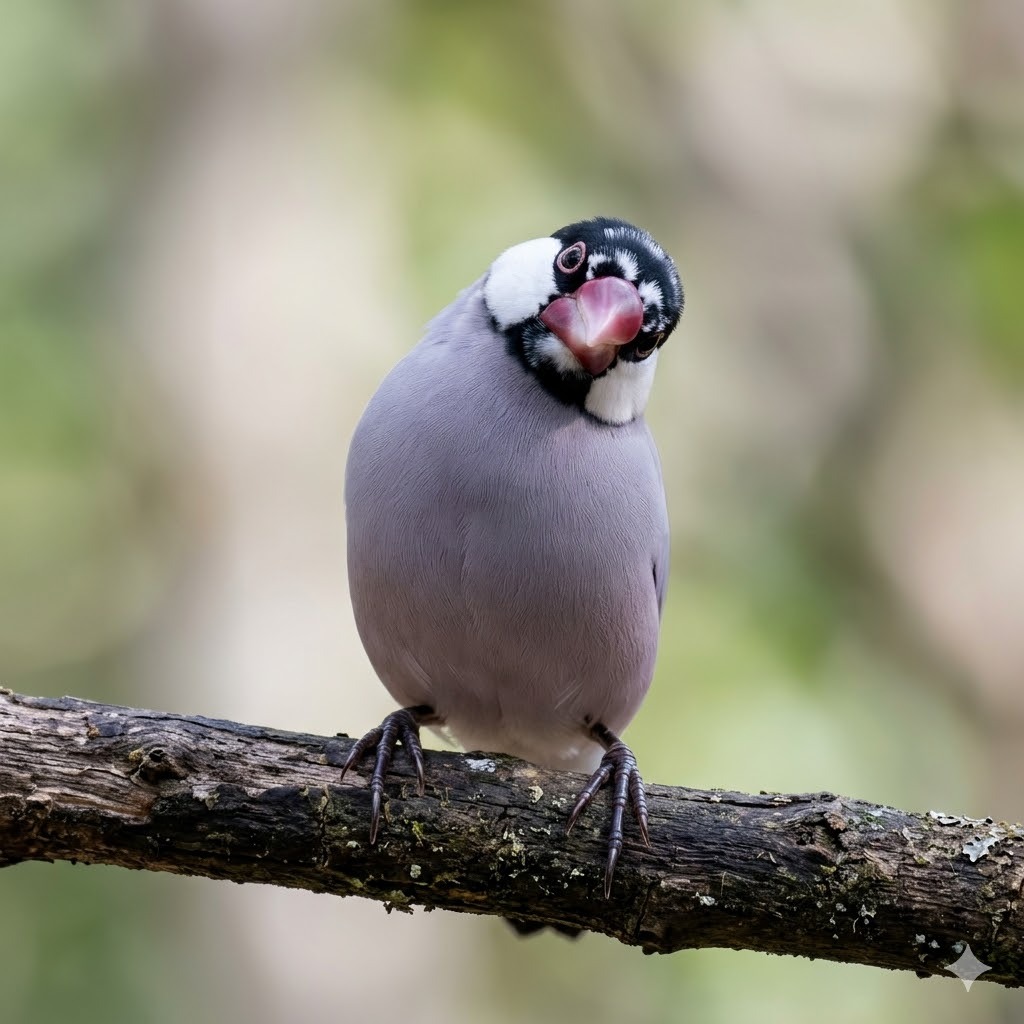
Java Sparrow
The Java sparrow is a small, elegant finch-type bird prized for its sleek grey plumage, crisp black-and-white head markings, and neat pink bill.
Overview
The Java sparrow is a small, elegant finch-type bird prized for its sleek grey plumage, crisp black-and-white head markings, and neat pink bill. Despite the name, it is not a true sparrow but a finch, and it shares the calm, tidy, low-maintenance nature that makes finches such rewarding aviary birds. Java sparrows are hardy, quiet, and social, best kept in groups or a planted aviary where they can flit and forage together. They are not hands-on pets and do not want to be handled, but they are beautiful, peaceful, and easy to care for. For a keeper who wants a serene, attractive flock of birds to watch rather than a parrot to interact with, the Java sparrow is an excellent choice.
Natural History & Origin
The Java sparrow originates from Indonesia, particularly the islands of Java and Bali, where it lives in grasslands, open country, and around rice fields and human settlements. In the wild it moves in flocks, feeding largely on grass seeds and rice, which historically made it something of an agricultural nuisance in its home range. It has been kept as a cage and aviary bird for centuries, admired in many cultures for its calm beauty, and is now bred worldwide in a range of colour mutations. Its flocking, seed-eating nature translates directly into how it is best kept: in groups, on a good seed and greens diet.
Appearance
Adults measure around 14-17 cm in length and weigh roughly 24-30 g, making them a small but sturdy finch. The classic Java sparrow is a soft blue-grey over the body, with a black head and tail, bold white cheek patches, and a stout, waxy pink-red bill. A pale ring of bare skin around the eye adds to the tidy, well-groomed look. Several colour mutations exist in captivity, including white, fawn (cinnamon), and pied varieties. Both sexes look very similar, though males often have a slightly larger, deeper-coloured bill and sing more, which helps with sexing.
Temperament & Noise
Java sparrows are calm, gentle, and undemanding. They are social flock birds that live peacefully together and spend their days flitting, feeding, and preening in quiet company. They are not aggressive under normal conditions and rarely cause trouble in a mixed finch aviary. On noise, they are quiet and pleasant: their vocalisations are soft chirps and a gentle, bell-like song from the males, nothing like the volume of a parrot. They are not birds that seek human handling and generally prefer the company of their own kind, so their charm is in watching a serene, well-behaved little flock rather than in personal interaction.
Housing & Flight
Java sparrows do best in a spacious flight cage or, ideally, a planted aviary where they can fly freely and live as a small flock. Because they are active fliers, horizontal length for flight matters more than height. A flock in a roomy aviary is far happier than a single bird in a small cage.
Provide:
- A long flight cage or aviary with clear flight paths.
- Several perches of varied thickness, plus natural branches and greenery.
- A shallow bath dish; Java sparrows love to bathe.
- Nesting material and boxes only if breeding is intended.
- Shelter from cold and damp if housed outdoors, as they prefer warmth.
Diet
- A quality finch or small-bird seed mix as the dietary base.
- Daily fresh greens and vegetables - such as spinach, chickweed, and leafy greens.
- Sprouted or soaked seeds for extra nutrition, especially when breeding.
- Some egg food or protein supplement during breeding and moulting.
- Cuttlebone and a mineral or grit source for calcium and digestion.
Avoid: avocado (toxic to all birds), chocolate, caffeine, alcohol, onion, and salt. Fresh, clean water for drinking and bathing should always be available. A varied diet of good seed plus daily greens keeps them in excellent condition, since a seed-only diet can leave them short of vitamins.
Health & Lifespan
Java sparrows are hardy and typically live around 5-9 years with good care, with some reaching a little older.
Common concerns:
- Nutritional deficiencies from an all-seed diet lacking greens and calcium.
- Egg binding in breeding females, prevented by good calcium and not over-breeding.
- Mites and lice - check for scaly signs and treat promptly.
- Respiratory infections from cold, damp, or drafty housing.
- Sensitivity to fumes - Teflon, aerosols, and smoke are dangerous to all birds.
They are generally robust and undemanding compared with many exotic finches, but still benefit from an avian vet. Find one experienced with finches before acquisition.
Training & Enrichment
Java sparrows are not trained in the way parrots are; they do not step up or perform tricks and have no interest in handling. Enrichment for them means a natural, stimulating environment rather than interactive training. Give them room to fly, branches and greenery to explore, seeding grasses to pick through, and a bath to splash in. Watching a flock forage, bathe, and sing is the reward. Males may develop a pleasant song, and providing variety in the aviary keeps the whole group active and healthy.
Pros & Cons
Pros:
- Elegant, tidy appearance with a distinctive pink bill.
- Calm, gentle, and peaceful in a flock.
- Quiet - suitable for noise-sensitive homes.
- Hardy and easy to care for.
- Attractive colour mutations available.
Cons:
- Not a hands-on or handleable pet.
- Must be kept in groups, never alone.
- Needs a flight cage or aviary, not a tiny cage.
- Shorter-lived than parrots (5-9 years).
- Prefers warmth; dislikes cold, damp conditions.
Best Suited For
- Keepers who want a calm, beautiful flock to watch rather than handle.
- People able to provide a flight cage or planted aviary.
- Households wanting a quiet, low-maintenance bird.
- First-time bird keepers comfortable with finches rather than parrots.
Not suited for anyone wanting a cuddly or handleable pet, keeping only a single bird, or households with non-stick cookware in active use, smokers in the same room, or cold damp housing.
Java Sparrow - frequently asked questions
Is the Java sparrow really a sparrow?
No. Despite the name it is a finch, closely related to other estrildid finches, and it shares their calm, seed-eating, flock-living nature.
Can I keep just one?
No. Java sparrows are flock birds and should always be kept in pairs or groups. A lone bird is lonely and stressed.
Are they noisy?
No, they are quiet. Their calls are soft chirps and a gentle song, making them well suited to noise-sensitive homes.
Can I tame and handle them?
Generally no. They are not hands-on birds and prefer the company of their own kind to human handling. They are birds to watch, not cuddle.
How long do they live?
Around 5-9 years with good care, sometimes a little longer.
๐ง Test yourself: guess the bird
Three clues from our quiz bank, each about another of our birds. Can you name them?
Clue 1.Spanish monks once monopolized the trade in this melodious island finch by selling only males abroad.
It's the Canary - read the full profile โ
Clue 2.Hailing from the rainforests of central Africa, this ash-colored parrot can mimic human speech and household sounds with uncanny accuracy.
It's the African Grey Parrot - read the full profile โ
Clue 3.Wild flocks of this slender, long-tailed parrot are grey, but pet breeding created lutino, pied, and pearl color mutations.
It's the Cockatiel - read the full profile โ
Social Needs
Java sparrows are true flock birds and should never be kept alone; a single Java sparrow is a lonely one. They thrive in pairs, small groups, or a mixed finch aviary, where they live peacefully and preen and roost together. They are not interested in bonding with people through handling, so their social needs are met by keeping them with their own kind. A small flock in a planted aviary is the ideal, providing the company and space that keep these gentle birds content.