Lineolated Parakeet
The lineolated parakeet - affectionately known as the "linnie" - is a tiny, calm, and remarkably quiet parrot that has quietly become one of the best small parrots for apartment living.
🗓️ Last reviewed: July 2026
Overview
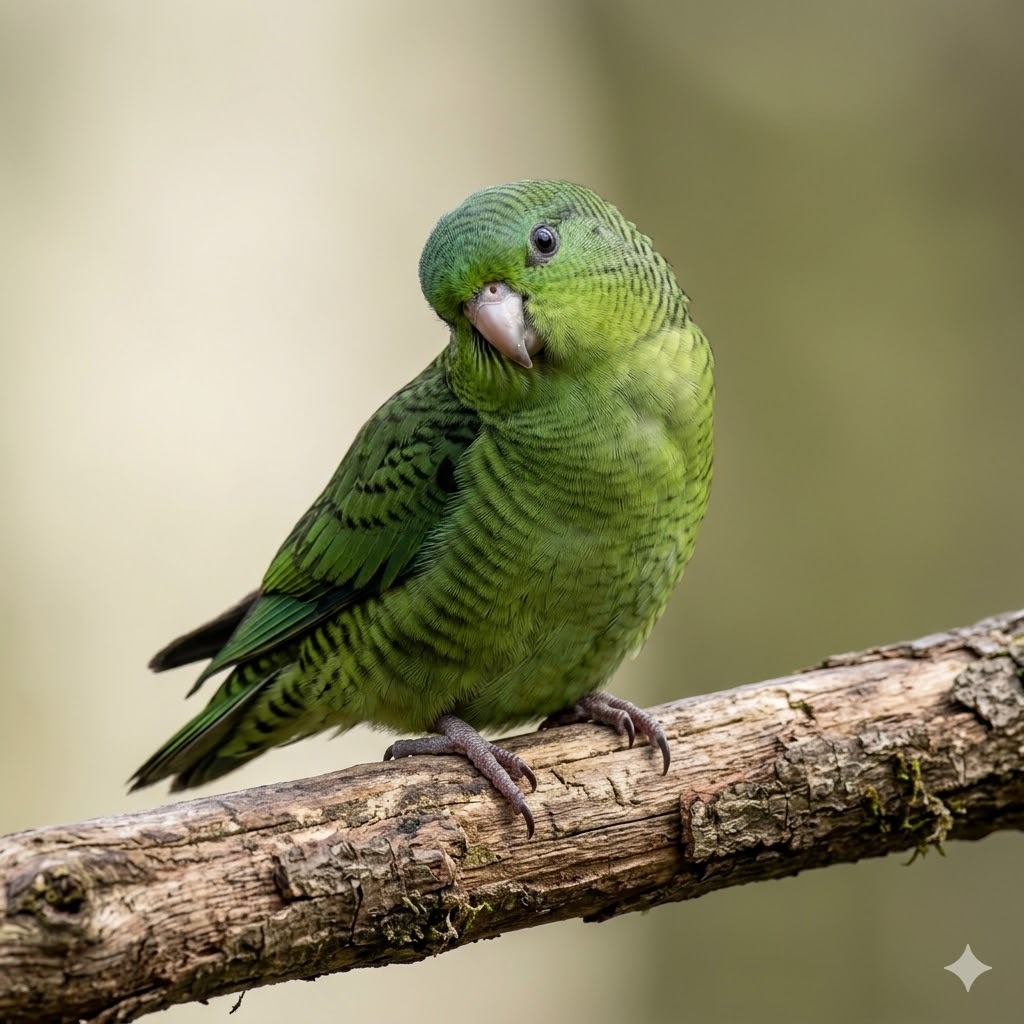
The lineolated parakeet - affectionately known as the "linnie" - is a tiny, calm, and remarkably quiet parrot that has quietly become one of the best small parrots for apartment living. Where most small parrots are busy, chattery, and loud, the linnie is gentle, deliberate, and soft-voiced. It has an unusual habit of walking and climbing more than flying, moving through its cage or aviary with a slow, careful, almost sloth-like poise. Combine that with a sweet temperament and low noise, and the linnie earns its reputation as one of the friendliest and easiest mini-parrots for beginners and quiet households alike.
Natural History & Origin
Lineolated parakeets are native to the highland forests of Central and South America, from southern Mexico through the Andes into Peru and Venezuela. In the wild they live at higher, cooler elevations in humid mountain forest, moving through the canopy in small flocks and feeding on seeds, fruit, and vegetation. Their name comes from the fine dark barred lines - "lineolations" - that mark their green plumage. They have been kept and bred in captivity for decades and are fully established in aviculture, with several attractive colour mutations now available.
Appearance
Linnies are genuinely small, measuring about 16 cm in length and weighing roughly 42-55 g, with a short, stubby tail that gives them a compact, rounded look quite unlike the long-tailed parakeets. The wild-type bird is green, overlaid with fine black barring across the wings and back and a darker marking on the flight feathers. The build is chunky for the length, sitting horizontally rather than upright. A wide range of mutations exists in captivity, including blue, turquoise, cobalt, olive, lutino, cream, and pied, making the linnie popular with mutation breeders as well as pet keepers.
Temperament & Noise
This is where the linnie shines. It is calm, gentle, and steady, without the frantic energy of many small parrots. Hand-raised linnies bond closely and affectionately with their people and are known for being sweet, easy to handle, and slow to bite. Crucially, they are one of the quietest parrots available: their vocalisations are soft chirps, gentle chatter, and quiet warbles, with none of the piercing screech that makes larger parrots impossible in flats. They rarely become loud even when excited, and their calmer disposition means they are far less prone to the sudden hormonal outbursts seen in feistier small parrots. This combination of tameness and low volume makes them stand out among companion parrots as a genuinely apartment-friendly choice.
Housing & Flight
Linnies are undemanding on space compared with more active parrots, though bigger is always better.
Provide:
- A cage of at least 60 cm width for a single bird, larger for a pair, with horizontal room to climb and walk.
- Plenty of perches, ropes, and ladders - linnies love to clamber and walk more than they fly.
- Natural branch perches of varying diameter.
- Foraging and chew toys sized for a small parrot.
- Daily out-of-cage time in a bird-safe room.
Because they walk and climb so much, horizontal space and plentiful perching matter more than sheer flight length, which makes them especially manageable indoors.
Diet
- Quality small-parrot pellets as a base.
- Small-parrot or budgie seed mix as a supplement rather than the whole diet.
- Daily fresh vegetables and greens - leafy greens, broccoli, carrot, peas, and sprouted seed.
- Small amounts of fruit as a treat.
- Cuttlebone and mineral block for calcium.
Avoid: avocado (toxic to all birds), chocolate, caffeine, alcohol, onion, and salt.
Health & Lifespan
Lineolated parakeets typically live around 10-15 years with good care, a solid lifespan for such a small parrot.
Common concerns:
- Obesity from an all-seed diet - a real risk given their calm, low-activity nature.
- Fatty liver disease linked to poor diet and inactivity.
- Respiratory infections and sensitivity to airborne fumes (non-stick cookware, aerosols, smoke).
- Egg binding in breeding females lacking calcium.
- Feather issues from stress or poor nutrition.
Find an avian vet before acquisition, and watch weight carefully given their sedentary habits.
Training & Enrichment
Intelligent and willing, linnies take well to gentle training. Many learn step-up, recall, and simple tricks, and their calm focus makes training sessions pleasant rather than chaotic. Short, positive sessions work best, as their steady temperament rewards patience over pressure. Some learn a few words or whistles, though they are not strong talkers and should be chosen for character rather than speech. Enrichment should play to their love of climbing and foraging: ladders, ropes, foraging toys, and safe branches to walk along and chew. Their deliberate, exploratory nature makes them a delight to watch problem-solve, working slowly and methodically through a puzzle where a busier parrot would rush.
Pros & Cons
Pros:
- Exceptionally quiet - one of the best parrots for apartments.
- Calm, gentle, and affectionate; easy to handle.
- Small and space-efficient.
- Beginner-friendly and low-drama.
- Many attractive colour mutations.
Cons:
- Prone to obesity due to low activity - diet must be managed.
- Not a strong talker.
- Still a 10-15 year commitment.
- Sensitive to airborne toxins like all parrots.
- Needs daily interaction or a companion bird.
Best Suited For
- Apartment dwellers and noise-conscious households.
- First-time small-parrot owners.
- People wanting a calm, affectionate mini-parrot.
- Quiet homes and gentle families with supervised older children.
Not suited for anyone wanting a talkative show-off parrot, households using non-stick cookware near the bird, or owners unwilling to manage diet against obesity.
Lineolated Parakeet - frequently asked questions
Are lineolated parakeets really that quiet?
Yes - they are among the quietest parrots kept as pets, making soft chirps and gentle chatter rather than screeches. This is their signature trait.
Do linnies talk?
Some learn a few words or whistles, but they are not strong talkers. Choose a linnie for temperament and quiet, not for speech.
Why does my linnie walk instead of fly?
It is normal. Linnies naturally walk and climb far more than they fly, moving with a slow, deliberate, careful gait.
How long do they live?
Around 10-15 years with good diet and care.
Are they good for beginners?
Yes - their calm, gentle nature and low noise make them one of the most beginner-friendly small parrots.
🧠 Test yourself: guess the bird
Three clues from our quiz bank, each about another of our birds. Can you name them?
Clue 1.Hailing from the rainforests of central Africa, this ash-colored parrot can mimic human speech and household sounds with uncanny accuracy.
It's the African Grey Parrot - read the full profile →
Clue 2.This small Australian grass parakeet, wild-colored green and yellow with black scalloping, is the world's most popular pet bird.
It's the Budgerigar (Budgie) - read the full profile →
Clue 3.Spanish monks once monopolized the trade in this melodious island finch by selling only males abroad.
It's the Canary - read the full profile →
Social Needs
Linnies are social and enjoy company, whether from a bonded human or another bird. A single hand-raised linnie makes a devoted companion if given daily interaction, and many owners keep them as beloved solo pets that ride happily on a shoulder while the household goes about its day. Those away from home for long hours should consider a pair so the bird has constant company and does not grow lonely. They are gentle enough to be kept in compatible pairs or small groups in an aviary without the squabbling common to feistier small parrots, making them one of the easier small parrots to keep in numbers.