Meyer's Parrot
Meyer's parrot is a small African parrot that offers a rare combination for parrot keepers: real parrot intelligence and personality in a calm, quiet, independent package that genuinely suits apartment living.
🗓️ Last reviewed: July 2026
Overview
Meyer's parrot is a small African parrot that offers a rare combination for parrot keepers: real parrot intelligence and personality in a calm, quiet, independent package that genuinely suits apartment living. A member of the poicephalus group, Meyer's is less needy and less noisy than most companion parrots, content to entertain itself and interact on its own terms rather than demanding constant attention. Its coloring is subtle and understated - soft greens and turquoise with muted brown - but its steady, easygoing temperament makes it one of the most livable small parrots available. For someone who wants a lifelong feathered companion without the noise and drama, Meyer's parrot deserves serious consideration.
Natural History & Origin
Meyer's parrot (Poicephalus meyeri) is native to a broad swathe of central and eastern Africa, including parts of Ethiopia, Kenya, Tanzania, Zambia, and beyond. It inhabits savanna woodlands and riverine forests, where it feeds on seeds, fruits, nuts, and blossoms. In the wild, Meyer's parrots live in small groups or pairs rather than large flocks, and they are relatively quiet and unobtrusive - a wild lifestyle that translates directly into their calm, independent behavior as pets. They are one of several poicephalus species popular in aviculture, alongside the closely related Senegal parrot, and share that group's reputation for being hardy, level-headed birds. Most pet Meyer's parrots are captive-bred, which produces confident, well-socialized companions.
Appearance
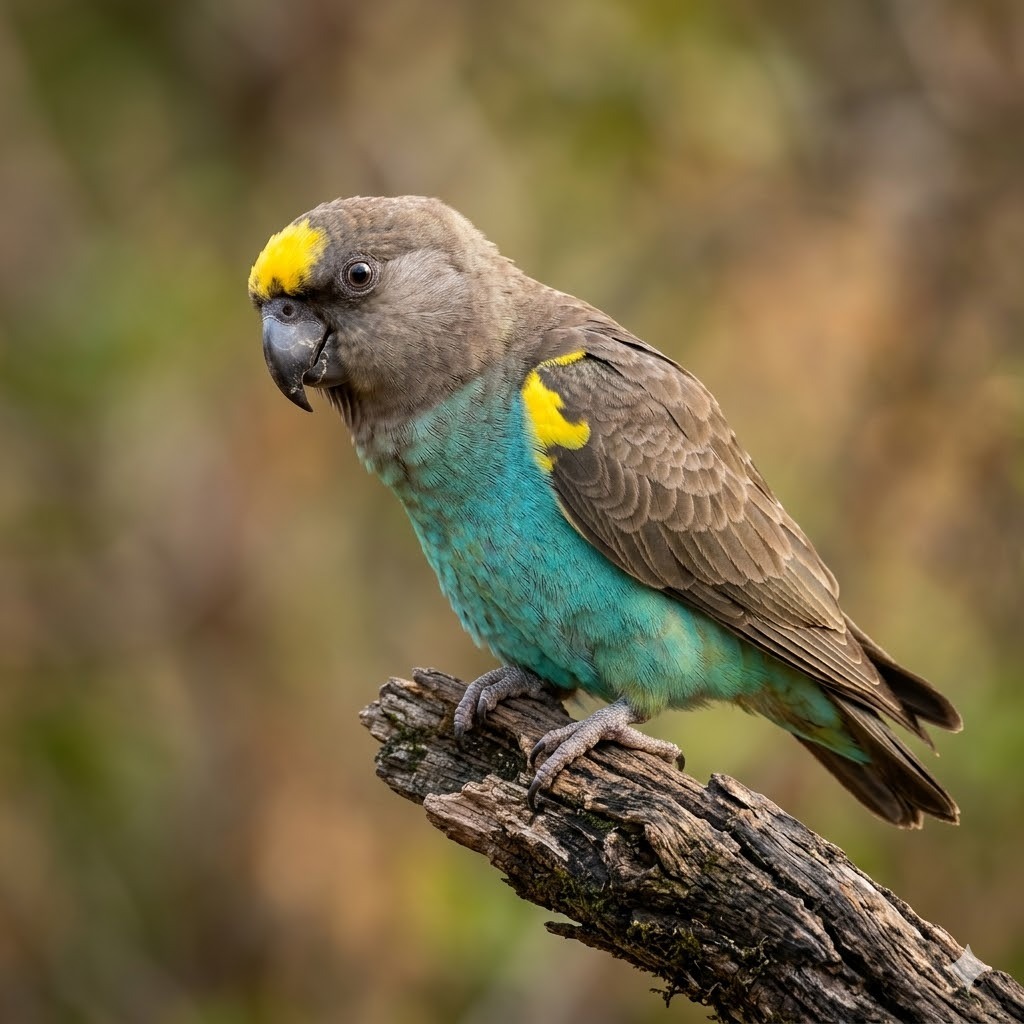
Small, stocky parrots roughly 21-25 cm long and weighing about 100-135 g. The plumage is understated but attractive: a brownish-grey body, bright yellow markings on the crown, bend of the wing, and thighs, and a beautiful blue-green to turquoise wash across the rump, belly, and underparts. Individual birds vary in how much yellow and turquoise they show. It is a subtle beauty rather than a showy one - the sort of coloring that looks better the longer you look.
Temperament & Noise
Meyer's parrots are calm, gentle, and notably independent. They form loyal bonds with their owners but are less clingy and attention-demanding than conures or many other parrots, happily occupying themselves with toys and foraging for long stretches. They can be a little shy or cautious with strangers and new situations, but a well-socialized Meyer's is confident, steady, and playful in a quiet way. They are generally even-tempered and not prone to dramatic hormonal aggression.
On noise, Meyer's parrots are a genuine standout - they are among the quietest parrots kept as pets. They chatter softly, make gentle whistles and clicks, and occasionally call, but they lack the piercing screams of conures and larger parrots. This makes them one of the few parrots that can honestly be recommended for apartment living and homes with close neighbors.
Housing & Flight
Minimum cage: around 50 x 50 x 70 cm, larger preferred, with bar spacing of about 1.5-2 cm. Though calm, Meyer's parrots are active and inquisitive and need room to climb and play.
Provide:
- Sturdy perches of varied natural-wood diameters.
- Plenty of foraging toys and chewable items - Meyer's love to forage and manipulate objects, which keeps their busy minds occupied.
- Rotated toys to prevent boredom.
- Daily out-of-cage time for exercise and interaction.
Diet
- Quality pellets as the base of the diet (about 60-70%).
- Fresh vegetables and leafy greens daily.
- Fruit in moderation.
- Seeds and nuts in limited amounts as treats - poicephalus parrots enjoy nuts but can gain weight, so keep them occasional.
Avoid avocado, chocolate, caffeine, alcohol, onion, garlic, and salty or sugary foods. As with most parrots, an all-seed diet leads to obesity and nutritional deficiency.
Health & Lifespan
Meyer's parrots typically live 20-35 years with good care, so ownership is a long-term commitment.
Common concerns:
- Obesity from over-rich, seed-heavy diets - a common poicephalus issue.
- Aspergillosis and other fungal or respiratory infections, especially in poor air quality.
- Vitamin A deficiency from unbalanced diets.
- Feather plucking, though less common in this independent species than in more attention-dependent parrots.
- Sensitivity to airborne toxins such as non-stick cookware fumes, aerosols, and smoke.
- Psittacosis (a bacterial infection).
Establish care with an avian vet before acquiring the bird and keep up with regular wellness checks.
Training & Enrichment
Intelligent and curious, Meyer's parrots respond well to patient, positive-reinforcement training. They can learn step-up, recall, and a range of tricks, and some pick up a few words in a soft voice - though they are modest talkers and are valued more for temperament than speech. Foraging toys and puzzle feeders are ideal for this species: their natural inclination to forage and problem-solve keeps them mentally sharp and content. A calm, consistent approach draws out their confident, playful side.
Pros & Cons
Pros:
- One of the quietest parrots - genuinely apartment-friendly.
- Calm, gentle, and independent.
- Tolerates a working owner's schedule well.
- Intelligent and enjoys foraging enrichment.
- Long lifespan and loyal companionship.
Cons:
- Subtle coloring - not a showy bird.
- Can be shy or cautious with strangers.
- Prone to obesity if diet is not managed.
- Modest talker at best.
- 20-35 year commitment.
Best Suited For
- Apartment dwellers and homes with close neighbors.
- Owners who work and need an independent bird.
- People wanting a calm, low-drama small parrot.
- Keepers who value quiet companionship over noise and flash.
Not suited for owners seeking a loud, showy, highly cuddly bird, homes with non-stick cookware in active use, or anyone unable to commit to decades of care.
Meyer's Parrot - frequently asked questions
Are Meyer's parrots quiet?
Yes - they are among the quietest pet parrots. They chatter softly and whistle but lack the piercing scream of conures, making them one of the few parrots suitable for apartments.
Are they good apartment birds?
Yes. Their low noise level and independent nature make them one of the best parrot choices for apartment living and homes with neighbors nearby.
Do they talk?
Some learn a few words in a soft voice, but they are modest talkers valued more for their calm temperament.
How long do they live?
Typically 20-35 years with good care.
Are they good for beginners?
Their calm, independent nature makes them a manageable choice, but their long lifespan and obesity risk mean owners should research the commitment thoroughly first.
🧠 Test yourself: guess the bird
Three clues from our quiz bank, each about another of our birds. Can you name them?
Clue 1.Selective breeding turned this little parrot into blues, whites, and a larger 'English' show type, though wild ones are always green.
It's the Budgerigar (Budgie) - read the full profile →
Clue 2.Named for its trembling, bobbing courtship motions, this gray-breasted parrot is a gifted talker for its small size.
It's the Quaker (Monk) Parakeet - read the full profile →
Clue 3.Sold in bright peach-faced and masked varieties, this little hookbill can become nippy without daily attention.
It's the Lovebird - read the full profile →
Social Needs
Meyer's parrots are social but self-sufficient. They enjoy their owner's company and daily interaction, but they do not fall apart when left alone for reasonable periods, which suits people who work. This independence is one of the species' greatest strengths. A single Meyer's does well with consistent daily attention; they can also be kept with compatible companions, though a strongly bonded pair may become more reserved toward humans. Because they can be cautious by nature, introducing new people, toys, and experiences gradually and positively helps a Meyer's stay confident and prevents the shyness that under-socialized individuals sometimes show.