Owl Finch
The owl finch, also known as the Bicheno finch or double-barred finch, is a tiny, charming Australian finch named for the fine dark barring across its face and chest that gives it the look of a little owl.
🗓️ Last reviewed: July 2026
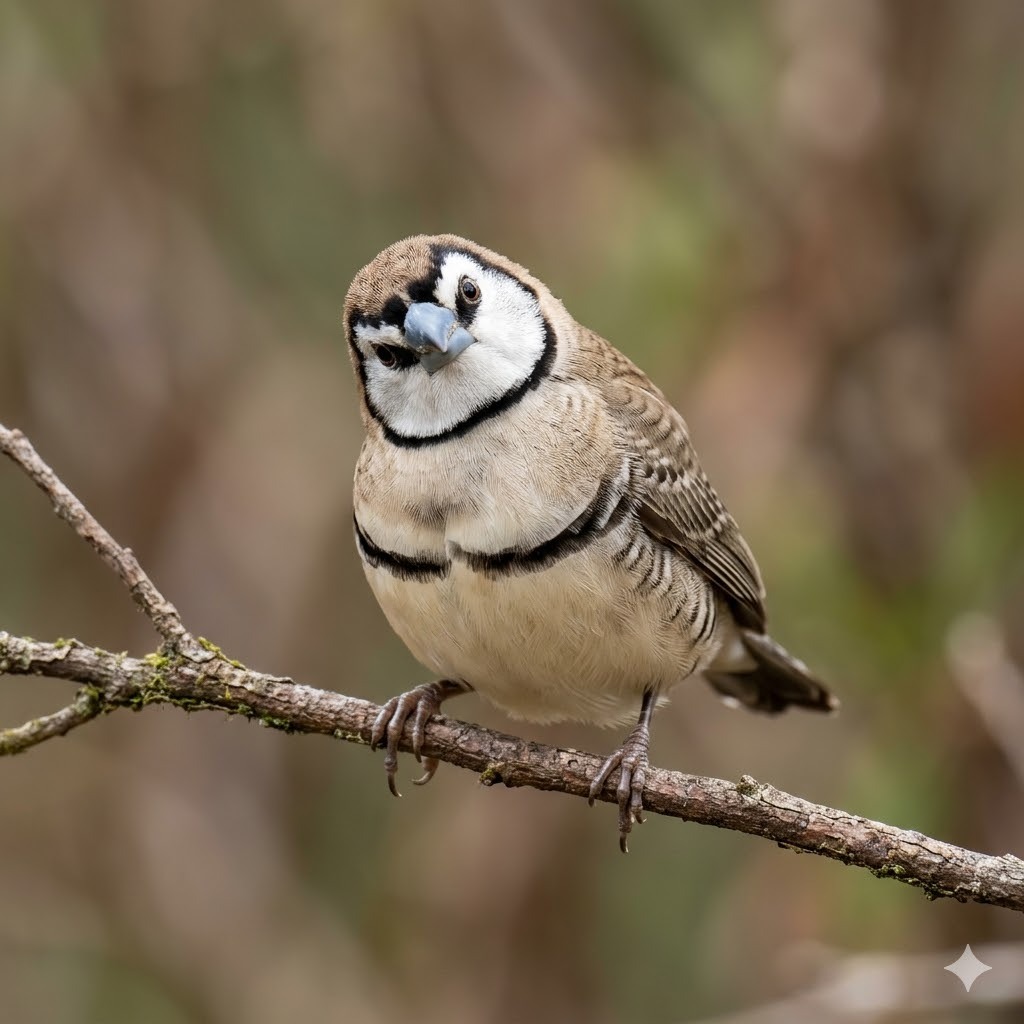
Overview
The owl finch, also known as the Bicheno finch or double-barred finch, is a tiny, charming Australian finch named for the fine dark barring across its face and chest that gives it the look of a little owl. Calm, peaceful, and remarkably hardy, it is one of the best finches for beginners and a favourite in community aviaries the world over. The owl finch is quiet, easy to keep, and gets along beautifully with its own kind and with other gentle finches. Kept in a pair or small group with good flight space, these busy, sociable little birds are endlessly watchable and undemanding, making them an ideal introduction to keeping Australian grassfinches. Their tidy owl-face markings and constant gentle activity give them huge appeal despite their small size, and they tend to thrive where fussier species struggle. For a keeper wanting a hardy, peaceful, quiet bird that mixes well with others, the owl finch is one of the safest and most rewarding choices available.
Natural History & Origin
The owl finch (Stizoptera bichenovii, sometimes placed in Taeniopygia) is native to Australia, ranging across the north and east in grassy woodland, savanna, and scrub, usually not far from water. Wild birds move in small flocks, feeding mainly on grass seeds and taking insects when breeding. Two natural forms exist, differing in rump colour. Long popular in aviculture, the owl finch is bred in large numbers and is well established as a domestic aviary bird, valued for its gentle nature, hardiness, and distinctive markings.
Appearance
A very small finch: length about 10-11 cm and weight around 8-12 g, one of the daintier grassfinches. The plumage is soft brown above and pale creamy-white below, with a white face outlined by a fine black border, and two narrow black bars - one across the throat and one across the lower breast - which, with the facial ring, create the "owl-face" pattern. The wings are finely spotted with white dots, the beak is bluish-grey, and depending on the form the rump is either white or black. The sexes look very similar, which can make pairs hard to tell apart by sight alone.
Temperament & Noise
Owl finches are calm, peaceful, and highly sociable little birds. They are among the most easy-going of the small finches, mixing well with their own kind and with other gentle species without squabbling. They are quiet: the song is a soft, low, buzzing trill and the everyday sound is a faint chirping, so a group is easily housed near living space without noise complaints. Like all finches they are not handleable pets and prefer to keep to themselves; they are enjoyed as active, decorative birds rather than companions to hold.
Housing & Flight
Owl finches are lively fliers that need horizontal space. Minimum cage: a flight cage around 80-100 cm long for a pair or small group, and larger or a planted aviary is far better. Bar spacing must be narrow, about 1 cm, to keep the tiny birds safe.
Provide:
- Multiple perches, including natural branches and fine twigs.
- Open space for short flights between perches.
- A shallow bath - they enjoy bathing regularly.
- Grasses, seeding heads, and cover for security and foraging.
- A wicker nest or nest box and soft material if breeding.
Diet
- A quality small-seed finch mix as the dietary base - mixed millets and canary seed.
- Live food such as small mealworms or fruit-fly cultures, especially when rearing chicks.
- Fresh greens and seeding grasses - spray millet, chickweed, sprouted seed.
- Egg food during breeding for added protein.
- Cuttlebone, grit, and a shell or mineral source for calcium and digestion.
- Fresh water daily for drinking and bathing.
Avoid: avocado (toxic to all birds), chocolate, caffeine, alcohol, and salty or processed foods.
Health & Lifespan
Owl finches typically live around 5-8 years with good care. They are notably hardy for such small birds and stay healthy when kept warm, clean, and well fed.
Common concerns:
- Air-sac mites - a common finch problem causing wheezing and breathing difficulty.
- Intestinal parasites and worms in aviary-kept birds.
- Egg binding in breeding females short on calcium.
- Chills and respiratory illness from cold, damp, or drafty conditions.
- Mites and scaly leg where hygiene is poor.
- Stress from overcrowding or aggressive tank-mates.
Keep an avian vet on hand, as tiny finches can go downhill fast when ill.
Training & Enrichment
Finches are not trained like parrots - they are not handled or taught tricks. Enrichment for owl finches comes from a rich environment: varied perching, growing grasses and seeding heads, live food to hunt, regular bathing water, and the constant company of their own kind. A planted aviary that lets them forage, flit, and socialise naturally keeps them active, healthy, and content.
Pros & Cons
Pros:
- Distinctive, endearing owl-face markings.
- Very quiet - a soft buzzing song and faint chirping.
- Extremely peaceful and easy in a community aviary.
- Hardy and one of the best finches for beginners.
- Sociable and lively to watch.
Cons:
- Not a hands-on or handleable pet.
- Must be kept in pairs or groups.
- Sexes look alike and are hard to tell apart.
- Needs flight space and ideally an aviary.
- Small and delicate - vulnerable to chills and air-sac mites.
Best Suited For
- Beginners starting out with finches.
- Community aviaries with other gentle finches.
- People wanting quiet, hardy, low-maintenance birds to watch.
- Keepers who enjoy observing a busy little flock.
Not suited for people wanting a bird to handle or train, keeping only a single bird, or cold, damp, drafty housing.
Owl Finch - frequently asked questions
Why is it called an owl finch?
For the fine dark barring around its face and across its chest, which gives it an owl-like appearance. It is also called the Bicheno or double-barred finch.
Are owl finches noisy?
No - they are very quiet, with a soft buzzing song and faint chirping that will not disturb a home.
Can I keep just one?
No. They are gregarious flock birds and should be kept at least as a pair, ideally in a small group.
Are they good for beginners?
Yes - they are hardy, peaceful, and among the best finches for newcomers to finch-keeping.
How long do they live?
Around 5-8 years with good care.
🧠 Test yourself: guess the bird
Three clues from our quiz bank, each about another of our birds. Can you name them?
Clue 1.This green-and-gray parrot is the only one that builds large communal stick nests instead of nesting in tree holes.
It's the Quaker (Monk) Parakeet - read the full profile →
Clue 2.Sold in bright peach-faced and masked varieties, this little hookbill can become nippy without daily attention.
It's the Lovebird - read the full profile →
Clue 3.Studies of how these birds' beaks varied across the Galapagos helped shape Darwin's ideas on evolution.
It's the Finch (Zebra & Society) - read the full profile →
Social Needs
Owl finches are flock birds and must be kept at least as a pair, ideally in a small group. They are peaceful and among the most reliable finches for a mixed community aviary, coexisting calmly with other small, gentle species. They are gregarious and even roost huddled together, so company of their own kind is essential to their wellbeing. During breeding they appreciate a little extra space and their own nesting spot. Their willingness to share an aviary calmly with other small grassfinches is one of the reasons they are so widely kept, and a mixed group of gentle species alongside owl finches makes a lively, harmonious display. A single owl finch kept without company will be visibly unhappy, so they should always be housed with at least one companion of their own kind.