Brazilian Shorthair
The Brazilian Shorthair is Brazil's first internationally recognised cat breed - an athletic, friendly, sleek-coated cat developed from the country's common street cats.
🗓️ Last reviewed: July 2026
Overview
The Brazilian Shorthair is Brazil's first internationally recognised cat breed - an athletic, friendly, sleek-coated cat developed from the country's common street cats. Where many breeds are the product of careful selective crossing, the Brazilian Shorthair was standardised from healthy, hardy free-roaming cats already thriving across Brazil. The result is a medium-sized, muscular, easygoing companion that typically weighs 4-7 kg. Affectionate and adaptable, with a low-maintenance coat and generally excellent health, the Brazilian Shorthair makes a wonderful family cat. It remains far more common in its homeland than abroad, but its friendly nature and robust constitution are winning it admirers worldwide.
History & Origins
Cats arrived in Brazil aboard Portuguese ships during colonisation, and over centuries they adapted to the country's warm climate and varied environments as free-roaming street and farm cats. These common cats developed into a hardy, uniform type through natural selection.
In the 1980s, Brazilian breeder Paulo Samuel Ruschi set out to document and standardise these native cats as a formal breed rather than importing foreign breeds. He gathered typical, healthy street cats and worked to establish a consistent standard. The World Cat Federation recognised the Brazilian Shorthair in 1998, making it the first cat breed from Brazil to gain international recognition.
Because it derives from a large population of naturally robust cats, the breed enjoys a broad, healthy gene pool. It is a point of national pride and remains most numerous in Brazil, though breeders elsewhere are slowly building populations.
Appearance
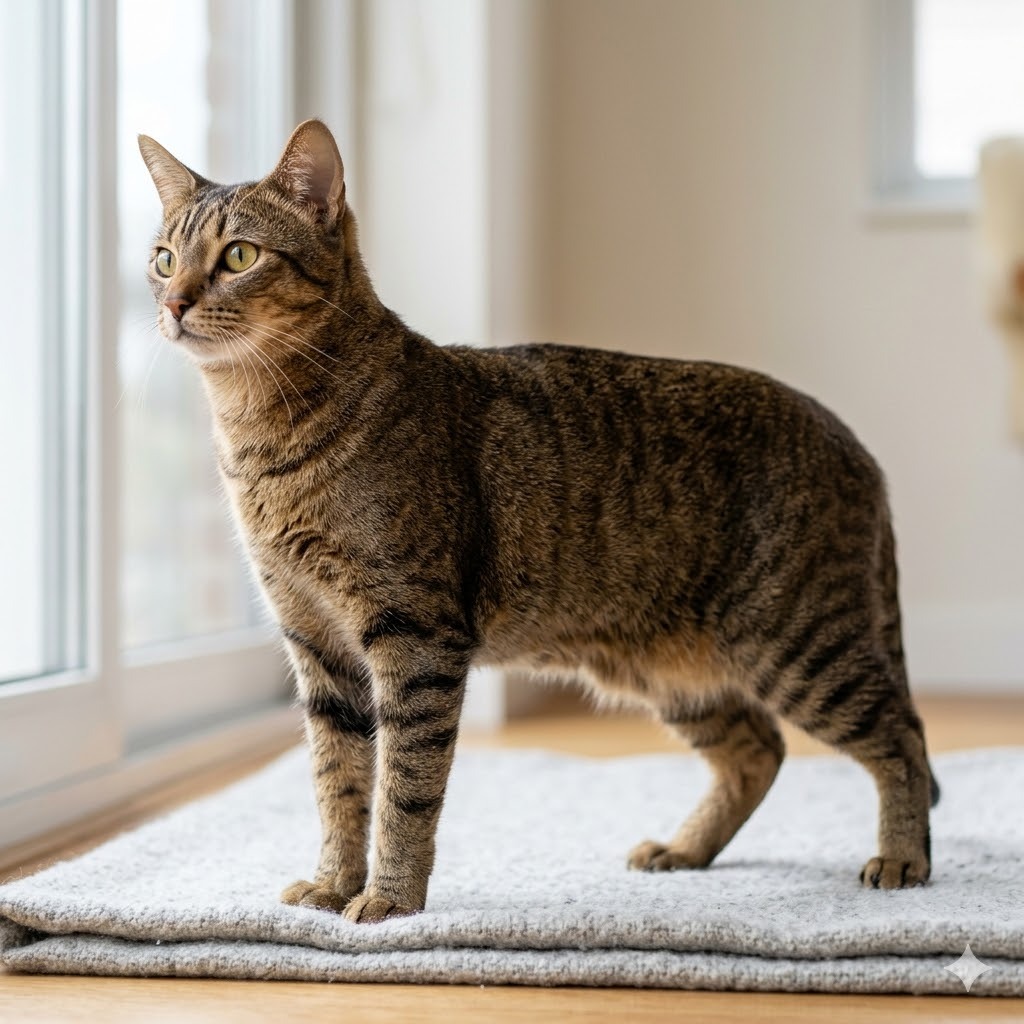
Medium-sized, sleek, and muscular, the Brazilian Shorthair has an athletic, elegant build without extremes. Weight is typically 4-7 kg, with males larger than females. The overall impression is of a fit, agile everyday cat.
Key features:
- Coat: short, smooth, close-lying, and glossy, with little undercoat - low maintenance and easy to care for.
- Colour: virtually all colours and patterns occur, including solids, tabbies, bicolours, and pointed varieties.
- Head: medium, slightly longer than wide, with a gentle profile.
- Ears: medium to large, set well apart, alert.
- Eyes: large, rounded, expressive, in colours that ideally harmonise with the coat.
- Body: medium-long, lean, and muscular, showing athletic power.
- Legs: long and well-proportioned, ending in neat oval paws.
- Tail: medium to long, tapering, in balance with the body.
Temperament & Character
The Brazilian Shorthair is friendly, sociable, and playful - an affectionate cat that enjoys being part of the family. Its street-cat heritage has produced a confident, streetwise, and highly adaptable temperament.
These cats are active and curious, enjoying play and exploration, but they also value companionship and will happily settle beside their people. Many are quite dog-like in their attachment, following owners around and greeting them warmly.
The breed is typically excellent with children, other cats, and dogs, adapting easily to busy households. Intelligent and interactive, Brazilian Shorthairs enjoy games and attention without being overly demanding, striking a comfortable balance between independent and affectionate. Their easygoing confidence means they usually settle quickly into new homes and take household comings and goings in stride.
Care
Coat & Grooming
The short, sleek coat is very low maintenance. A weekly brush with a soft brush or grooming mitt removes loose hair and keeps the coat glossy. Shedding is moderate and easily managed.
Bathing is rarely needed. Clean ears as required, trim claws every couple of weeks, and brush teeth regularly to support dental health.
Exercise & Enrichment
An athletic and energetic breed, the Brazilian Shorthair needs regular play and mental stimulation. Provide climbing trees, scratching posts, interactive wand toys, and puzzle feeders.
These cats enjoy active games and appreciate room to run and jump. Daily play sessions keep them fit and satisfied, and many take readily to clicker training or fetch. Rotating toys and offering new challenges helps hold the interest of this bright, energetic breed.
Health & Lifespan
Average lifespan is 14-20 years.
Common concerns:
- Generally very healthy - descended from a large, robust street-cat population, the breed has no widespread breed-specific genetic diseases.
- Standard feline issues - routine concerns such as dental disease and, in older cats, kidney disease apply as to any cat.
- Obesity - keep this active cat lean with measured feeding.
- Parasites and injury if allowed to roam freely.
Choose a breeder who keeps cats healthy and well socialised; the breed's genetic soundness is one of its greatest strengths.
Feeding & Nutrition
Feed a high-quality, protein-rich diet suited to an active, medium-sized cat. Measured meals help prevent obesity, as the breed is food-motivated and energetic.
A mix of wet and dry food supports hydration and dental health. Keep fresh water available at all times, and adjust portions to activity level and life stage.
Living With
Litter
Standard provisions: 1 + 1 box per cat, scooped daily. A medium-large box suits this athletic cat. Low-dust, unscented litter is generally preferred.
Multi-cat households
Brazilian Shorthairs are typically very sociable and adapt well to other cats, especially with proper introductions. Their easygoing, confident nature makes them good companions in busy multi-pet homes.
Indoor vs outdoor
The breed adapts well to indoor life given enough play and vertical space. While its street-cat roots make it capable outdoors, indoor-only living (with a catio or supervised outdoor time) is safest and protects it from traffic, disease, and injury.
Pros & Cons
Pros
- Friendly, sociable, adaptable temperament.
- Excellent with children and other pets.
- Very healthy with a broad gene pool.
- Low-maintenance short coat.
- Athletic, playful, and interactive.
Cons
- Rare outside Brazil.
- High energy needs daily play.
- Less "exotic" looking than some breeds.
- Can become bored without stimulation.
- Food-motivated, so prone to weight gain if overfed.
Best Suited For
- Families with children of any age.
- Multi-pet households.
- Active owners wanting a playful, interactive cat.
- First-time owners seeking a hardy, easy breed.
- Homes wanting a healthy, low-maintenance companion.
Not suited for owners wanting a calm, sedentary lap cat, homes with no time for daily play, or anyone set on an unusual or exotic appearance.
Brazilian Shorthair - frequently asked questions
Are Brazilian Shorthairs healthy?
Yes - descended from a large, robust population of Brazilian street cats, they have a broad gene pool and no widespread breed-specific diseases, often living well into their late teens.
Are they good with children?
Excellent. They are friendly, adaptable, and tolerant, making them well suited to family life with kids and other pets.
Do they need much grooming?
Very little. A weekly brush keeps the short, sleek coat glossy and healthy.
Are they rare?
Outside Brazil, yes. The breed is common and popular in its homeland but only slowly building populations abroad.
Are they active cats?
Yes - they are athletic and playful and appreciate daily play, climbing, and interaction to stay fit and content.
🧠 Test yourself: guess the cat
Three clues from our quiz bank, each about another of our cats. Can you name them?
Clue 1.This large, plush, sweet-tempered cat is a longhaired relative of the Ragdoll, recognized in a rainbow of colors and patterns.
It's the Ragamuffin - read the full profile →
Clue 2.Said to ride with the Vikings as a ship's mouser, this sturdy cat features a long ruff and tufted ears and toes.
It's the Norwegian Forest Cat - read the full profile →
Clue 3.This large blue-eyed pointed cat is named for its tendency to flop limp and relaxed when held.
It's the Ragdoll - read the full profile →
💛 Adoptable Brazilian Shorthairs near you
Real cats of this breed (and close mixes) waiting in shelters and rescues right now, live from Petfinder. We have no affiliation and earn nothing - if someone catches your eye, the link goes straight to their shelter. New to adopting? Start with our adoption guide.
Widget not loading (some ad-blockers hide it)? Search directly on petfinder.com.