Cheetoh
The Cheetoh is a modern designer cat breed created by crossing the Bengal with the Ocicat to produce a large, athletic cat with a bold spotted "wild" appearance and a genuinely friendly, people-loving temperament.
🗓️ Last reviewed: July 2026
Overview
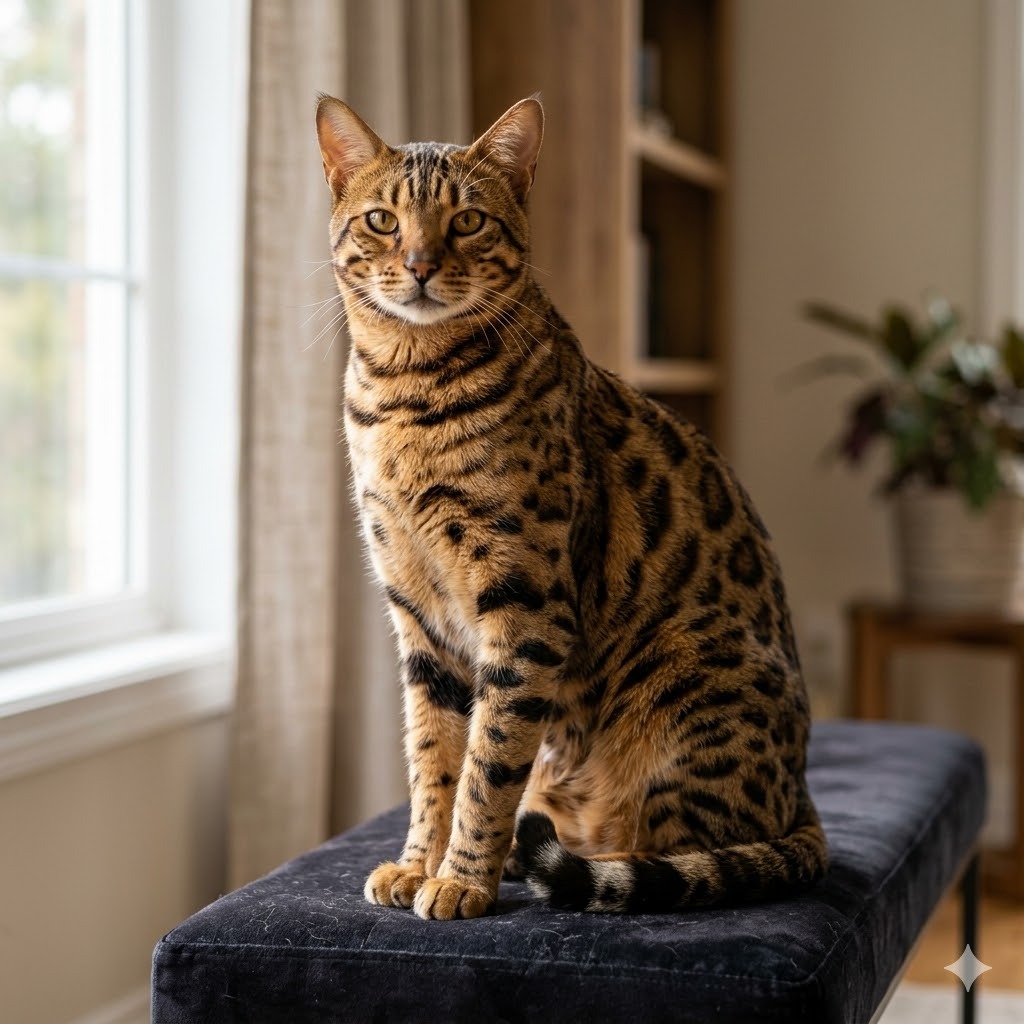
The Cheetoh is a modern designer cat breed created by crossing the Bengal with the Ocicat to produce a large, athletic cat with a bold spotted "wild" appearance and a genuinely friendly, people-loving temperament. The name is a nod to the cheetah, whose graceful spotted coat inspired the breed's look. The Cheetoh is entirely domestic - no wild ancestry in its recent generations - but it carries the exotic patterning of its Bengal and Ocicat parents while aiming for a calmer, more consistently sociable personality. Adults typically weigh 4-7 kg. The breed is still developing and remains genuinely uncommon; it is recognised by TICA as an experimental breed rather than a fully established championship breed, so pedigrees, breeder numbers, and type are still being refined.
History & Origins
The Cheetoh is a young breed, developed in the early 2000s in the United States. Breeder Carol Drymon is credited with formalising the cross around 2001, with the goal of combining the striking spotted markings of the Bengal with the reliably gentle, outgoing nature of the Ocicat.
Both parent breeds are themselves relatively modern. The Bengal was created by crossing domestic cats with the Asian leopard cat, then breeding back to fully domestic lines for temperament. The Ocicat, despite its wild look, is a purely domestic breed built from Abyssinian, Siamese, and American Shorthair lines. By combining these two, the Cheetoh inherits a large, muscular frame and a clearly defined spotted or rosetted coat, without adding any new wild input.
The breed gained early recognition from TICA as an experimental or advanced-new breed. It is important to be honest here: the Cheetoh is not widely established, and you will not find it in most registries or at most shows. Breeder numbers are small, and standards continue to evolve. Anyone seeking a Cheetoh should expect limited availability and should research the specific lines behind any kitten carefully.
Appearance
The Cheetoh is a large, powerfully built cat that combines the athletic body of the Bengal with the graceful, ground-hugging movement associated with wild cats. Males are noticeably larger than females and can reach the upper end of the weight range.
Key features:
- Coat: short, dense, and unusually soft, often with a slight sheen. The hallmark is a clear spotted or rosetted pattern arranged in horizontal alignment across the body.
- Colour: brown-spotted tabby is the most iconic, but silver, snow, and other tabby-based colours occur. Contrast between the spots and background is prized.
- Head: moderately wedge-shaped with a gentle profile, high cheekbones, and expressive eyes.
- Eyes: large, slightly almond-shaped, ranging from gold and green to aqua in some snow-coloured cats.
- Ears: medium to large, set well apart, sometimes with light furnishings.
- Body: long, muscular, and substantial, with a low, prowling gait that emphasises the wild look.
- Legs and paws: strong and well-boned, built for jumping and climbing.
The overall impression is of a miniature wild cat - a spotted, muscular animal that moves with deliberate, cat-of-the-savannah grace.
Temperament & Character
Despite its wild appearance, the Cheetoh is bred specifically for a friendly, affectionate, people-focused temperament. Owners describe these cats as confident, curious, and highly interactive rather than shy or aloof.
The breed is active and playful, keeping its kitten energy well into adulthood. Cheetohs love to climb, leap, and explore, and they thrive with owners who engage them in games and training.
Many Cheetohs are described as dog-like: they follow their people around the house, greet visitors, enjoy fetch, and can learn to walk on a harness. The Ocicat influence tends to soften the sometimes intense Bengal energy, producing a cat that is lively but generally easygoing.
Cheetohs are typically sociable with children, other cats, and cat-friendly dogs, especially when introduced early. They are not usually a good match for households wanting a quiet, hands-off pet - this is a cat that wants to be involved.
Care
Coat & Grooming
The short, soft coat is very low maintenance. A weekly brush or a rubber grooming mitt removes loose hair and keeps the coat glossy. The breed sheds modestly.
Bathing is rarely needed. Clean ears when they look dirty, trim claws every couple of weeks, and brush the teeth regularly to prevent dental disease. Overall grooming demands are minimal, making this an easy-care breed in the coat department.
Exercise & Enrichment
The Cheetoh is an athletic, intelligent cat that needs real activity. Provide tall cat trees, sturdy climbing shelves, puzzle feeders, and interactive wand toys. Daily play sessions are important - a bored Cheetoh may become destructive or over-vocal.
Many enjoy harness walks, fetch, and clicker training. Because these cats are strong jumpers and climbers, give them plenty of vertical space and secure any areas you want to keep off-limits.
Health & Lifespan
Average lifespan is 12-16 years.
Because the Cheetoh is a young hybrid breed drawing on Bengal and Ocicat lines, its long-term health profile is still being documented. Watch for concerns known in the parent breeds:
- Hypertrophic cardiomyopathy (HCM) - a heart condition seen in many breeds; responsible breeders should screen breeding cats.
- Progressive retinal atrophy (PRA) - an inherited eye condition seen in Bengal lines; a DNA test is available.
- Pyruvate kinase deficiency (PK deficiency) - a Bengal-associated blood disorder with a DNA test.
- Dental disease and routine issues common to all cats.
Choose a breeder who health-tests parent cats and can discuss the specific lines behind a kitten. Given the breed's small population, transparent breeding practices matter especially.
Feeding & Nutrition
Adults typically eat around 60-90 g of quality cat food per day, adjusted for size and activity. Given the breed's athletic build and high energy, a high-protein, meat-forward diet suits it well.
Feed measured meals rather than free-feeding to maintain lean muscle and avoid weight gain. Fresh water should always be available; many active cats appreciate a fountain. A mix of wet and dry food supports hydration and urinary health.
Living With
Litter
Standard provisions apply: 1 + 1 boxes per cat, scooped daily. Given the Cheetoh's larger size, choose roomy boxes. Low-dust, unscented litter is generally preferred.
Multi-cat households
Cheetohs are usually sociable with other cats, particularly when raised together or introduced gradually. Their active nature pairs well with another playful cat. Cat-friendly dogs are often accepted too.
Indoor vs outdoor
Indoor-only living is safest, protecting this striking and valuable cat from traffic, theft, and disease. Because the breed is so active, indoor enrichment is essential. A secure catio or supervised harness walks let the Cheetoh satisfy its curiosity safely.
Pros & Cons
Pros
- Striking wild spotted look without wild ancestry.
- Friendly, confident, people-focused temperament.
- Active, playful, and trainable.
- Low grooming needs.
- Good with children and other pets when socialised.
Cons
- Very rare and hard to find; limited breeder network.
- Still an experimental, developing breed with evolving standards.
- High energy demands daily play and enrichment.
- Long-term health data still limited.
- Premium prices for a scarce breed.
Best Suited For
- Active owners wanting an interactive, dog-like cat.
- Families with children and other pets.
- People who enjoy training and play.
- Households that can provide vertical space and enrichment.
- Owners drawn to an exotic look who understand the breed is uncommon.
Not suited for owners wanting a calm lap cat, people with no time for play, or anyone expecting an easily available, well-established breed.
Cheetoh - frequently asked questions
Is the Cheetoh part wild cat?
No. The Cheetoh is a domestic cross of Bengal and Ocicat. While the Bengal has distant wild ancestry, the Cheetoh itself is fully domestic and bred for a friendly temperament.
Is the Cheetoh a recognised breed?
It is recognised by TICA as an experimental or developing breed, not a fully established championship breed. It remains genuinely rare, with a small number of breeders worldwide.
Are Cheetohs good with children and other pets?
Yes, generally. They tend to be sociable and playful, doing well with respectful children and cat-friendly pets when introduced properly.
Do they need a lot of attention?
Yes. This is an active, interactive breed that thrives on play, climbing, and companionship. It is not the right choice for someone wanting a quiet, independent cat.
How big do they get?
Cheetohs are large, muscular cats, typically 4-7 kg, with males at the upper end. Their build makes them look and move like miniature wild cats.
🧠 Test yourself: guess the cat
Three clues from our quiz bank, each about another of our cats. Can you name them?
Clue 1.Named for the snowy patches on its paws, this blue-eyed pointed cat is known for an affectionate, dog-like attachment to owners.
It's the Snowshoe - read the full profile →
Clue 2.Said to ride with the Vikings as a ship's mouser, this sturdy cat features a long ruff and tufted ears and toes.
It's the Norwegian Forest Cat - read the full profile →
Clue 3.Combining the genetics of the Siamese and Burmese, this breed's signature 'mink' pattern is intermediate between its two parents.
It's the Tonkinese - read the full profile →
💛 Adoptable Cheetohs near you
Real cats of this breed (and close mixes) waiting in shelters and rescues right now, live from Petfinder. We have no affiliation and earn nothing - if someone catches your eye, the link goes straight to their shelter. New to adopting? Start with our adoption guide.
Widget not loading (some ad-blockers hide it)? Search directly on petfinder.com.