Donskoy
The Donskoy, also called the Don Sphynx, is a hairless cat breed that originated in Russia and is genetically distinct from the more familiar Sphynx.
🗓️ Last reviewed: July 2026
Overview
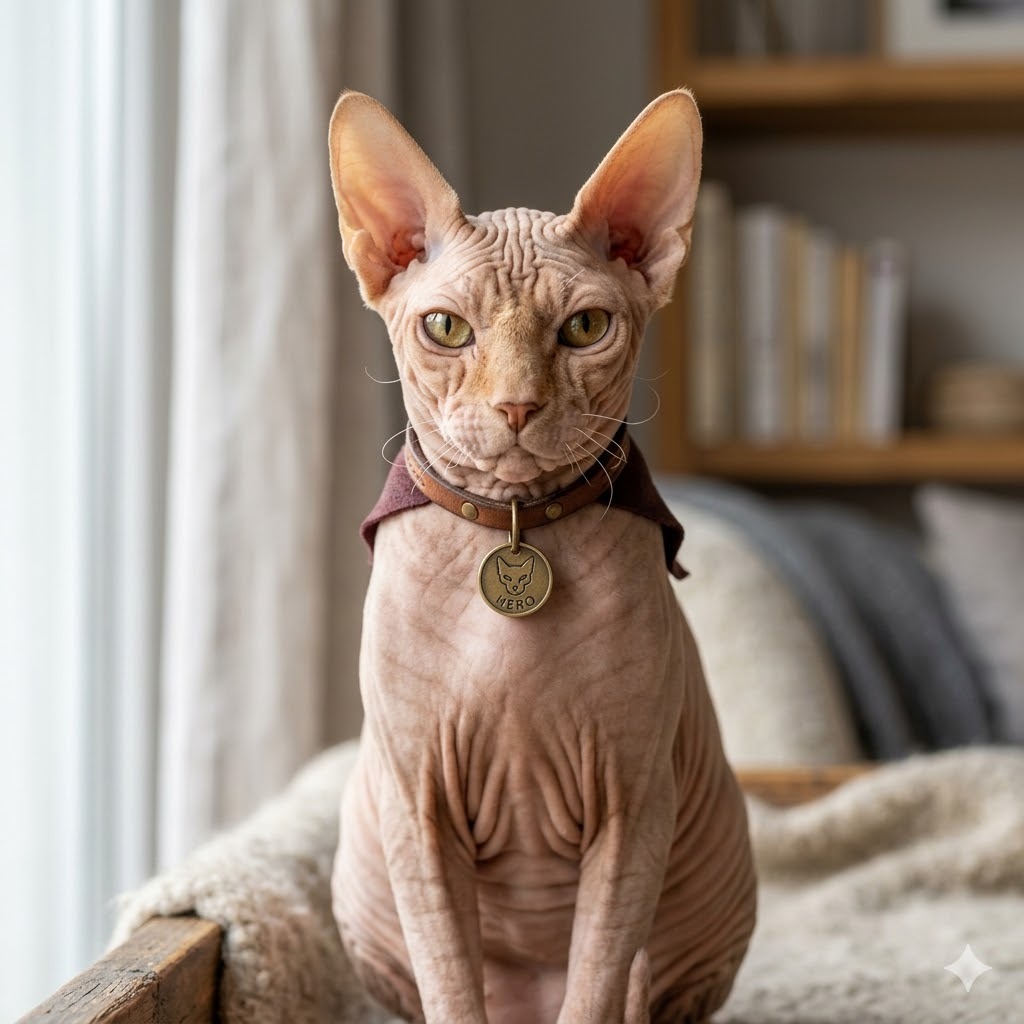
The Donskoy, also called the Don Sphynx, is a hairless cat breed that originated in Russia and is genetically distinct from the more familiar Sphynx. Its hairlessness comes from a dominant gene, and the breed is known for wrinkled, warm, elastic skin, expressive almond eyes, and a friendly, affectionate personality. Adults typically weigh 4-7 kg and have an average lifespan of 12-15 years, but their exposed skin demands consistent, attentive care.
History & Origins
The Donskoy traces to the city of Rostov-on-Don in southern Russia. In 1987, a woman rescued a kitten that gradually lost its hair over the following months. Rather than a sign of illness, this hairlessness proved to be a heritable trait, and the cat went on to produce partially hairless offspring.
A local breeder recognised the potential of this distinctive cat and began a careful breeding programme to establish and stabilise the trait. Crucially, the Donskoy's hairlessness is caused by a dominant gene, unlike the recessive gene responsible for the Canadian Sphynx. Because of this difference, the two breeds are entirely separate and should not be confused, despite the shared "Sphynx" name that attaches to the Donskoy.
Russian cat organisations recognised the Donskoy in the 1990s, and international recognition followed in the early 2000s. The Donskoy also served as a foundation breed in the creation of the Peterbald. It remains an uncommon breed worldwide.
Appearance
Medium-sized, muscular, and elegant, the Donskoy carries itself with a proud, almost regal bearing. Males typically weigh 5-7 kg; females 4-5 kg. The most striking feature is the skin, which is soft, warm to the touch, and often described as feeling like suede or a warm peach.
Donskoys come in several coat types that can even change with season and age:
- Rubber bald: completely hairless from birth, with the most pronounced wrinkling.
- Flock: a soft, downy coating that feels like a fine chamois; may be lost over time.
- Velour: born with a light coat and a bald spot on the head that often spreads.
- Brush: a wiry, uneven coat, which is a non-standard coat for showing but valuable in breeding.
Other key features:
- Skin: wrinkled, especially around the muzzle, cheeks, neck, and where the legs meet the body; soft and elastic.
- Head: wedge-shaped with pronounced cheekbones and a flat forehead.
- Ears: large, wide-set, and upright.
- Eyes: almond-shaped, medium to large, giving an alert, expressive look.
- Body: muscular with a firm belly, long webbed toes, and long, slender fingers on the front paws.
Temperament & Character
The Donskoy is affectionate, sociable, and deeply people-oriented. It craves companionship and warmth in equal measure, often seeking out laps, blankets, and the crook of an arm both for love and for heat, since a hairless cat loses body warmth quickly.
Intelligent and curious, the Donskoy is playful and stays engaged with its surroundings well into adulthood. The breed is friendly with strangers, gentle with children, and generally sociable with other pets, making it a warm and interactive family cat.
These cats are active and inquisitive, following owners around the home and involving themselves in daily life. They tend to be gentle and even-tempered rather than high-strung, and many enjoy a peaceful cuddle as much as an energetic play session.
Care
Coat & Grooming
Although hairless, the Donskoy is not maintenance-free; in some ways it is more demanding than a furred cat. The skin produces oils that would normally be absorbed by fur, so without regular care these oils build up and can leave a greasy, sticky residue on skin and surfaces.
Wipe the skin down regularly with a soft damp cloth, and bathe roughly once a week or as needed with a gentle, cat-safe cleanser. Dry thoroughly and keep the cat warm afterward. Pay special attention to the wrinkled folds and between the toes, where oils and debris collect. Clean the large ears frequently, as they accumulate waxy buildup quickly, and protect the skin from sunburn indoors near windows.
Exercise & Enrichment
The Donskoy is active, intelligent, and playful, and it thrives on interaction. Provide cat trees, warm cosy perches, puzzle feeders, and daily play sessions with wand and chase toys. Because the breed bonds so closely with people, much of its enrichment can come from shared play and attention.
Warmth is part of enrichment for this breed: heated beds, soft blankets, and sunny spots are appreciated, and many Donskoys will happily wear a knitted sweater in cool weather.
Health & Lifespan
Average lifespan is 12-15 years.
Common concerns:
- Skin problems - the exposed skin is prone to oil buildup, blackheads, yeast, and irritation without regular cleaning.
- Temperature sensitivity - hairless cats lose heat quickly and are vulnerable to cold, and their skin can sunburn.
- Dental issues - the dominant hairless gene can be associated with dental and gum problems, so routine dental care is especially important.
- Standard feline concerns - such as heart, kidney, and digestive issues that affect cats generally.
Choose a breeder who prioritises health and temperament and keeps kittens in a warm, clean home environment. Discuss the parents' dental and skin health directly.
Feeding & Nutrition
Hairless cats have a faster metabolism because they burn extra energy staying warm, so the Donskoy often eats more for its size than a furred cat. Adults typically eat 60-90 g of quality cat food per day, adjusted for activity, size, and ambient temperature.
Feed a high-protein, energy-dense diet and provide meals on a regular schedule. Fresh water should always be available. A mix of wet and dry food supports hydration and overall condition. Monitor weight, as the breed's appetite can lead to overeating.
Living With
Litter
Standard provisions apply: one box per cat plus one extra, scooped daily. Choose low-dust, unscented litter, since fine dust can cling to and irritate exposed skin. Wipe paws if litter sticks to the toes.
Multi-cat households
The Donskoy is sociable and typically enjoys the company of other cats and cat-friendly dogs. Companionship also provides warmth and stimulation. Introduce new animals gradually, and the breed's friendly nature usually eases the process.
Indoor vs outdoor
The Donskoy should be an indoor-only cat. Without a protective coat, it is highly vulnerable to cold, sunburn, scratches, and infection outdoors. A warm, safe indoor home with cosy perches suits the breed best; a secure catio in mild, shaded conditions can offer supervised fresh air.
Pros & Cons
Pros
- Warm, affectionate, and strongly bonded to people.
- Friendly with children, cats, and dogs.
- Striking, unusual appearance.
- Intelligent and interactive.
- No shedding fur around the home.
Cons
- High skin-care and bathing needs.
- Sensitive to cold and prone to sunburn.
- Possible dental issues linked to the breed.
- Eats more due to a fast metabolism.
- Rare and often costly to acquire.
Best Suited For
- Owners who are home often and enjoy a highly affectionate cat.
- Households willing to commit to weekly bathing and skin care.
- Warm homes, or owners happy to provide heated beds and sweaters.
- Families with gentle children and other sociable pets.
- People who love an unusual, interactive companion.
Not suited for owners wanting a low-maintenance pet, cold or draughty homes, or anyone unable to commit to regular skin and dental care.
Donskoy - frequently asked questions
Is the Donskoy the same as a Sphynx?
No. The Donskoy is a separate Russian breed. Its hairlessness comes from a dominant gene, while the Canadian Sphynx's comes from a recessive gene. They are genetically distinct.
Do hairless cats need bathing?
Yes. Without fur to absorb skin oils, the Donskoy needs regular wipe-downs and roughly weekly baths to prevent greasy buildup and skin problems.
Do they get cold?
Yes. Hairless cats lose heat quickly. Provide warm bedding, keep the home comfortably heated, and consider a sweater in cool weather.
Are Donskoys hypoallergenic?
No. Although they lack fur, they still produce dander and the Fel d 1 protein in saliva and skin oils, so they are not hypoallergenic.
Are they good family cats?
Yes. They are affectionate, sociable, and generally gentle with children and other pets, making them warm and engaging companions.
Why do some Donskoys have a little fuzz?
The breed has several coat types, and some are born with fine down or a light coat that may be lost over time, while others are completely bald from birth.
🧠 Test yourself: guess the cat
Three clues from our quiz bank, each about another of our cats. Can you name them?
Clue 1.One of the oldest known domestic cat breeds, this ticked-coat feline was named after a former name of Ethiopia, though its true origin likely lies near the Indian Ocean coast.
It's the Abyssinian - read the full profile →
Clue 2.This breed's coat is covered in soft springy curls, and kittens are often born completely bald.
It's the LaPerm - read the full profile →
Clue 3.Looking like a miniature leopard, this energetic, muscular cat has bold rosettes or marbling and a love of climbing and play.
It's the Bengal - read the full profile →
💛 Adoptable Donskoys near you
Real cats of this breed (and close mixes) waiting in shelters and rescues right now, live from Petfinder. We have no affiliation and earn nothing - if someone catches your eye, the link goes straight to their shelter. New to adopting? Start with our adoption guide.
Widget not loading (some ad-blockers hide it)? Search directly on petfinder.com.