German Rex
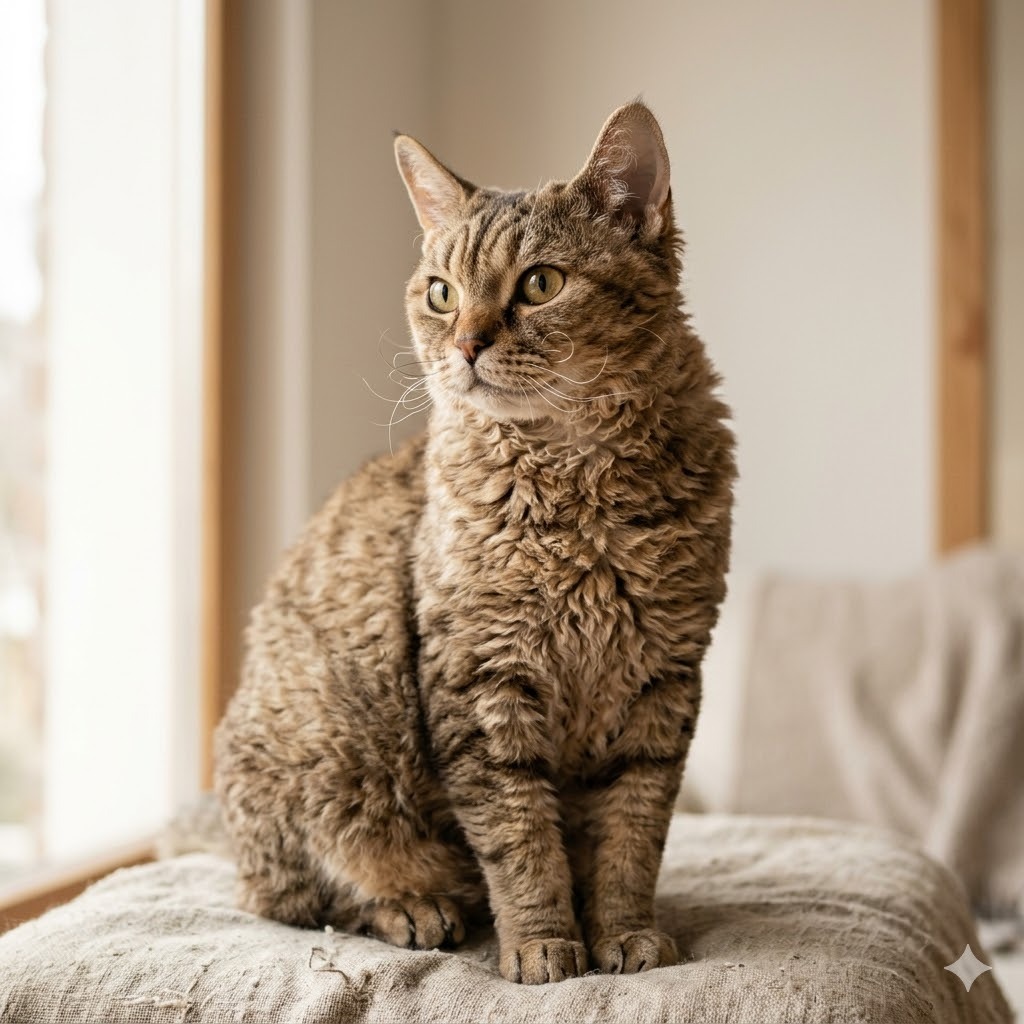
The German Rex is a curly-coated cat and one of the oldest of the Rex breeds - a medium-sized cat with a soft, plush, wavy coat and a famously gentle, playful nature.
🗓️ Last reviewed: July 2026
Overview
The German Rex is a curly-coated cat and one of the oldest of the Rex breeds - a medium-sized cat with a soft, plush, wavy coat and a famously gentle, playful nature. It typically weighs 3-5 kg and enjoys a lifespan of around 12-16 years. Robust, affectionate, and easy-going, the German Rex is prized for its velvety texture and its calm, people-loving temperament.
History & Origins
The German Rex traces to a curly-coated cat named Lammchen ("little lamb"), discovered in Berlin in the years after the Second World War. Accounts place her in the grounds of a hospital in the East Berlin district of Buch around 1951, where a doctor noticed her unusual soft, wavy coat and took her in. Lammchen is regarded as the foundation cat of the breed, and her descendants were bred to establish and fix the curly coat.
This makes the German Rex one of the earliest recognised Rex breeds, predating or paralleling the better-known Cornish Rex, which appeared in England in 1950. The two are distinct: the German Rex carries its own recessive gene for the curly coat, separate from the Cornish Rex mutation. Interestingly, the two genes have at times been treated as compatible, and outcrossing between German and Cornish lines has occurred during the breeds' development, which is part of why the German Rex remained numerically small and somewhat blurred with the Cornish in some registries.
The German Rex is recognised by some registries but remains a rare breed, far less common than the Cornish or Devon Rex. Numbers have always been modest, and the breed is seldom seen outside a handful of dedicated breeding programmes.
Appearance
The German Rex is a medium-sized cat of rounded, moderate build - neither the slim, greyhound-like body of the Cornish Rex nor anything cobby. Weight typically ranges from about 3 to 5 kg.
Key features:
- Coat: short, dense, soft, and wavy, with a plush velvety texture often compared to a lamb's fleece. There is no coarse guard hair, so the coat feels uniformly silky. The whiskers are also curled or crinkled.
- Colour: the curly coat can appear in essentially any colour and pattern.
- Head: rounded with well-developed cheeks, a distinct but not sharp nose stop, and a gently rounded forehead.
- Eyes: medium to large, rounded, in colours matching the coat.
- Ears: medium-large, broad at the base, set moderately wide - not the huge ears of a Devon Rex.
- Body: medium, muscular, and well-rounded, carried on legs of medium length.
- Tail: medium length, well-covered with the same soft wavy fur, tapering slightly.
Temperament & Character
The German Rex is affectionate, gentle, and companionable. It is a people-oriented breed that forms strong bonds with its family and thrives on attention and closeness. Many German Rex cats are true lap cats, happy to curl up with their owners, and they tend to be calmer and more placid than the highly excitable Devon Rex.
That said, the breed is also playful and lively, retaining a kitten-like curiosity well into adulthood. German Rex cats enjoy interactive games, are intelligent and trainable, and often greet their owners and seek out laps and shoulders.
They are typically easy-going and adaptable, tolerant of children, friendly with other cats and dogs, and rarely nervous. The combination of a soft, strokable coat and a warm, gentle personality makes them exceptionally cuddly companions.
Care
Coat & Grooming
The German Rex coat is very low maintenance and does not require regular brushing - in fact, over-brushing can damage the delicate wavy hair. A gentle stroke with the hand or an occasional soft rub with a chamois or your fingers is usually enough to keep the coat in good condition. Because the coat is fine and lacks heavy guard hairs, these cats shed relatively little, but they are not hypoallergenic. Pay attention to routine care instead: check the large ears regularly and clean them gently as needed, trim claws every couple of weeks, and brush the teeth. The fine coat also offers little insulation, so German Rex cats feel the cold and appreciate warm spots.
Exercise & Enrichment
Playful and intelligent, the German Rex benefits from daily interactive play, puzzle feeders, and climbing space. They enjoy wand toys and games of chase, and their trainable nature means many take happily to fetch or simple tricks. Enrichment keeps this curious breed mentally engaged and prevents boredom, though their generally calm temperament means they are not as relentlessly demanding as some active breeds.
Health & Lifespan
Average lifespan is 12-16 years.
The German Rex is generally a healthy, robust breed with no long list of documented breed-specific diseases, partly thanks to its natural origins. General points to watch include:
- Dental disease - the most common feline chronic problem.
- Obesity - preventable with measured feeding.
- Cold sensitivity - the thin coat provides little insulation, so keep these cats warm.
- Skin and ear care - the fine coat and open ears benefit from routine checks.
Because the gene pool is small, responsible breeders take care to avoid excessive inbreeding; seek out breeders who health-check and vaccinate their cats.
Feeding & Nutrition
Adults typically eat around 40-70 g of quality cat food per day, adjusted for size and activity. Feed measured meals to keep this small-to-medium breed at a healthy weight.
A high-protein, meat-forward diet suits the German Rex. Because the fine coat offers little insulation, these active cats may have slightly higher energy needs in cold conditions, but there are no special breed dietary requirements. A mix of wet and dry food supports hydration and urinary health.
Living With
Litter
Standard provisions work well: one box per cat plus one spare, scooped daily. A medium box and a low-dust, unscented litter suit most German Rex cats.
Multi-cat households
The German Rex's gentle, sociable nature makes it well suited to multi-cat homes. They generally get along well with other cats and with cat-friendly dogs, especially when introduced properly, and their placid temperament means they rarely stir up conflict.
Indoor vs outdoor
Indoor life is strongly recommended. The rarity and value of the breed, combined with a thin coat that offers poor protection from cold and wet, make outdoor roaming unwise. A warm indoor home with enrichment, a secure catio, or supervised harness time keeps a German Rex safe and comfortable.
Pros & Cons
Pros
- Uniquely soft, plush, velvety wavy coat.
- Gentle, affectionate, and often a genuine lap cat.
- Playful and trainable yet calmer than other Rex breeds.
- Very low grooming needs.
- Good with children and other pets.
Cons
- Rare and hard to find.
- Small gene pool requires careful breeding.
- Thin coat means sensitivity to cold.
- Not hypoallergenic despite low shedding.
- Needs company and daily interaction.
Best Suited For
- Owners wanting a soft, cuddly, affectionate companion.
- Families with children and other pets.
- People who love the Rex look but want a calmer temperament.
- Indoor homes that stay comfortably warm.
- Anyone seeking a low-grooming cat.
Not suited for owners who want a common, easy-to-source breed, households that are cold and draughty, or people who are away for long hours with no company for the cat.
German Rex - frequently asked questions
How is the German Rex different from the Cornish Rex?
Both have curly coats, but they arise from different genes. The German Rex has a rounder, more moderate body and a calmer temperament, while the Cornish Rex is slimmer and more athletic. The German Rex is also much rarer.
Is the German Rex hypoallergenic?
No. It sheds less than many breeds and lacks coarse guard hairs, but it still produces dander and allergens. No cat is truly hypoallergenic.
Does the curly coat need special grooming?
Very little. Over-brushing can damage the delicate wavy hair, so a gentle hand-stroke or occasional soft buffing is usually all that is needed.
Are German Rex cats good lap cats?
Yes. They are among the more affectionate and placid Rex breeds and many happily settle on laps and shoulders.
Do they get cold easily?
Somewhat. The fine coat offers little insulation, so German Rex cats seek out warm spots and appreciate a cosy indoor home.
🧠 Test yourself: guess the cat
Three clues from our quiz bank, each about another of our cats. Can you name them?
Clue 1.Unlike other curly-coated cats, this stocky breed keeps its dense, woolly curls on a full, non-thinning coat.
It's the Selkirk Rex - read the full profile →
Clue 2.Born white, this docile longhaired breed develops its dark color points on ears, face, and tail as it grows.
It's the Ragdoll - read the full profile →
Clue 3.This semi-longhair carries the same agouti ticking as the Abyssinian, with each hair banded in multiple colors.
It's the Somali - read the full profile →
💛 Adoptable German Rexs near you
Real cats of this breed (and close mixes) waiting in shelters and rescues right now, live from Petfinder. We have no affiliation and earn nothing - if someone catches your eye, the link goes straight to their shelter. New to adopting? Start with our adoption guide.
Widget not loading (some ad-blockers hide it)? Search directly on petfinder.com.