Highlander
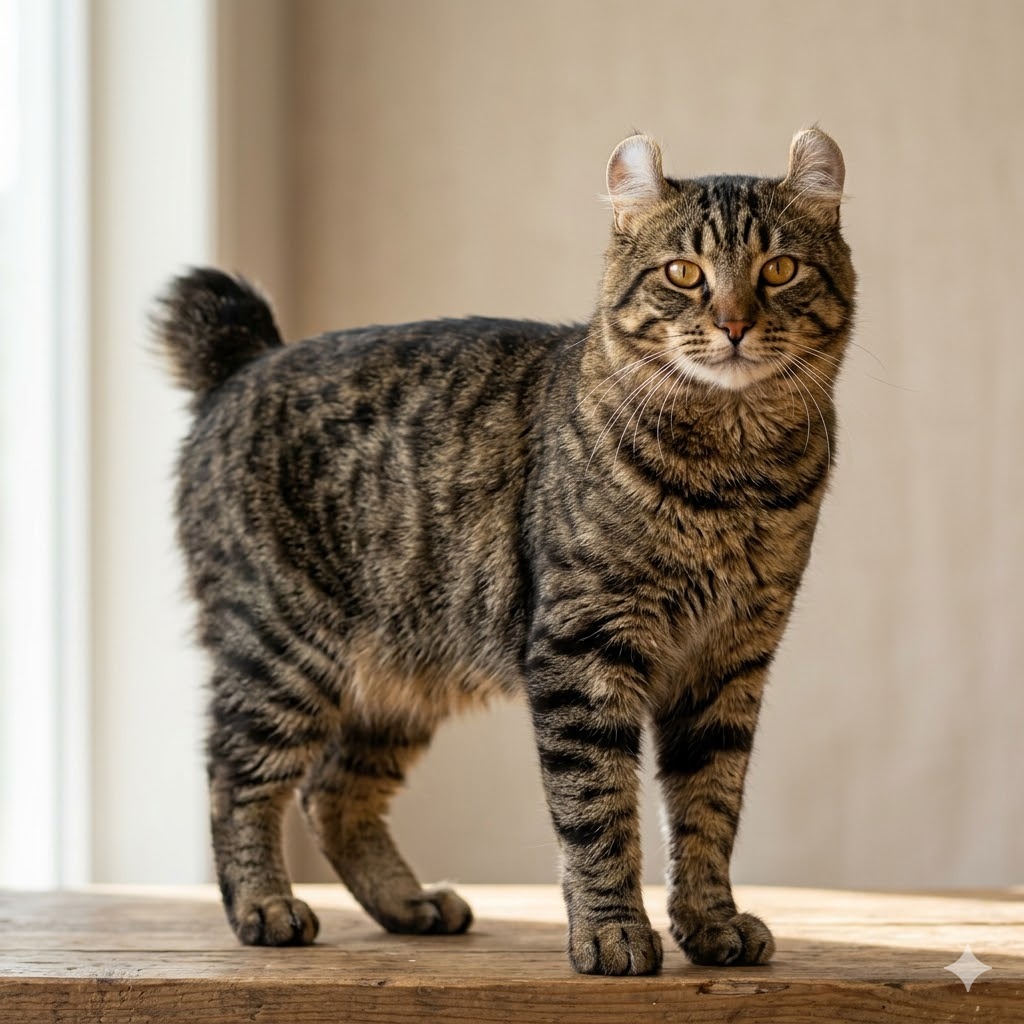
The Highlander is a bold, dramatic-looking designer cat breed distinguished by two striking traits: gently curled-back ears and a short, bobbed tail.
🗓️ Last reviewed: July 2026
Overview
The Highlander is a bold, dramatic-looking designer cat breed distinguished by two striking traits: gently curled-back ears and a short, bobbed tail. Large, muscular, and athletic, the Highlander was developed to have a "big cat" wild appearance paired with a playful, affectionate, dog-like personality. Adults typically weigh 4-9 kg, with powerful males at the top of the range. Despite its imposing looks, the breed is known for being clownish, social, and eager to interact with its family. The Highlander is a young and still-developing breed, recognised by TICA as a preliminary or advanced-new breed; it remains genuinely uncommon, and its type and standards are still being refined.
History & Origins
The Highlander is a modern American breed developed in the mid-2000s, first appearing around 2004 under the working name Highland Lynx before being formalised as the Highlander. It was created by crossing the Desert Lynx and the Jungle Curl - both themselves composite breeds - to combine a curled ear with a bobbed tail in a large, wild-looking domestic cat.
Both signature traits come from dominant genes. The curled ears result from a gene that causes the upper ear to curl gently backward, while the short tail comes from a bobtail gene. Breeders emphasise that, despite names referencing lynx and jungle, the Highlander is a fully domestic cat with no recent wild ancestry - the wild look is entirely cosmetic.
The breed was accepted into TICA's new-breed program and continues to develop. Honest note: the Highlander is rare, and because it is still being established, breeder numbers are small and standards continue to evolve. As with any breed featuring curled ears, careful breeding matters to ensure the ear cartilage is healthy and the curl is moderate rather than extreme.
Appearance
The Highlander is a large, muscular, athletic cat with an unmistakable wild appearance created by its curled ears and bobbed tail.
Key features:
- Ears: the signature trait - set wide and curling gently backward at the tips. The curl should be moderate, not tight or extreme.
- Tail: short and bobbed, ranging from a small stub to about half length; some kittens are born with longer tails.
- Coat: available in both shorthair and longhair, dense and plush. Tabby patterns are common and emphasise the wild look.
- Colour: a wide range of colours and patterns, with spotted and marbled tabbies especially popular.
- Head: broad with a strong muzzle, prominent whisker pads, and a slightly sloped forehead.
- Eyes: large and expressive, ranging in colour.
- Body: long, powerful, and muscular, with a solid, substantial build.
- Toes: the breed sometimes carries polydactyly (extra toes), which is accepted in the standard.
The overall impression is of a small, playful wildcat - powerful and exotic, yet approachable.
Temperament & Character
For all its wild looks, the Highlander is bred to be a big softie. Owners describe these cats as outgoing, playful, and remarkably dog-like, keeping a kittenish sense of fun throughout their lives.
Highlanders are highly social and love being part of the action. They tend to follow their people around, greet visitors, and involve themselves in whatever the household is doing. Many enjoy fetch, respond to training, and can learn to walk on a harness.
The breed is confident and curious, often described as clownish - happy to entertain and be entertained. Highlanders frequently enjoy water, batting at faucets or joining their owners near sinks and baths.
They are typically excellent with children, other cats, and cat-friendly dogs, thriving in busy, interactive homes. A Highlander is not a good match for someone wanting a calm, independent, or hands-off cat; this breed wants engagement and company.
Care
Coat & Grooming
Grooming is straightforward. Shorthaired Highlanders need a weekly brush; longhaired individuals benefit from brushing a few times a week to prevent tangles. Both coats are relatively easy to maintain.
Because of the curled ears, ear care deserves attention: check ears regularly and clean gently when needed, as the shape can trap a little more debris. Trim claws every couple of weeks and brush teeth regularly to protect dental health.
Exercise & Enrichment
The Highlander is athletic, intelligent, and energetic, and it needs plenty of outlets. Provide tall, sturdy cat trees, climbing shelves, puzzle feeders, and interactive wand toys. Daily play sessions are essential to burn energy and prevent boredom-driven mischief.
Many Highlanders enjoy fetch, clicker training, and harness walks. Given their strength and love of climbing, offer generous vertical space and secure anything you want protected from an inquisitive, powerful cat.
Health & Lifespan
Average lifespan is 10-15 years.
As a young breed built from composite lines, the Highlander's long-term health picture is still emerging. Sensible considerations include:
- Ear cartilage health - the curled-ear gene requires careful, moderate breeding to avoid overly tight curls or ear problems.
- Hypertrophic cardiomyopathy (HCM) - a heart condition common across many breeds; responsible breeders should screen.
- Tail and spinal considerations - bobtail genes are generally well tolerated, but breeders should avoid pairings that could cause skeletal issues.
- Routine concerns such as dental disease and obesity.
Choose a breeder who health-screens parents, breeds for moderate ear curl, and is open about the breed's developing status.
Feeding & Nutrition
Adults typically eat around 70-100 g of quality cat food per day, adjusted for size and activity. Given the Highlander's large frame and high energy, a high-protein, meat-forward diet supports lean muscle.
Feed measured meals rather than free-feeding to keep this substantial cat in good condition. Fresh water should always be available; many water-loving Highlanders appreciate a fountain. A mix of wet and dry food supports hydration and urinary health.
Living With
Litter
Standard provisions apply: 1 + 1 boxes per cat, scooped daily. Because Highlanders are large, choose big, roomy boxes. Low-dust, unscented litter is generally preferred.
Multi-cat households
Highlanders are typically sociable and playful with other cats and cat-friendly dogs, especially when raised together or introduced gradually. Their energetic nature pairs well with another active companion, which helps keep them entertained.
Indoor vs outdoor
Indoor-only living is safest, protecting this valuable and distinctive cat from traffic, theft, and disease. Because the breed is so active and strong, rich indoor enrichment is essential. A secure catio or supervised harness walks let the Highlander explore safely.
Pros & Cons
Pros
- Striking, wild look with curled ears and bobbed tail.
- Playful, outgoing, dog-like temperament.
- Great with children and other pets.
- Trainable and interactive.
- Easy-care coat.
Cons
- Rare and hard to find; small breeder network.
- Still a developing breed with evolving standards.
- High energy demands daily play and space.
- Curled ears need careful, ethical breeding.
- Premium prices for a scarce designer breed.
Best Suited For
- Active, interactive households wanting a dog-like cat.
- Families with children and other pets.
- Owners who enjoy training, play, and enrichment.
- Homes with room for a large, athletic climber.
- People drawn to an exotic look who accept the breed's rarity.
Not suited for owners wanting a calm lap cat, people with little time for play, or anyone expecting a common, easily available breed.
Highlander - frequently asked questions
Is the Highlander part wild cat?
No. Despite names like Desert Lynx and Jungle Curl in its background, the Highlander is a fully domestic cat. Its wild appearance is cosmetic, with no recent wild ancestry.
Are the curled ears harmful?
Not when bred responsibly. The curl should be moderate. Ethical breeders select for healthy ear cartilage and avoid extreme curls, and owners should keep the ears clean.
Do all Highlanders have short tails?
Most do, thanks to the bobtail gene, but tail length varies and some kittens are born with longer tails. The signature look combines the bob with the curled ears.
Are they good with families?
Yes, very. Highlanders are social, playful, and typically excellent with children and other pets, thriving in busy interactive homes.
How big do they get?
Highlanders are large cats, typically 4-9 kg, with muscular males at the upper end of the range.
🧠 Test yourself: guess the cat
Three clues from our quiz bank, each about another of our cats. Can you name them?
Clue 1.This slender, athletic cat has a warm ruddy coat where every hair is banded with several colors, giving a shimmering, wild-rabbit-like appearance.
It's the Abyssinian - read the full profile →
Clue 2.Nicknamed the 'Wegie,' this hardy longhair resembles a wild forest cat and sheds heavily each spring.
It's the Norwegian Forest Cat - read the full profile →
Clue 3.Named with a French-sounding word for its waves, this rex cat has curly whiskers and a wash-and-wear coat.
It's the LaPerm - read the full profile →
💛 Adoptable Highlanders near you
Real cats of this breed (and close mixes) waiting in shelters and rescues right now, live from Petfinder. We have no affiliation and earn nothing - if someone catches your eye, the link goes straight to their shelter. New to adopting? Start with our adoption guide.
Widget not loading (some ad-blockers hide it)? Search directly on petfinder.com.