Lykoi (Felis catus)
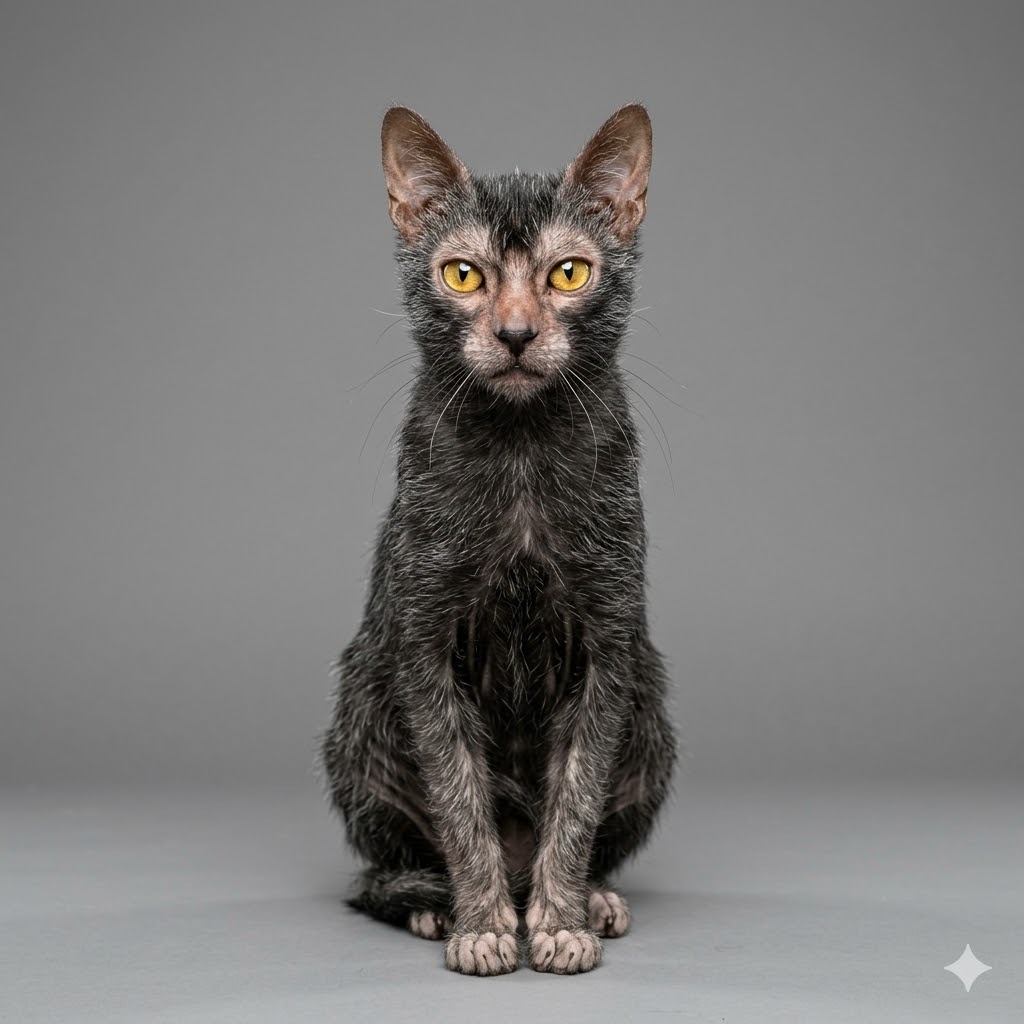
The Lykoi is a striking newer breed, often nicknamed the "werewolf cat" for its sparse, roan coat of black and white hairs over partially bald skin.
🗓️ Last reviewed: June 2026
Overview
The Lykoi is a striking newer breed, often nicknamed the "werewolf cat" for its sparse, roan coat of black and white hairs over partially bald skin. It arose from a natural mutation in ordinary domestic shorthair cats, not from crossing existing pedigree breeds. The patchy coat, the bald "mask" around the eyes, nose, and muzzle, and the thin legs and ears give the Lykoi an unmistakable, slightly wild look. Behind that appearance is a friendly, intelligent, intensely playful cat with a dog-like, hunting-driven personality that bonds closely with its family.
History & Origins
The Lykoi is a young breed, developed in the United States from around 2010. The mutation that defines it had been turning up sporadically in feral and domestic shorthair populations, but it was Dr. Johnny Gobble, a veterinarian, together with breeders Patti Thomas and Brittney Gobble, who first studied it and began a planned breeding programme.
The name comes from the Greek "lykos", meaning wolf, chosen for the breed's wolf-like roan coat. Early on, the founders did careful health work: they had the cats screened for skin and coat disorders, confirmed the look was caused by a recessive gene and not by illness or infection, and outcrossed to black domestic shorthairs to build a healthy gene pool.
The mutation affects the hair follicles. Lykoi follicles lack the balance of cells needed to produce a full coat, so the cat grows only a partial coat with no true undercoat, and it periodically molts - sometimes shedding down to near-bald patches before the hair regrows. The breed was accepted by TICA, advancing to championship status in the mid-2010s, and is recognised in a developmental capacity by some other registries. It remains rare worldwide.
Appearance
Small to medium-sized, with a lean, athletic build and fine bone - an ordinary domestic-shorthair frame wrapped in a very unusual coat. Males weigh 3.5-5 kg (8-11 lb); females 2.5-4 kg (6-9 lb).
Key features:
- Coat: the breed's signature - a sparse, patchy roan coat mixing black and white (amelanistic) hairs, with no undercoat. Coverage is uneven, leaving bald patches that shift as the cat molts. The texture is soft and somewhat hollow-feeling rather than dense.
- Roan pattern: the salt-and-pepper effect comes from white hairs scattered through a black coat; the degree of roaning varies cat to cat and changes over a lifetime.
- Bald "mask": the skin around the eyes, nose, muzzle, chin, and the backs of the ears is typically hairless, giving the distinctive werewolf face.
- Skin: where bare, the skin can pigment darker with sun exposure and feels warm and soft, similar to a Sphynx; it produces oils that need managing because there is little coat to absorb them.
- Colour: the standard recognises the black roan; the look depends on the mix of black and white hairs rather than on conventional colour patterns.
- Head: a modified wedge with a rounded muzzle, the bare mask emphasising large, alert eyes.
- Eyes: medium to large, often gold or yellow, giving an intense expression.
- Ears: large, broad at the base, and sparsely haired to bare, adding to the feral look.
- Body: lean and rangy with long legs, light bone, and an agile, hunter's carriage.
Temperament & Character
Despite the eerie looks, the Lykoi is a warm, friendly, and highly intelligent cat. It bonds strongly with its people and tends to be loyal and affectionate with its own family, while often staying reserved or cautious with strangers until it has weighed them up.
This is a busy, energetic breed with a strong play and prey drive - many owners describe it as dog-like. Lykoi love to chase, stalk, and pounce, they take quickly to fetch and puzzle games, and they bring real determination and problem-solving to play and to exploring their territory. Their hunting instinct is pronounced, a legacy of the ordinary working cats they came from.
Lykoi are social and do not like being left with nothing to do. They enjoy company, get on well with other cats and cat-friendly dogs, and appreciate a household where there is interaction and activity. They are generally good with respectful children.
The bare mask and partial coat make the Lykoi a warmth-seeker like other low-coat breeds - it will look for soft, warm spots and is happy to snuggle, though it usually balances cuddle time with bursts of energetic play.
Care
The Lykoi's partial coat and oily skin mean it needs more grooming attention than an ordinary shorthair, closer to the skin care a Sphynx requires.
Coat & Grooming
Because there is little coat to absorb skin oils, a Lykoi can develop a waxy or greasy residue on the skin and in the bare areas. Regular gentle wiping with a damp cloth, or a bath every week or two with a mild cat-safe shampoo, keeps the skin clean and comfortable. The bare mask, chin, and the folds around the ears need particular attention.
Ears accumulate wax quickly without protective hair and should be cleaned regularly, and the nail beds can collect oily grime that should be wiped away. Expect periodic molts: the coat can thin dramatically or shed to bald patches before regrowing, which is normal for the breed and not a sign of illness, though any sudden patchy hair loss with redness or irritation is worth a vet check.
With no undercoat, the Lykoi feels the cold and can sunburn on its bare skin, so keep it warm and limit strong direct sun, including through windows. For grooming routine, trim claws every 2 weeks and brush teeth several times weekly.
Exercise & Enrichment
The Lykoi is athletic, driven, and clever, and it needs daily activity and plenty of mental stimulation. Provide tall cat trees, climbing shelves, puzzle feeders, and interactive wand-toy sessions, and rotate toys to keep the inquisitive breed engaged.
Because the prey drive is so strong, games that let the cat stalk, chase, and "catch" are especially satisfying, and many Lykoi enjoy fetch and clicker training. Channelling that hunting energy into structured play prevents boredom and keeps this busy breed content.
Health & Lifespan
Average lifespan is estimated at 12-15 years. The Lykoi is generally considered healthy, and the founders built the breed on health-screened cats with domestic-shorthair outcrosses, which supports a broad gene pool. Importantly, though, the breed is very young, so long-term and large-scale health data simply do not exist yet, and any breed-specific predispositions may still be emerging.
Points to keep in mind:
- Skin and coat care - the bare areas need protection from sunburn and cold and regular cleaning to manage oils; the molting cycle is normal but should be distinguished from genuine skin disease.
- Limited long-term data - because the breed is new, owners and breeders should monitor and report health honestly as the population ages.
- Higher metabolism - cats with little coat can burn more calories staying warm and may need adequate, energy-dense nutrition.
- Routine feline concerns - standard dental, cardiac, and parasite monitoring as for any cat.
Choose a breeder who is transparent about health and lines, screens breeding cats appropriately, and is honest about what is and is not yet known about the breed.
Feeding & Nutrition
Adults typically eat 45-65 g of quality cat food per day, though a Lykoi with extensive bare skin may need somewhat more because it burns extra energy maintaining body heat.
A high-protein, energy-dense diet supports the breed's active metabolism and hunting energy. Feed measured meals and monitor body condition, increasing food in cold weather if a low-coat cat is using more energy to stay warm.
Fresh water should always be available; a mix of wet and dry food supports hydration and urinary health.
Living With
Litter
Standard provisions: 1 + 1 box per cat, scooped daily. Low-dust unscented litter is generally preferred, and is gentler on a low-coat cat's exposed skin and paws.
Multi-cat households
The sociable Lykoi usually enjoys company and does well with other cats and cat-friendly dogs, especially a companion to share play and keep it occupied while the family is out. Another warm body to snuggle is a bonus for this heat-seeking breed.
Indoor vs outdoor
Indoor-only is strongly recommended. With little coat the Lykoi cannot tolerate cold or strong sun well, is rare and valuable, and its strong hunting drive is best satisfied indoors with enrichment rather than let loose on local wildlife. A warm, draught-free indoor home with sunny but UV-safe perches suits the breed best.
Pros & Cons
Pros
- Unique, striking "werewolf" appearance.
- Friendly, loyal, and affectionate with its family.
- Highly intelligent, playful, and trainable - often dog-like.
- Warm and willing to snuggle.
- Generally good with cats, cat-friendly dogs, and respectful children.
Cons
- Partial coat and oily skin need regular cleaning, like a Sphynx.
- Sensitive to cold and sun; should be kept indoors and warm.
- Molts to bald patches at times, which can surprise new owners.
- Long-term breed health data is still limited.
- Rare, often expensive, and can be reserved with strangers.
Best Suited For
- Owners wanting a unique-looking, interactive, intelligent companion.
- Households that can provide regular skin care and a warm home.
- People who enjoy a busy, playful, hunting-driven, dog-like cat.
- Homes with cat-friendly pets or where the cat has company and stimulation.
- Owners comfortable with a newer breed and willing to choose a transparent breeder.
Not suited for people wanting a low-maintenance cat, owners unwilling to bathe and skin-care a low-coat cat, homes that are cold, draughty, or strongly sunlit, or anyone uneasy about the limited long-term health data of a young breed.
Lykoi (Felis catus) - frequently asked questions
Is the Lykoi a sick or unhealthy cat?
No - the patchy coat is caused by a natural recessive gene affecting the hair follicles, not by disease or infection. The founders had the cats screened to confirm this. The breed is considered generally healthy, though it is young and long-term data is still limited.
Why does my Lykoi go bald in patches?
Lykoi molt as part of the breed's normal coat cycle: the sparse coat can thin or shed to near-bald patches before regrowing. This is expected. Sudden hair loss with red, irritated, or sore skin is different and should be checked by a vet.
Do Lykoi need baths like a Sphynx?
Often yes - with little coat to absorb skin oils, they can build up a waxy residue, so regular wiping or a bath every week or two keeps the skin and bare mask clean.
Is the Lykoi hypoallergenic?
No - despite the sparse coat, Lykoi still produce dander and the Fel d 1 protein in saliva and skin, so no cat is truly hypoallergenic.
Are Lykoi affectionate?
Yes, with their own family - they are loyal, friendly, and playful, though many are reserved with strangers at first. They balance snuggling with energetic, hunting-style play.
🧠 Test yourself: guess the cat
Three clues from our quiz bank, each about another of our cats. Can you name them?
Clue 1.A gentle, silky-coated cat with sapphire eyes and snowy gloved paws, it is affectionate and quieter than many pointed breeds.
It's the Birman - read the full profile →
Clue 2.Nicknamed the 'pixie cat' for its huge ears and impish face, this breed has a soft, wavy, suede-like coat.
It's the Devon Rex - read the full profile →
Clue 3.This sleek cat was deliberately bred to resemble a miniature black panther, with a glossy jet coat and copper or gold eyes.
It's the Bombay - read the full profile →
💛 Adoptable Lykoi (Felis catus)s near you
Real cats of this breed (and close mixes) waiting in shelters and rescues right now, live from Petfinder. We have no affiliation and earn nothing - if someone catches your eye, the link goes straight to their shelter. New to adopting? Start with our adoption guide.
Widget not loading (some ad-blockers hide it)? Search directly on petfinder.com.