Minuet
The Minuet - formerly known as the Napoleon - is a small, round-faced companion breed created by crossing the short-legged Munchkin with the flat-faced Persian group (Persian, Himalayan, and Exotic Shorthair).
🗓️ Last reviewed: July 2026
Overview
The Minuet - formerly known as the Napoleon - is a small, round-faced companion breed created by crossing the short-legged Munchkin with the flat-faced Persian group (Persian, Himalayan, and Exotic Shorthair). The result is a sweet, mellow, low-slung cat with a rounded head, large expressive eyes, and a plush coat. Adults typically weigh 3-4 kg. The Minuet was designed purely as a lap-loving companion, and its gentle, people-oriented nature is its defining feature. It is worth being upfront: this is a designer breed built on the Munchkin's dwarfism gene, and the short-legged trait remains the subject of an ongoing welfare debate among vets and registries. The breed is still relatively uncommon, though it has grown a devoted following.
History & Origins
The breed was created in the 1990s by American Basset Hound breeder Joe Smith, who wanted to combine the short legs of the Munchkin with the round, doll-like features of the Persian family. He originally named it the Napoleon, after the French emperor, in a playful reference to its small stature.
The Munchkin contributes the short-legged trait, which is caused by an autosomal dominant gene affecting the long bones of the legs - a form of feline dwarfism. The Persian group contributes the round head, short muzzle, large eyes, and luxurious coat. Because breeding two short-legged cats together can be lethal to embryos, standard-legged Minuets are always part of the breeding program, and litters contain both short-legged and standard-legged kittens.
In 2015 the breed was renamed the Minuet and gained recognition from TICA. It remains a niche breed. Honest note: the Munchkin gene and the flat-faced Persian conformation both attract criticism on welfare grounds. Some registries decline to recognise short-legged breeds at all, citing concerns about mobility and the ethics of breeding for dwarfism. Prospective owners should understand this debate before choosing the breed.
Appearance
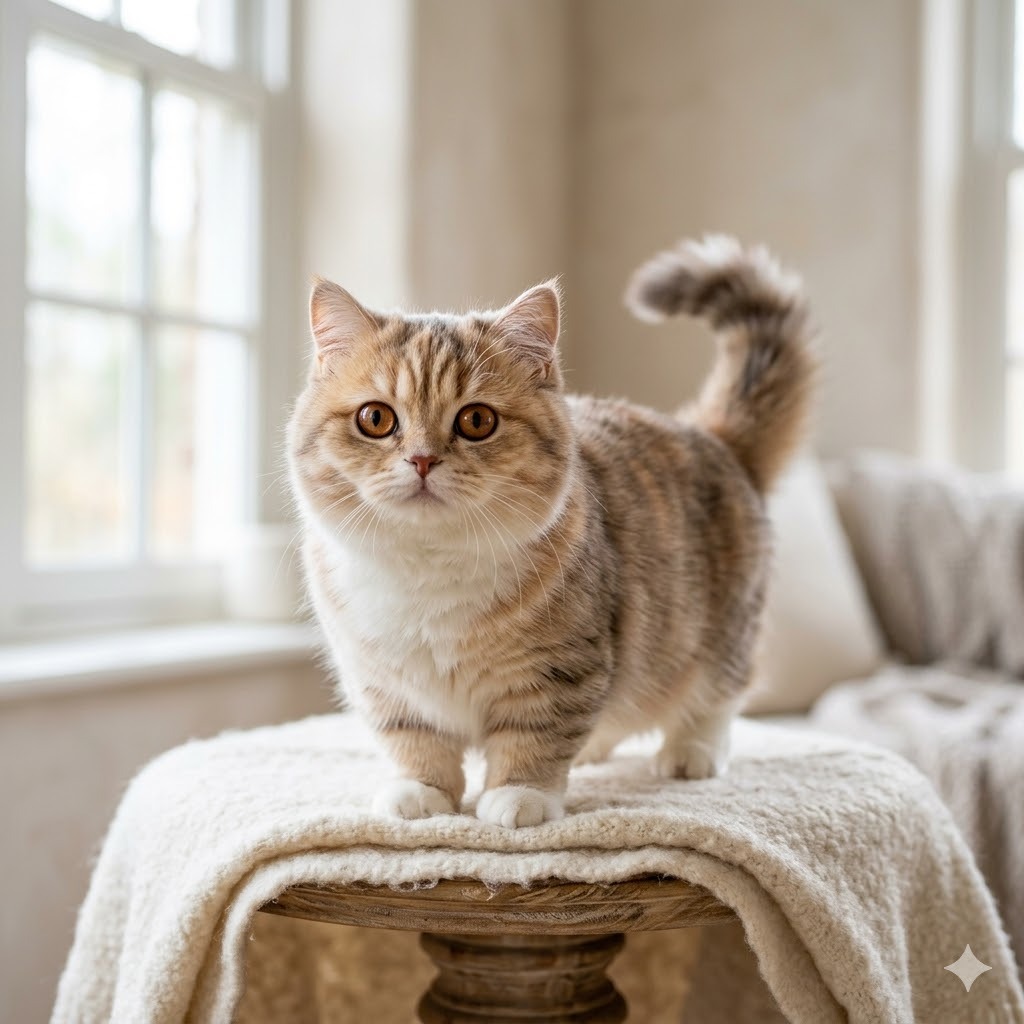
The Minuet is a small, sturdy cat with a rounded, cobby body and, in many individuals, distinctively short legs. Standard-legged Minuets look like a rounder, plusher cat of normal proportions.
Key features:
- Legs: short in the classic version, giving a low, close-to-the-ground stance; standard-legged individuals occur in every litter.
- Coat: available in both shorthair and longhair, always plush and dense. The longhair version has a soft, flowing coat.
- Colour: virtually any colour and pattern is accepted.
- Head: round with full cheeks, a short nose, and a sweet, doll-like expression softer than the extreme flat face of some Persians.
- Eyes: large, round, and wide-set, giving an open, appealing look.
- Ears: medium, rounded at the tips, set well apart.
- Body: compact, well-muscled, and rounded, with a broad chest.
The overall impression is of a small, cuddly, round cat with big eyes and, often, endearingly short legs.
Temperament & Character
The Minuet is bred first and foremost for temperament, and it shows. These cats are typically sweet, gentle, and deeply affectionate, blending the playful curiosity of the Munchkin with the calm, mellow disposition of the Persian.
Minuets love to be near their people. They enjoy laps, cuddles, and quiet companionship, and they tend to greet family members and follow them around the home. Despite their short legs, many are surprisingly playful and can run, chase toys, and climb to low perches.
The breed is generally people-oriented rather than independent, forming strong bonds and disliking long periods alone. Minuets are usually good with children, other cats, and friendly dogs, and their easygoing nature makes them adaptable to a range of households, including apartments.
They are not demanding or loud, but they do want company. A Minuet left alone for long stretches every day may become lonely.
Care
Coat & Grooming
Grooming depends on coat length. Shorthaired Minuets need only a weekly brush. Longhaired Minuets need brushing several times a week - ideally daily - to prevent mats and tangles, especially around the ruff, armpits, and hindquarters.
Because of the Persian influence, some Minuets have short muzzles and may need occasional eye cleaning to manage tear staining. Clean ears when needed, trim claws every couple of weeks, and brush teeth regularly.
Exercise & Enrichment
Minuets are moderately active and playful. Provide wand toys, balls, puzzle feeders, and low, accessible perches, since short-legged individuals cannot leap as high as long-legged cats. Ramps or steps help them reach favourite spots safely.
Daily play keeps them fit and mentally engaged. They enjoy gentle games and interactive time with their owners more than frantic activity.
Health & Lifespan
Average lifespan is 12-15 years.
The Minuet's health must be considered honestly, given its two parent breeds:
- Short-leg (dwarfism) concerns - the Munchkin gene affects leg length. While many short-legged cats live active lives, the trait is debated on welfare grounds, and some cats may be more prone to spinal or joint strain. Breeding two short-legged cats is avoided because it is lethal to embryos.
- Persian-related issues - flatter-faced individuals may experience breathing difficulty, dental crowding, and tear-duct problems. Polycystic kidney disease (PKD) is seen in Persian lines and has a DNA test.
- Hypertrophic cardiomyopathy (HCM) - responsible breeders screen for this.
Choose a breeder who prioritises moderate features, screens for PKD and HCM, and is transparent about the welfare debate around dwarfism.
Feeding & Nutrition
Adults typically eat around 40-60 g of quality cat food per day, adjusted for size and activity. Because Minuets are small and can be less active than long-legged cats, portion control is important to prevent weight gain that could add strain to short legs and joints.
A balanced, high-protein diet suits the breed. Feed measured meals rather than free-feeding. Fresh water should always be available, and a mix of wet and dry food supports hydration.
Living With
Litter
Standard provisions apply: 1 + 1 boxes per cat, scooped daily. Choose boxes with a lower entry lip so short-legged cats can climb in and out easily. Low-dust, unscented litter is generally preferred.
Multi-cat households
Minuets are typically friendly and adaptable, getting along well with other cats and cat-friendly dogs, especially when introduced gradually. Their gentle nature makes them suitable companions in multi-pet homes.
Indoor vs outdoor
Indoor-only living is strongly recommended. Short legs limit a Minuet's ability to jump, climb, and escape danger, making the outdoors especially risky. A safe indoor environment with low perches, or a secure catio, is ideal.
Pros & Cons
Pros
- Sweet, gentle, affectionate lap-cat temperament.
- Small size suits apartments.
- Adorable round face and big eyes.
- Good with children and other pets.
- Available in short and long hair.
Cons
- Built on the debated Munchkin dwarfism gene.
- Possible Persian-linked breathing, eye, and dental issues.
- Not recognised by all registries; remains uncommon.
- Short legs limit jumping and may strain joints.
- Longhaired coats need frequent grooming.
Best Suited For
- Owners wanting an affectionate, calm lap companion.
- Apartment and indoor households.
- Families with gentle children and other pets.
- People who are home often and want a companionable cat.
- Owners who have researched and accept the dwarfism welfare debate.
Not suited for anyone uncomfortable with the ethics of short-legged breeds, owners wanting a highly athletic cat, or people who are away from home for long hours.
Minuet - frequently asked questions
What is the difference between a Minuet and a Napoleon?
They are the same breed. Napoleon was the original name; it was renamed the Minuet in 2015 when TICA recognised it.
Are all Minuets short-legged?
No. Every litter includes both short-legged and standard-legged kittens, because breeding two short-legged cats together is not viable. Standard-legged Minuets are healthy, normally proportioned cats.
Is the short-legged trait harmful?
This is genuinely debated. Many short-legged cats live active, comfortable lives, but the dwarfism gene attracts welfare criticism, and some registries decline to recognise such breeds. Prospective owners should weigh this carefully.
Are Minuets good lap cats?
Yes. Affection is the whole point of the breed. Most Minuets love laps, cuddles, and being close to their people.
How big do they get?
Minuets are small cats, typically 3-4 kg, with a compact, rounded body.
🧠 Test yourself: guess the cat
Three clues from our quiz bank, each about another of our cats. Can you name them?
Clue 1.Named with a French-sounding word for its waves, this rex cat has curly whiskers and a wash-and-wear coat.
It's the LaPerm - read the full profile →
Clue 2.Famously the model for a grinning Lewis Carroll character, this teddy-bear cat has copper or gold eyes against a crisp slate coat.
It's the British Shorthair - read the full profile →
Clue 3.This silver-blue cat from Thailand is considered a good-luck gift and has striking peridot-green eyes.
It's the Korat - read the full profile →
💛 Adoptable Minuets near you
Real cats of this breed (and close mixes) waiting in shelters and rescues right now, live from Petfinder. We have no affiliation and earn nothing - if someone catches your eye, the link goes straight to their shelter. New to adopting? Start with our adoption guide.
Widget not loading (some ad-blockers hide it)? Search directly on petfinder.com.