Leonberger
The Leonberger is a giant German working breed prized as one of the ultimate gentle giants - a lion-like, mane-crowned family dog that combines enormous size with a famously calm, patient, and affectionate nature.
🗓️ Last reviewed: July 2026
Overview
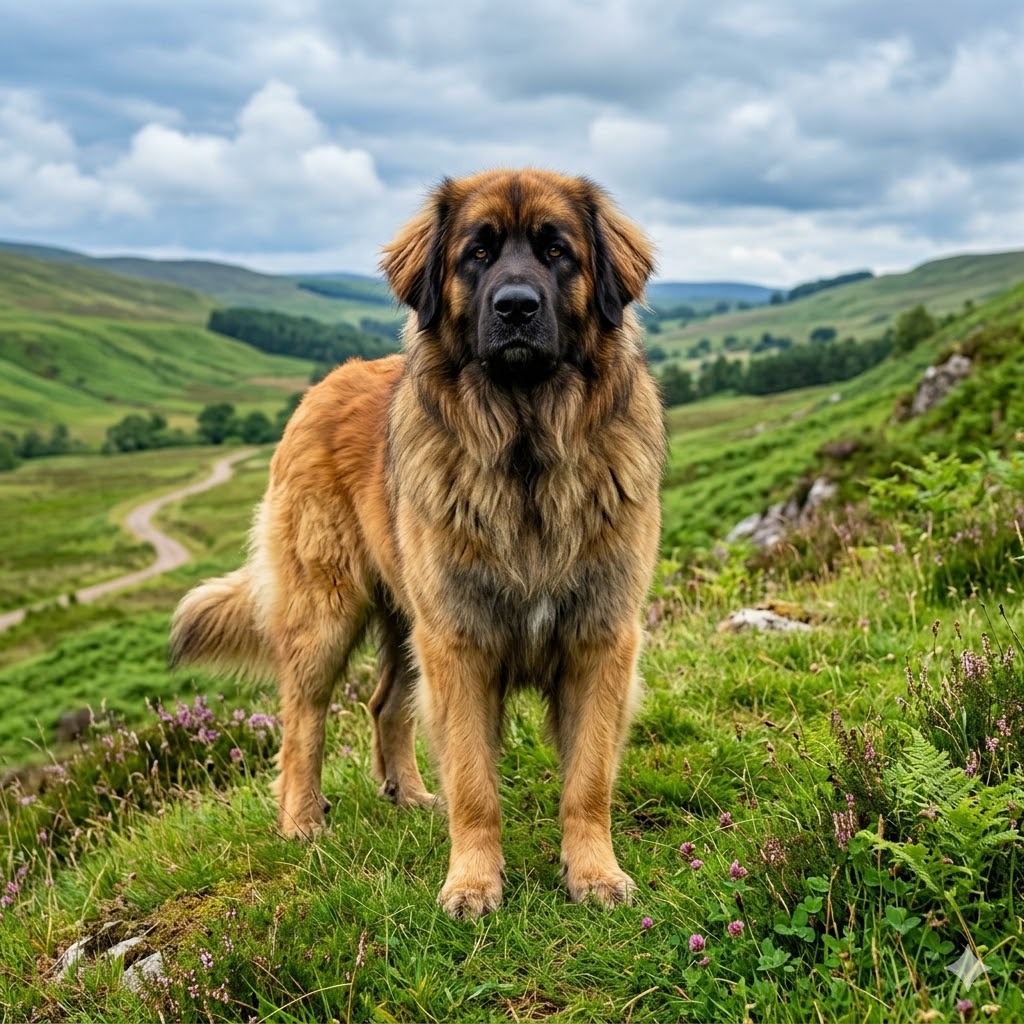
The Leonberger is a giant German working breed prized as one of the ultimate gentle giants - a lion-like, mane-crowned family dog that combines enormous size with a famously calm, patient, and affectionate nature. Bred to resemble the lion on the crest of its home town of Leonberg, the breed carries a striking golden-to-red coat, a dark mask, and a water-loving, work-ready constitution. Males typically weigh 54-77 kg (120-170 lb). Despite their imposing scale, well-bred Leonbergers are soft-hearted, people-focused companions - though their size, heavy shedding, and short lifespan make them a serious commitment.
History & Origins
The Leonberger was created in the town of Leonberg, in south-west Germany, in the mid-19th century. Local dog breeder and town councillor Heinrich Essig is credited with developing the breed, reputedly aiming to create a dog resembling the lion featured on the town's coat of arms. The breed was built from crosses of large working dogs, including Newfoundlands, Saint Bernards, and Great Pyrenees-type mountain dogs.
The result was a majestic, water-capable working dog that became fashionable across Europe, favoured by royalty and celebrities of the era. On farms the breed worked as a draft and guarding dog, and its swimming ability and gentle temperament made it a natural water-rescue and companion dog.
The two World Wars devastated the breed, and at times only a handful of dogs remained; dedicated breeders rebuilt it from these survivors. The Leonberger is recognised internationally today and joined the AKC in 2010. It remains a specialist breed, valued for temperament, therapy work, and water rescue.
Appearance
Giant, muscular, and balanced, with a noble, lion-like look. Males stand 72-80 cm (28-31.5 in) and weigh 54-77 kg (120-170 lb); females are smaller. The build is powerful yet elegant, never clumsy.
Key features:
- Coat: medium-long to long, water-resistant double coat, with a pronounced mane around the neck and chest, heaviest in males.
- Colour: lion-gold, red, reddish-brown, and sandy, always with a black mask.
- Head: deep rather than broad, with a black mask that gives the breed its characteristic expression.
- Eyes: medium, brown, with a gentle, intelligent expression.
- Ears: medium, drop, set high, close to the head.
- Tail: well-furred, carried low.
- Feet: webbed, reflecting the breed's swimming heritage.
Temperament & Character
Gentle, calm, and confident. The Leonberger's temperament is its greatest asset - steady, self-assured, and unshakeably good-natured. The breed is deeply devoted to its family, thrives on being included in daily life, and is remarkably patient, which makes it a beloved family and therapy dog.
Well-socialised Leonbergers are friendly and composed with strangers, neither shy nor aggressive. They retain a watchful, protective awareness and will alert to genuine concerns, but they are not sharp or reactive guardians.
The breed is typically excellent with children, tolerant and affectionate, though its size means small children can be bowled over during play, so supervision matters. Leonbergers generally get on well with other dogs and household pets when raised together. They form strong bonds and do not thrive if isolated or left alone for long stretches.
Care
Coat & Grooming
The thick double coat needs brushing several times a week - and daily during heavy sheds - to prevent matting behind the ears, around the mane, and on the breeches and tail. Leonbergers shed heavily year-round and blow their coat dramatically once or twice a year; owners should expect significant hair around the home.
Bathe as needed, and dry the coat and skin thoroughly, especially after swimming, to prevent hot spots. Clean the ears weekly, trim nails regularly, and brush the teeth often. Wiping paws and the beard after drinking or water play helps keep the coat clean.
Exercise & Activity Needs
Moderate. Leonbergers need around 60 minutes of daily activity - walks, hikes, gentle play, cart-pulling, or swimming, which they adore. They are not high-octane dogs, but they do need regular work to stay fit and mentally content, and they excel at water rescue, carting, tracking, and therapy roles.
As a giant breed, growth must be protected: puppies need controlled, low-impact exercise and no forced running or jumping until the joints mature. The heavy coat also means Leonbergers can overheat, so exercise in the cool parts of the day in warm weather and always offer water.
Health & Lifespan
Average lifespan is 7-9 years - short, as is typical for giant breeds.
Common concerns:
- Hip and elbow dysplasia - screen breeding stock.
- Osteosarcoma (bone cancer) - a leading cause of death in the breed.
- Bloat (GDV) - a serious risk in this deep-chested giant.
- Leonberger polyneuropathy (LPN) - inherited neurological disorders with genetic tests available.
- Dilated cardiomyopathy and other heart conditions.
- Hypothyroidism.
- Eyelid abnormalities such as entropion and ectropion.
Buy from breeders who test hips, elbows, heart, eyes, and polyneuropathy status.
Feeding & Nutrition
A giant-breed adult typically eats 4-6 cups of quality food daily, split across two meals to reduce bloat risk. Growing puppies must be fed a large- or giant-breed puppy formula that controls calcium and calorie levels, since too-fast growth damages developing joints.
Keep the dog lean to protect the heart and skeleton, avoid vigorous activity for an hour before and after meals, and consider a slow feeder. Provide constant access to fresh water, particularly given the coat and swimming.
Pros & Cons
Pros
- Wonderfully gentle, calm temperament.
- Excellent with children and other pets.
- Trainable and eager to please for a giant breed.
- Versatile working dog; loves water and carting.
- Majestic, striking appearance.
Cons
- Short lifespan (7-9 years) and serious health risks.
- Very heavy shedding and demanding grooming.
- Giant size needs space, strong training, and money.
- Cannot be left alone for long.
- Can overheat in warm climates.
Best Suited For
- Families with space and time for a giant companion.
- Owners who want a gentle, involved family dog.
- People who enjoy grooming, hiking, or water activities.
- Temperate or cool climates.
Not suited for apartment dwellers, absent full-time-office households, the house-proud who dislike hair, hot climates, or owners on a tight budget for food and veterinary care.
Leonberger puppy growth chart
A typical growth curve for a giant breed like the Leonberger, estimated from its adult weight of 54-77 kg. Puppies vary with sex, genetics and diet, so treat this as a guide - for your own puppy, use the puppy weight predictor.
| Age | Typical weight | % of adult |
|---|---|---|
| 2 mo | 9.7-13.9 kg | 18% |
| 3 mo | 15.1-21.6 kg | 28% |
| 4 mo | 20-28.5 kg | 37% |
| 6 mo | 28.1-40 kg | 52% |
| 9 mo | 37.8-53.9 kg | 70% |
| 12 mo | 44.8-63.9 kg | 83% |
| Adult | 54-77 kg | 100% |
Leonberger - frequently asked questions
Are Leonbergers good with children?
Yes - they are famously gentle, patient, and affectionate with children. Their size means play should be supervised so small children are not accidentally knocked over.
How much do Leonbergers shed?
A great deal. They shed year-round and blow their coat heavily once or twice a year, so regular brushing and tolerance for hair around the home are essential.
Do Leonbergers like water?
Very much. With their water-resistant coat and webbed feet they are natural swimmers, bred in part for water work, and many love to swim whenever given the chance.
How long do Leonbergers live?
Around 7-9 years on average, which is short even for a giant breed. Bone cancer, bloat, and heart disease are significant concerns.
Can Leonbergers be left alone?
Not for long. They bond closely with their families and can become distressed or destructive if isolated regularly, so they suit households where someone is usually home.
🧠 Test yourself: guess the dog
Three clues from our quiz bank, each about another of our dogs. Can you name them?
Clue 1.A German tax collector developed this sleek guard dog in the 1890s to protect him on his rounds.
It's the Doberman Pinscher - read the full profile →
Clue 2.Nicknamed the 'Gamekeeper's Night Dog', this powerful, quiet guardian was meant to knock down and hold an intruder silently.
It's the Bullmastiff - read the full profile →
Clue 3.This ancient toy lapdog wears a long, flowing pure-white coat that hangs straight to the floor.
It's the Maltese - read the full profile →
💛 Adoptable Leonbergers near you
Real dogs of this breed (and close mixes) waiting in shelters and rescues right now, live from Petfinder. We have no affiliation and earn nothing - if someone catches your eye, the link goes straight to their shelter. New to adopting? Start with our adoption guide.
Widget not loading (some ad-blockers hide it)? Search directly on petfinder.com.