Convict Cichlid
The convict cichlid (Archocentrus nigrofasciatus) is one of the toughest, most prolific and most notoriously aggressive fish in the entire freshwater hobby.
🗓️ Last reviewed: July 2026
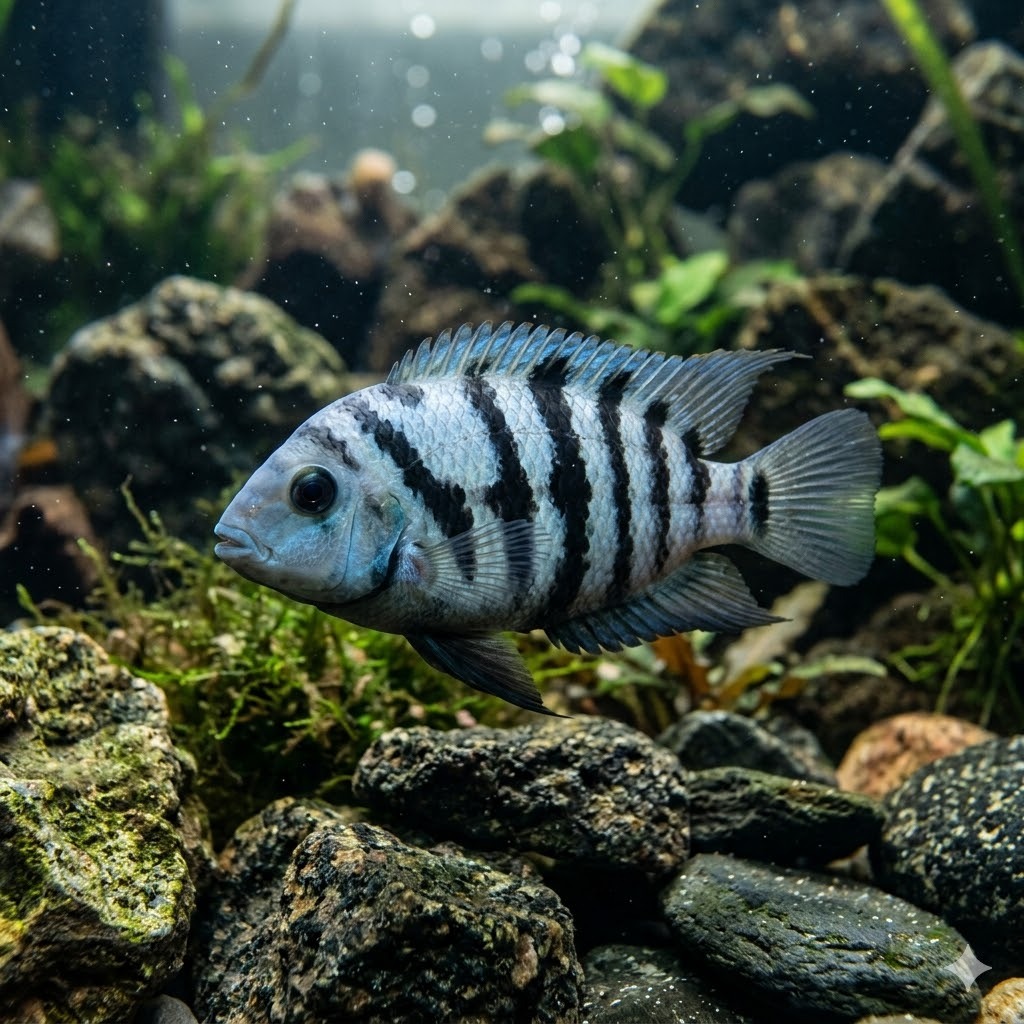
Overview
The convict cichlid (Archocentrus nigrofasciatus) is one of the toughest, most prolific and most notoriously aggressive fish in the entire freshwater hobby. Named for the bold black bars that run down its pale body like a prison uniform, it is a hardy Central American cichlid that breeds so readily and defends its young so fiercely that it has become the textbook example of a fish that is simply too aggressive for a typical community tank. Adults reach around 10-15 cm. What convicts lack in size they more than make up for in attitude, and they are often the fish that introduces new keepers to the fascinating - and sometimes overwhelming - world of cichlid parenting. Kept with clear eyes and in the right setup, they are endlessly entertaining; kept casually in a mixed tank, they cause chaos.
Natural History
Convict cichlids come from the warm streams, rivers and lakes of Central America, ranging across countries such as Guatemala, Honduras, Nicaragua, El Salvador and Costa Rica. They thrive in rocky, structured habitats with plenty of cover and hard, alkaline water, holding territories among boulders and submerged wood. In the wild, as in the aquarium, they are dedicated substrate spawners and famously devoted parents, with both male and female guarding the eggs, fanning them with fresh water and then escorting the fry as a protective team. Their willingness to breed under almost any conditions, and their ability to survive water that would kill more delicate fish, has made them one of the most widely available cichlids anywhere, and in some warm regions they have even become established as an introduced species outside their native range.
Appearance
A stocky, oval-bodied cichlid patterned with a series of dark vertical bars over a pale blue-grey base, giving the striped "convict" look that names the fish. Males grow larger, develop longer, more pointed dorsal and anal fins, and often show a fatty forehead hump with age. Females are smaller and, when in breeding condition, flush with an orange or pinkish patch on the belly and flanks, which is the easiest way to sex them. A popular pink or leucistic strain lacks the dark barring altogether and shows a pale peach body instead. Adult size is typically 10-15 cm, with males at the larger end.
Tank Size & Setup
- Single pair: minimum tank size around 110 litres.
- Larger or more robust setup: 150 litres or more, especially if breeding.
Provide caves, rockwork and flowerpots for territory and spawning sites, giving the fish clear landmarks to claim and defend. Use a firm substrate and firmly anchor any decor, because convicts dig energetically and will happily bulldoze gravel and undermine ornaments. Robust filtration and hardy or artificial plants are the practical choice, since live plants are often uprooted or torn. Broken sight lines and plenty of cover help reduce constant fighting, because this is an assertive fish that does best when it cannot see and harass every other inhabitant at once. A species tank, or a pair alone, is often the calmest arrangement.
Water Parameters
- Temperature: 24-28°C.
- pH: 6.5-8.0 - tolerant, prefers harder, more alkaline water.
- Ammonia 0, nitrite 0, nitrate low to moderate.
Convicts are famously undemanding about water chemistry and shrug off conditions that would stress more delicate fish, which is exactly why they are so often recommended as a first cichlid. Clean, stable water is really all they require, and they will breed in it almost regardless of the exact numbers. This resilience is a double-edged sword, though, because it means they survive and reproduce even when their care is far from ideal.
Diet
Omnivore with a hearty appetite. Convicts readily take quality cichlid pellets and flakes and relish frozen and live foods such as bloodworm, brine shrimp and chopped shellfish. Including some vegetable matter, from spirulina flake or blanched greens, balances the diet and keeps digestion healthy. Avoid overfeeding, as these greedy, opportunistic fish will happily eat far more than is good for them, and heavy feeding fouls the water and encourages even more prolific breeding.
Health & Lifespan
Average lifespan is 8-10 years.
Common concerns:
- Injuries from fighting - aggression toward tank-mates and even toward their own mate is common, sometimes fatal.
- Bloat from overfeeding rich foods.
- Ich (white spot) in stressed fish.
- Poor water quality in overstocked or under-filtered tanks, often the result of runaway breeding.
Pros & Cons
Pros: extremely hardy, undemanding, fascinating parental behaviour, breeds with almost no effort, striking bold pattern. Cons: very aggressive and territorial - honestly too aggressive for most community tanks; breeds so readily that fry quickly overwhelm keepers; digs and rearranges the tank.
Convict Cichlid - frequently asked questions
How big do convict cichlids get?
Around 10-15 cm, with males larger than females.
Are they aggressive?
Yes - notably so. Convicts are among the more aggressive small cichlids and are best kept in a species tank or with equally robust cichlids, not in a peaceful community.
Are they easy to breed?
Extremely. A compatible pair will spawn under almost any conditions, and they are attentive, protective parents. Be prepared for frequent broods.
Can I keep them in a community tank?
It is not recommended. Their aggression, especially when breeding, makes them unsuitable for most mixed communities.
Are they good for beginners?
They are hardy and easy to keep alive, but their aggression and rampant breeding mean beginners should go in with realistic expectations.
🧠 Test yourself: guess the fish
Three clues from our quiz bank, each about another of our fish. Can you name them?
Clue 1.This tall, laterally compressed blackwater fish needs warm, soft, acidic water and is famously sensitive for keepers.
It's the Discus - read the full profile →
Clue 2.This stout algae-eating catfish has bony armor plates and males that grow fleshy tentacle-like growths on the snout.
It's the Bristlenose Pleco - read the full profile →
Clue 3.This tiny schooling fish glows with an iridescent blue stripe and a red streak along its rear half.
It's the Neon Tetra - read the full profile →