Otocinclus
The otocinclus (Otocinclus sp.), often called the "oto" or dwarf sucker catfish, is a tiny, peaceful algae-eating catfish that stays around 4 cm and typically lives 3-5 years.
🗓️ Last reviewed: July 2026
Overview
The otocinclus (Otocinclus sp.), often called the "oto" or dwarf sucker catfish, is a tiny, peaceful algae-eating catfish that stays around 4 cm and typically lives 3-5 years. It is a superb natural cleaner for planted community tanks, but it is sensitive to poor water and really needs a mature, established aquarium with a steady supply of biofilm and soft algae to do well.
Natural History
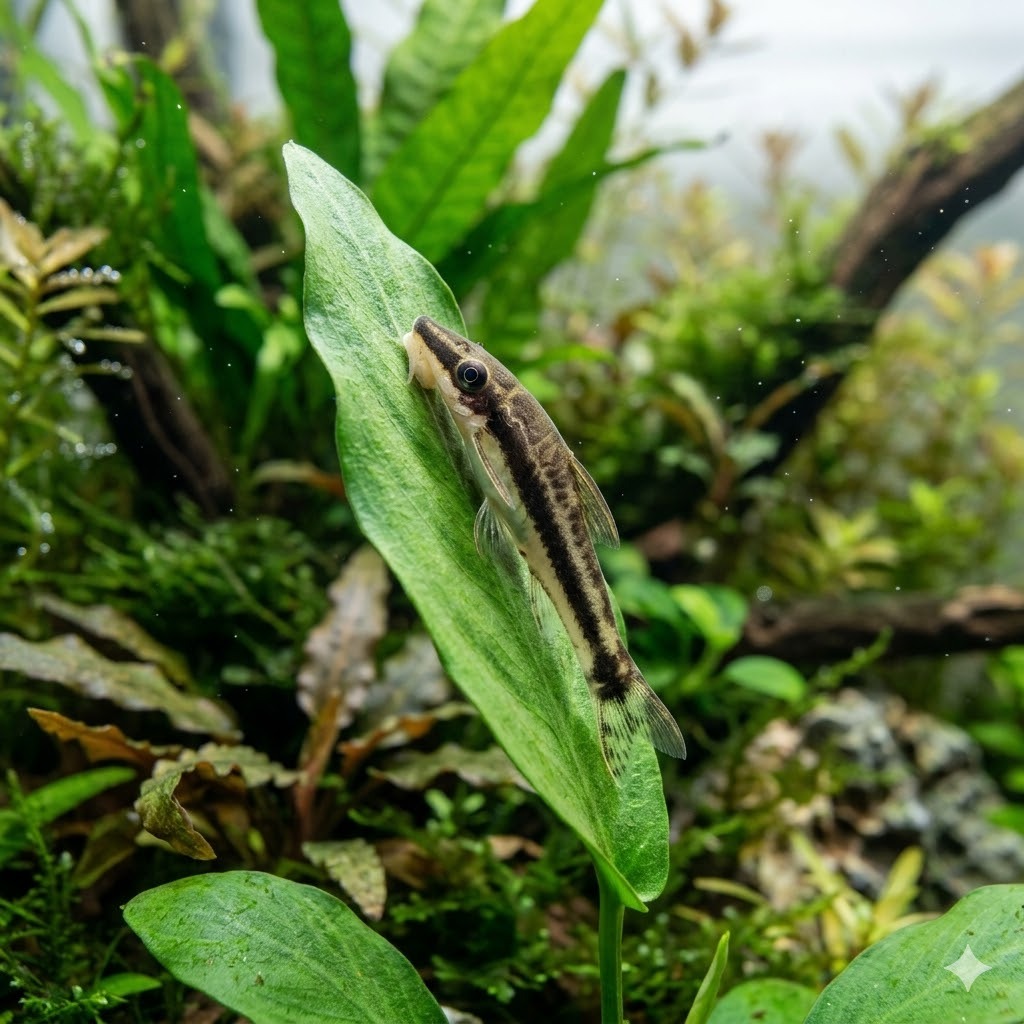
Otocinclus are native to South America, ranging across streams and river margins from Venezuela down to northern Argentina. In the wild they cling to plants, roots, and submerged surfaces in flowing, well-oxygenated water, grazing constantly on the fine film of algae and biofilm that coats them. Because they graze all day, a bare or brand-new tank simply cannot support them - this is the single biggest reason otos struggle in the hobby. Most fish sold are still wild-caught, which means new arrivals are often stressed and thin and need careful acclimation.
Appearance
Otocinclus are small and slender with a flattened underside and a sucker-like mouth used to rasp algae from surfaces. Most species show a brownish-tan body with a dark horizontal stripe running from the snout to the tail, and a paler belly. Their modest, camouflaged colouring helps them blend into plants and wood, and the different species in the trade look broadly similar to the casual eye.
Tank Size & Setup
- Minimum tank size: about 40-45 L, and ideally a tank that has been running for several months.
- Otocinclus are social and should be kept in groups of at least 6.
The tank must be mature enough to grow soft green algae and biofilm on glass, wood, and broad-leaved plants. Provide plenty of live plants, driftwood, and smooth surfaces for grazing, along with good oxygenation and a gentle flow that mimics their stream habitat. Broad-leaved plants such as anubias and swords give them large grazing surfaces, and driftwood grows the biofilm they love. If natural algae runs low, supplement with blanched vegetables and algae wafers so the group does not starve - a slowly thinning oto is a warning sign. Keep the lid closed, as even these small fish can occasionally jump, and avoid strong chemical algae treatments, which strip out the very food they depend on.
Water Parameters
- Temperature: 22-26°C.
- pH: 6.5-7.5.
- Hardness: soft to moderate, roughly 2-15 dGH.
- Ammonia 0, nitrite 0, nitrate low. Otos are very intolerant of ammonia, nitrite, and unstable conditions.
Stable, clean, well-oxygenated water is essential. Never add otocinclus to an uncycled or newly set-up tank.
Diet
Herbivore leaning strongly toward algae and biofilm. Their staple in nature and the aquarium is the soft green algae, diatoms, and biofilm growing on surfaces, which they rasp off continuously throughout the day. Supplement with blanched vegetables such as courgette, cucumber, and spinach, weighed down so they sink, plus quality algae wafers offered after lights-out when otos tend to be most active. Anchor a vegetable slice for a day or so and remove it before it fouls the water. They are not effective at clearing tough black or hair algae, so they should be seen as gentle biofilm grazers rather than an algae "cure." Always make sure there is enough grazing food available, as starvation is a common and often overlooked cause of loss, and a plump, rounded belly is the simplest sign that a group is eating well.
Health & Lifespan
Average lifespan is 3-5 years.
Otocinclus are delicate, and most deaths happen in the first weeks after purchase. Common concerns include:
- Starvation - in tanks without enough algae or supplemental food; look for a sunken belly.
- Shipping and acclimation stress - wild-caught fish often arrive weak; slow, careful acclimation is vital.
- Ammonia and nitrite sensitivity - they crash quickly in immature or unstable tanks.
- Ich (white spot) - triggered by stress and temperature swings.
Buying otos only for a mature tank, choosing plump, active individuals, and acclimating slowly greatly improves survival. It is also worth quarantining new arrivals and feeding them well before they join the main tank, since fresh imports are often underfed and need time to recover their condition.
Pros & Cons
Pros: tiny, peaceful, excellent natural biofilm and soft-algae grazer, safe with plants and shrimp, great for planted community tanks. Cons: sensitive to poor water; needs an established tank; often wild-caught and fragile on arrival; can starve if algae runs out; not a fix for tough algae.
Otocinclus - frequently asked questions
Do otocinclus really eat algae?
Yes, but mainly soft green algae, diatoms, and biofilm. They will not clear tough hair or black algae, so treat them as gentle grazers, not an algae solution.
Why do otocinclus die so easily?
Most losses come from being added to immature tanks with little algae, or from stress and starvation after being wild-caught. A mature, well-established planted tank and careful acclimation fix most problems.
How many otocinclus should I keep?
At least 6. They are social and are far more active and settled in a group.
Are otocinclus safe with shrimp and small fish?
Yes. They are completely peaceful and are a classic choice for shrimp tanks and peaceful community setups.
Can I add otocinclus to a new tank?
No. Wait until the tank has been running for several months and is growing algae and biofilm, or they are very likely to starve.
Do I need to feed them if my tank has algae?
Usually yes, at least sometimes. Algae supply fluctuates, so offer blanched vegetables and algae wafers to keep the group well fed.
🧠 Test yourself: guess the fish
Three clues from our quiz bank, each about another of our fish. Can you name them?
Clue 1.This small South American scavenger has tiny barbels and a sharp spine in each fin that can lock upright for defense.
It's the Corydoras Catfish - read the full profile →
Clue 2.Unlike most aquarium fish, this beginner-friendly group gives birth to free-swimming young instead of laying eggs.
It's the Molly / Platy / Swordtail (Livebearers) - read the full profile →
Clue 3.Keepers love this diverse group for bold personalities but warn that many dig substrate and fiercely defend a chosen territory.
It's the Cichlid (Overview) - read the full profile →