Platy
The Platy (Xiphophorus maculatus) is a small, hardy, brightly coloured livebearer and one of the best fish for beginners.
🗓️ Last reviewed: June 2026
Overview
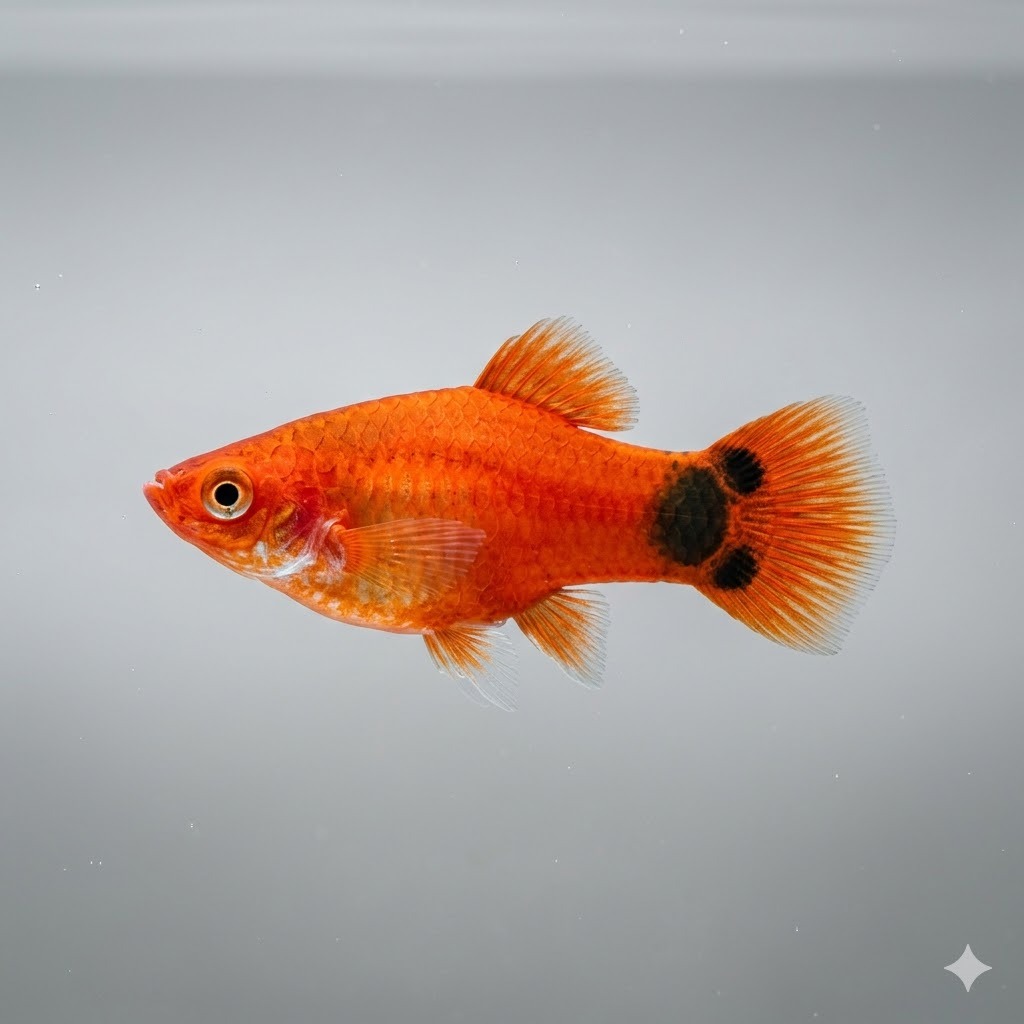
The Platy (Xiphophorus maculatus) is a small, hardy, brightly coloured livebearer and one of the best fish for beginners. Peaceful, active, and available in a huge range of colours and patterns - Mickey Mouse, sunburst, wagtail, and many more - it thrives in a community tank and is happy to breed on its own. Forgiving of small mistakes and undemanding about water, the platy is hard to beat as a first fish.
Natural History
Native to the warm, slow-moving and still freshwaters of eastern Mexico and Central America - ditches, canals, warm springs, and the marshy edges of rivers. These waters tend to be slightly hard and neutral-to-alkaline, with plenty of plants and algae. The aquarium platy is a long-domesticated fish, selectively bred for decades, so most of the colours and forms in shops do not occur in the wild.
Appearance
Adults reach 4-6 cm, with females noticeably larger and rounder than the slimmer, smaller males. The wild fish is a muted olive, but captive breeding has produced an enormous palette: red, orange, yellow, blue, and black, in patterns such as Mickey Mouse (a three-spot mark at the tail), sunburst, wagtail (coloured body with black fins), and tuxedo. Males carry a gonopodium, a modified pointed anal fin used for breeding, which is the easiest way to tell the sexes apart.
Temperament & Tankmates
Peaceful, active, and sociable. Platies are happiest in a small group and do best kept in a ratio of more females than males - around two or three females per male - which spreads out male attention and keeps the females from being harassed. They occupy the middle and upper water and are constantly on the move.
They are excellent community fish, mixing well with other peaceful species such as mollies, guppies, swordtails, tetras, corydoras, and dwarf shrimp. Avoid fin-nippers and large or aggressive tankmates. Two or more males with no females may squabble, though rarely seriously.
Tank Size & Setup
Minimum: 60 L (15 gallon) for a small group.
A planted aquarium with open swimming space suits them well: plants for cover and grazing, a gentle to moderate flow, and some algae growth they can pick at. Live plants also give fry places to hide. They are not fussy about substrate or decor. A lid is a good idea, as active fish can occasionally jump.
Water Parameters
- Temperature: 22-26°C.
- pH: 7.0-8.2 (neutral to alkaline preferred).
- Slightly hard to hard water.
- Ammonia 0, nitrite 0, nitrate <30 ppm.
Diet
Omnivore with a healthy appetite. Offer a quality flake or micro-pellet staple, and make sure to include plenty of plant matter - platies graze on algae and appreciate blanched vegetables such as courgette, spinach, or peas. Supplement with frozen or live daphnia, brine shrimp, and bloodworms for variety. Feed small portions once or twice daily and avoid overfeeding.
Health & Lifespan
3-4 years.
Common concerns:
- Ich (white spot).
- Fin rot from poor water quality.
- Fungal infections and shimmying from cold or unstable water.
- Stress and weakness from inbreeding or from soft, acidic water that does not suit them.
- Tank-cycle deaths from being added before the tank is established.
Pros & Cons
Pros: very hardy, peaceful, brilliant colours, beginner-friendly, easy to breed, active and entertaining. Cons: breeds so readily that numbers climb fast; prefers hard alkaline water; modern strains can be less robust from overbreeding; shorter lifespan than some community fish.
Platy - frequently asked questions
Are platies good beginner fish?
Yes - they are one of the best. Hardy, peaceful, colourful, and forgiving of small mistakes once the tank is cycled.
Why is my female platy always fat?
She is most likely pregnant. Platies are livebearers and females store sperm, so a single mating produces several batches of fry over months. Expect young if you keep both sexes.
How many platies should I keep, and what ratio?
Keep a small group, with more females than males - roughly two or three females per male. This stops the females being constantly chased.
What water do they prefer?
Slightly hard, neutral-to-alkaline water suits them best. Soft, acidic water tends to leave them stressed and prone to illness.
What can I keep them with?
Other peaceful community fish: mollies, guppies, swordtails, tetras, corydoras, and dwarf shrimp. Avoid fin-nippers and large aggressive species.
🧠 Test yourself: guess the fish
Three clues from our quiz bank, each about another of our fish. Can you name them?
Clue 1.Aquarists prize this small loricariid because, unlike its giant relatives, it tops out around five inches and won't outgrow a community tank.
It's the Bristlenose Pleco - read the full profile →
Clue 2.This category of hardy tropical fish includes the swordtail and platy and breeds readily in home tanks.
It's the Molly / Platy / Swordtail (Livebearers) - read the full profile →
Clue 3.A peaceful nano-fish best kept in large shoals, it glows electric blue and crimson under subdued aquarium lighting.
It's the Cardinal Tetra - read the full profile →