African Fat-Tailed Gecko (Hemitheconyx caudicinctus)
The African Fat-Tailed Gecko (Hemitheconyx caudicinctus) is a docile, ground-dwelling gecko from West Africa and one of the best beginner reptiles available.
🗓️ Last reviewed: June 2026
Overview
The African Fat-Tailed Gecko (Hemitheconyx caudicinctus) is a docile, ground-dwelling gecko from West Africa and one of the best beginner reptiles available. A close counterpart to the popular leopard gecko, it is stockier, has a distinctive fat tail that stores energy, and appreciates a little more humidity. It is nocturnal, terrestrial, eats a simple insect diet, and tolerates gentle handling once accustomed - a calm, hardy, low-maintenance lizard for new keepers.
Natural History
Wild range: the dry savannahs and rocky scrub of West Africa, from Senegal across to Cameroon. Terrestrial and nocturnal, sheltering in burrows and under cover during the day and emerging at night to hunt. The fat-tailed gecko comes from a region with a defined wet season, so it is adapted to higher ambient humidity than many desert species and relies on humid retreats underground. The fat tail acts as a fat and water store, helping it through lean periods.
Appearance
Adults 18-25 cm total length including tail, 45-75 g. Females are typically a little smaller than males.
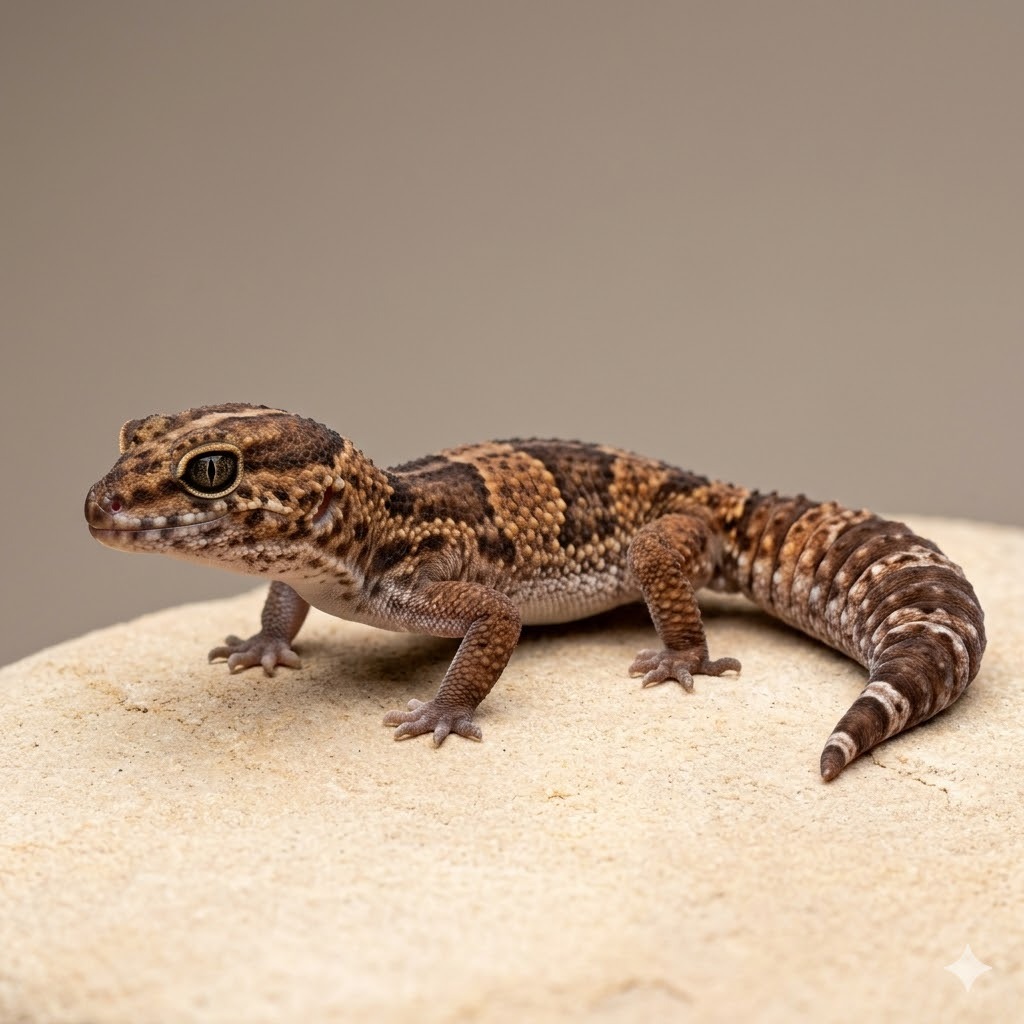
Colour is usually warm brown with darker bands, and many animals carry a thin white stripe down the back. The body is stocky and the head broad. The standout feature is the thick, fat tail, which stores energy and roughly matches the head in width when the animal is healthy. Like its relatives, this species has movable eyelids and lacks the toe pads of climbing geckos. It can drop its tail under stress and regrow it, though the regrown tail looks rounder and less distinct.
Temperament & Handling
Calm and slow-moving, generally accepting gentle, brief handling once settled. They are less flighty than many geckos, which adds to their beginner appeal. Let new arrivals adjust for a week or two before handling, then keep sessions short and support the whole body. Handle low over a soft surface in case of a sudden dash. Never grab or restrain the tail, which can drop under stress and then regrow.
Enclosure
Minimum: 60 × 45 × 30 cm for one adult. Larger preferred. A horizontally oriented glass or PVC terrarium suits this ground-dwelling species; height is unimportant.
Provide:
- A non-impaction substrate that holds a little humidity, such as a soil-and-sand mix or paper for simpler setups. Avoid loose calcium sand and other impaction risks.
- At least three hides: a warm hide, a cool hide, and a humid hide for shedding.
- Low, secure decor - flat stones, cork bark, and low plants - rather than tall climbing structures.
- A shallow water dish, refreshed daily.
Heating & Lighting
- Warm ground-level basking spot: 31-33°C surface temperature, provided by an overhead heat source on a thermostat, measured at the floor where the gecko rests.
- Cool end: 24-26°C, giving a thermal gradient across the floor.
- Night: a drop to 21-24°C is fine; no bright light at night.
- UVB: optional but beneficial. A low-output (low-percentage) UVB lamp supports health when paired with a good supplement routine. This is a nocturnal species, so keep UVB low-level and provide shaded hides.
Humidity
Ambient 40-60%, higher inside the humid hide. Keep one hide consistently moist with damp substrate or moss to support clean shedding, and allow the rest of the enclosure to stay drier with good ventilation. Mist the humid hide as needed rather than soaking the whole enclosure, which prevents the stagnant, overly wet conditions that cause skin and respiratory problems.
Diet
Insectivorous. Fed a varied diet of appropriately sized live insects:
- Staple: gut-loaded crickets and dubia roaches, dusted with a calcium supplement.
- Occasional: mealworms, black soldier fly larvae, and the rare waxworm as a treat.
- Avoid: wild-caught insects, and prey larger than the space between the gecko's eyes.
Dust feeders with calcium at most feedings and add a vitamin and D3 supplement on a schedule appropriate to your UVB setup. Feed juveniles daily and adults every two to three days. Always provide fresh water.
Health & Lifespan
15-20 years.
Common concerns:
- Metabolic bone disease from inadequate calcium or D3.
- Impaction from inappropriate or loose substrate.
- Retained shed, especially on the toes and tail, in low humidity.
- Tail loss under stress, followed by regrowth.
- Mouth rot.
- Parasites, more common in wild-caught animals.
Pros & Cons
Pros:
- Docile, calm, and beginner-friendly.
- Simple insect diet and modest space needs.
- Ground-level setup with no tall climbing rig required.
- Tolerates gentle handling and regrows its tail.
Cons:
- Needs a reliable warm basking spot and a humid hide.
- Live insects required at every feeding.
- Nocturnal, so most active when you may be asleep.
- 15-20 year commitment.
Best Suited For
- First-time reptile owners.
- Keepers wanting a calm, handleable ground gecko.
- Apartment dwellers with limited floor space.
Not suited for owners unwilling to keep live insects, or those wanting a brightly active daytime display animal.
African Fat-Tailed Gecko (Hemitheconyx caudicinctus) - frequently asked questions
Are they good for kids?
Yes, for older children with supervision. They are gentle and slow-moving, though all handling should be brief and supported low over a soft surface.
Do I need UVB?
Optional but beneficial. Many keepers raise healthy fat-tailed geckos with a strong calcium and D3 routine alone, while low-output UVB supports natural health when provided.
How long do they live?
15-20 years with good care. Plan accordingly.
Do they regrow their tail?
Yes. A dropped tail regrows, though the new tail is rounder and looks different from the original.
How are they different from leopard geckos?
They are stockier, have a fatter tail, and prefer slightly higher humidity with a dedicated humid hide. Care is otherwise very similar.
🧠 Test yourself: guess the reptile
Three clues from our quiz bank, each about another of our reptiles. Can you name them?
Clue 1.This slender egg-laying snake earns farmers' favor by hunting mice in grain stores, and is closely related to the rat snakes.
It's the Corn Snake - read the full profile →
Clue 2.A hardy beginner snake, this powerful squeezer is known for occasionally eating tankmates of its own kind.
It's the King Snake / Milk Snake - read the full profile →
Clue 3.Often sold tiny but reaching over five feet, this tree-dwelling herbivore is a far bigger commitment than buyers expect.
It's the Green Iguana - read the full profile →