Campbell's Dwarf Hamster
The Campbell's dwarf hamster (Phodopus campbelli) is a tiny, fast, endlessly busy rodent that has become one of the most popular pocket pets in the world.
🗓️ Last reviewed: July 2026
Overview
The Campbell's dwarf hamster (Phodopus campbelli) is a tiny, fast, endlessly busy rodent that has become one of the most popular pocket pets in the world. Weighing barely more than a slice of bread and small enough to sit in the palm of a hand, it is often marketed as the perfect "beginner hamster." The reality is more nuanced. Campbell's dwarfs are charming, active, and unusually social for a hamster - unlike the solitary Syrian, they can sometimes live in same-sex pairs or small groups. But they are also quick, wriggly, and prone to nipping, which makes them better suited to older children and adults who enjoy watching an animal rather than constantly holding one. They are also genetically prone to diabetes, which shapes everything about how they are fed.
Natural History & Origin
The Campbell's dwarf hamster is native to the steppes, semi-deserts, and dry grasslands of central Asia - Mongolia, northern China, Kazakhstan, and parts of Russia. It was first described by W. C. Campbell, who collected the type specimen in Mongolia in 1902, and the species carries his name.
In the wild these hamsters dig extensive burrow systems to escape temperature extremes, foraging at dawn and dusk for seeds, insects, and plant matter. Unlike many hamsters they are relatively tolerant of one another and are sometimes found in loose family groups, which is why captive Campbell's can occasionally be kept together. They are frequently confused and even hybridised with the closely related winter white hamster, though the two are distinct species.
Appearance
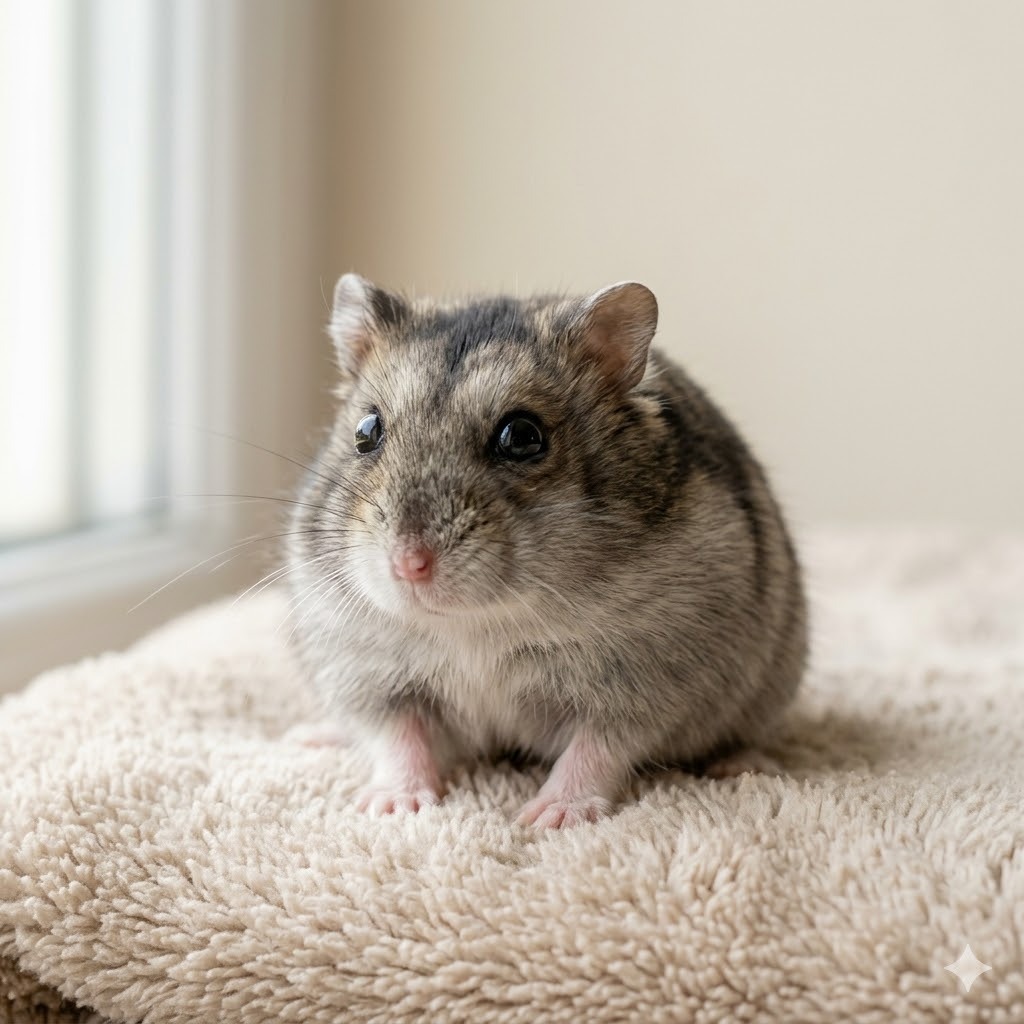
Campbell's dwarfs are true dwarves, typically 7-10 cm long and weighing 20-50 grams as adults. They have a compact, rounded body, small ears, tiny feet, and a short, barely visible tail.
The wild-type coat is greyish-brown or sandy on the back with a darker dorsal stripe running down the spine, and a paler, ivory belly. The dividing line between back and belly is arched rather than sharply demarcated. Selective breeding has produced many colour and coat varieties - opal, argente, black, mottled, and satin among them. Their eyes are usually black, though some morphs have red or ruby eyes. Their fur is short and slightly coarse compared to the fluffier winter white.
Temperament & Handling
Campbell's dwarfs are energetic, curious, and quick. They are enormous fun to watch as they sprint, dig, stuff their cheek pouches, and race on a wheel. However, they are also more prone to nipping than Syrian hamsters, partly because they are fast, easily startled, and small enough to feel vulnerable.
Handling should be gentle, low, and unhurried. Scoop rather than grab, keep sessions short, and always work close to a surface so a sudden leap does not end in a fall. Tame them gradually with still hands and treats. Because they are nocturnal and crepuscular, they resent being woken during the day and may nip if disturbed. For these reasons they are watch-more-than-cuddle pets and are not ideal for very young children who want a hamster to hold constantly.
Housing
Provide the largest enclosure you can - a minimum floor area of around 4,000 cm² is a good target, and bigger is always better. A glass tank or barred cage with a very narrow bar spacing works well, since these tiny escape artists can squeeze through gaps that would stop a larger hamster.
Provide:
- Deep bedding (15 cm or more) for burrowing - paper-based or aspen, never pine or cedar.
- A solid-surface exercise wheel at least 20 cm across (wire rungs cause injuries).
- Hides, tunnels, and chew items.
- A sand bath for grooming.
- A heavy water bottle or bowl and a small food dish.
Keep the enclosure out of direct sun and draughts, at a stable room temperature. Because they can be kept in pairs, a shared cage must be even larger with duplicated resources - two wheels, two hides, multiple food and water stations.
Diet
A good staple is a quality hamster mix based on a variety of small seeds, grains, and dried vegetables, supplemented with occasional protein such as a mealworm, a little cooked egg, or a piece of plain chicken.
Because Campbell's dwarfs are strongly prone to diabetes, the diet must be low in sugar. Avoid sugary treats, fruit, honey sticks, yogurt drops, and mixes containing molasses or added sugar. Small amounts of fresh vegetables such as cucumber, broccoli, or a little carrot are fine, but fruit should be rare or avoided entirely.
Fresh water must always be available. Provide occasional gnawing material to keep the continuously growing incisors worn down. Feed a small measured portion daily rather than constantly topping up, and remove uneaten fresh food before it spoils.
Health & Lifespan
Campbell's dwarf hamsters typically live around 1.5 to 2.5 years, occasionally a little longer with excellent care.
Major concerns:
- Diabetes - this species is genetically predisposed; a low-sugar diet is essential, and symptoms include excessive drinking, urination, and weight changes.
- Wet tail and digestive upset - stress-related diarrhoea that can be rapidly fatal; requires urgent veterinary care.
- Dental overgrowth - continuously growing teeth need gnawing material.
- Bite wounds - common when housed in groups that fall out.
- Tumours - relatively frequent in older hamsters.
- Injuries - from wire wheels, falls, or unsafe bar spacing.
Find a vet experienced with small exotics before problems arise, as many general practices have limited rodent experience.
Pros & Cons
Pros:
- Tiny, affordable, and space-efficient.
- Fascinating to watch - fast, busy, always digging.
- Can sometimes be kept in same-sex pairs.
- Wide range of colours.
- Low odour compared with many rodents.
Cons:
- Quick and prone to nipping.
- Diabetes-prone - strict low-sugar diet needed.
- Short lifespan.
- Pairs can fight and need constant monitoring.
- Nocturnal - active when you may be asleep.
Best Suited For
- Older children and adults who enjoy observing an active pet.
- Owners who prefer watching to constant handling.
- People wanting a small, low-space companion.
- Those willing to feed a careful low-sugar diet.
Not suited for very young children wanting a cuddly pet, households unwilling to provide a large enclosure, or anyone expecting a slow, easily handled animal.
Campbell's Dwarf Hamster - frequently asked questions
Can Campbell's dwarf hamsters live together?
Sometimes. Same-sex pairs introduced young in a large cage can work, but fights are common and you must be ready to separate them for good.
Do they bite?
They can. They are fast and easily startled, so gentle, patient taming and careful handling are important.
Why do they need a low-sugar diet?
They are genetically prone to diabetes. Sugary foods and most fruit should be avoided to keep them healthy.
How long do they live?
Usually about 1.5 to 2.5 years.
Are they good for young children?
Not ideal. They are quick and nippy and are better as watch-and-observe pets for older children and adults.
🧠 Test yourself: guess the small mammal
Three clues from our quiz bank, each about another of our small mammals. Can you name them?
Clue 1.This social Chilean rodent communicates with a complex range of calls and will shed its tail skin if grabbed.
It's the Degu - read the full profile →
Clue 2.Unlike its larger solitary cousin, this tiny pocket-sized rodent can sometimes be kept in same-sex pairs.
It's the Dwarf Hamster - read the full profile →
Clue 3.This long, slinky carnivore is a domesticated polecat whose name comes from the Latin for 'little thief.'
It's the Ferret - read the full profile →
Social Needs
Campbell's dwarfs are among the more social hamsters. Same-sex pairs or small groups can sometimes live together successfully, but only if they are siblings or introduced very young and given a large enclosure with duplicated resources. Even then, fighting can erupt suddenly - sometimes violently - and owners must be prepared to separate them permanently at the first sign of serious aggression.
Never mix the sexes unless you want an overwhelming number of babies. If in any doubt, keeping a single hamster is perfectly acceptable and often safer. They do not need human company but they do need daily observation, mental stimulation, and space to be active.