Jird
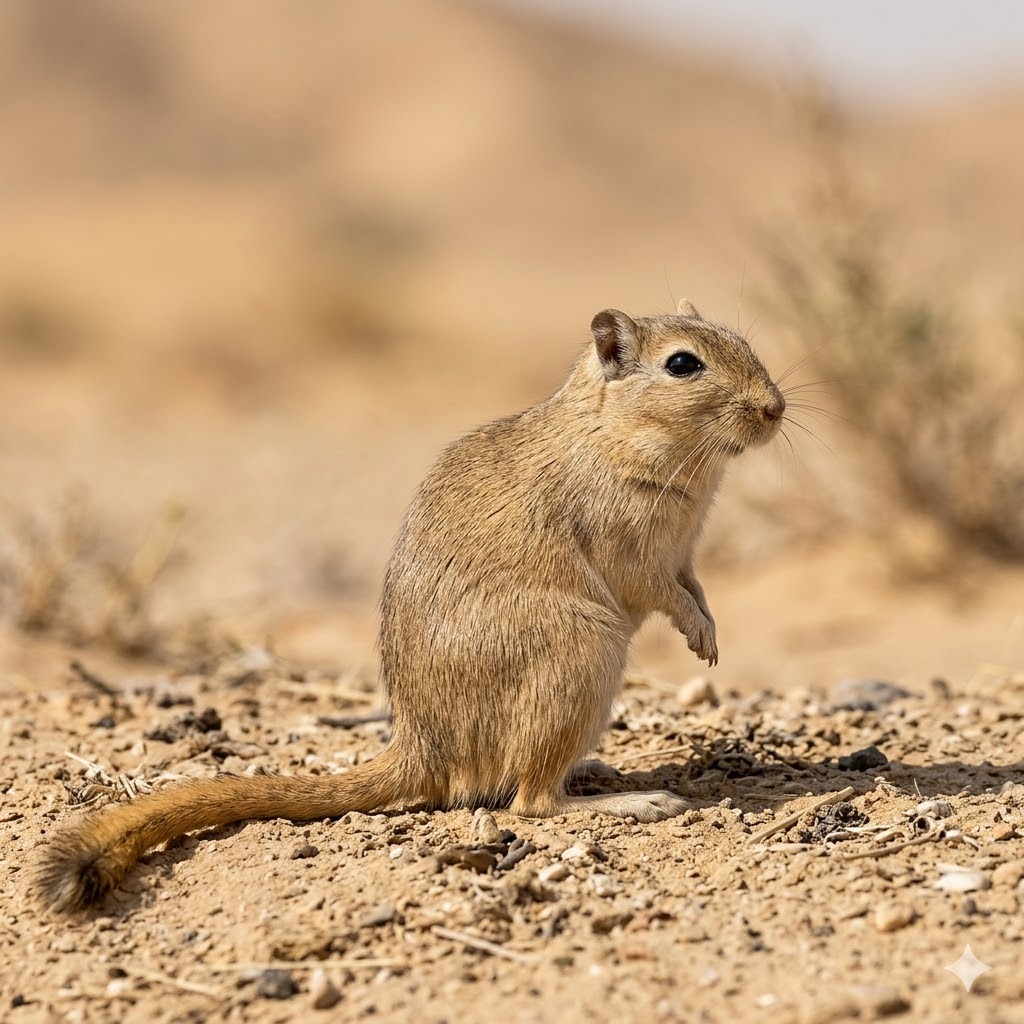
The jird is a small, active, sociable desert rodent of the genus Meriones - a close relative of the familiar Mongolian gerbil, which is itself technically a jird.
🗓️ Last reviewed: July 2026
Overview
The jird is a small, active, sociable desert rodent of the genus Meriones - a close relative of the familiar Mongolian gerbil, which is itself technically a jird. Several species are kept as pets, and all share the same appealing profile: a curious, clean, diurnal little animal built for dry sandy country, endlessly digging, foraging, and exploring. Jirds are hardy, low-odour, and rewarding to keep, thriving in a dry sandy setup with plenty of room to tunnel. They are social and should be kept in same-sex pairs or small groups rather than alone. For anyone who enjoys watching natural burrowing behaviour in a busy daytime pet, jirds are an excellent choice.
Natural History & Origin
Jirds are native to the arid and semi-arid regions of North Africa, the Middle East, and Central Asia, ranging across deserts, steppes, and dry grasslands. The genus Meriones includes several species kept by hobbyists - among them the Mongolian jird (the common pet gerbil), Shaw's jird, Libyan jird, and the Persian or midday jird. In the wild they live in extensive burrow systems that shelter them from heat and cold, emerging to forage for seeds, plants, and roots.
Adapted to dry environments, jirds are extremely water-efficient, extracting much of their moisture from food and producing very concentrated urine, which is a large part of why they are such low-odour pets. They are colonial and social, living in family groups, which is why captive jirds need companions of their own kind. As rodents adapted to open, predator-rich terrain, they are alert and quick, and they retain a strong instinct to dig and burrow.
Appearance
Small and sleek, larger and longer-tailed than a hamster. Depending on species, body length runs roughly 10-16 cm with a furred tail of similar length again, and adults weigh around 60-160 grams - the larger species such as Shaw's jird sit at the top of that range, while the Mongolian jird is smaller.
The coat is typically a sandy or agouti brown above, blending to a paler or white belly, which camouflages them against desert ground. A distinctive feature is the long, fully furred tail ending in a small tuft - never the bare scaly tail of a rat or mouse - which they use for balance and which can be injured if grabbed. The eyes are dark and prominent, the hind legs are long and strong for hopping and digging, and the overall build is athletic and neat.
Temperament & Handling
Jirds are active, inquisitive, and generally friendly when handled regularly from a young age. They are diurnal to crepuscular, meaning they are lively during the day and around dawn and dusk, so they interact when their owners are awake. Tame jirds will approach the hand, sit up to investigate, and take food readily.
Handling should be gentle and low, ideally over a soft surface, because these are fast, springy animals that can leap from the hands. The single most important rule is never to grab or pull the tail - a jird's tail can shed its skin (degloving) if handled roughly, causing serious injury. Scoop the whole body instead. Bites are uncommon in well-socialised animals but can happen if the animal is startled or not yet tame. With patient daily handling, jirds become confident and enjoyable companions.
Housing
Jirds are dedicated diggers, so depth of substrate and secure containment matter most. A large glass or acrylic tank-style enclosure, or a deep-based cage with a tall dig zone, works best - wire cages alone are poor because they cannot hold a deep burrowing layer and jirds may chew or escape.
Provide:
- A deep layer of dry burrowing substrate (paper-based bedding mixed with a burrow-holding material) so they can dig proper tunnels.
- A sand bath area for grooming, reflecting their desert origins.
- Hides, tunnels, and a nest box.
- A solid-surface exercise wheel sized to the species.
- Untreated wood and safe chews, since incisors grow continuously.
Keep the enclosure in a dry, well-ventilated spot out of direct sun and away from damp - humidity is unnatural and unhealthy for a desert animal. The setup should be escape-proof, since jirds are strong chewers and diggers.
Diet
A dry, seed-and-plant based, low-water diet suits their desert physiology. A balanced approach:
- A base of a quality gerbil or jird seed and grain mix, or formulated rodent pellets.
- Small amounts of fresh vegetables and leafy greens offered in moderation.
- Occasional protein such as a mealworm or small insect.
- Very limited fruit and sugary treats, since these can cause obesity and are unnatural for a dry-country rodent.
Because jirds are so water-efficient, they drink relatively little, but fresh clean water must still always be available. Avoid rich, watery, or sugary foods as staples; a dry, varied, seed-forward diet keeps them lean and healthy.
Health & Lifespan
Jirds are hardy animals, and a well-cared-for pet commonly lives around 3-5 years depending on species, with the larger species often on the longer end.
Major concerns:
- Tail injuries - degloving from being grabbed by the tail; always scoop the body.
- Obesity - from too many seeds, fruit, or fatty treats.
- Dental overgrowth - continuously growing incisors need chew material.
- Respiratory issues - from damp, dusty, or poorly ventilated bedding.
- Stress and boredom - from cramped housing or being kept alone.
An exotic or small-animal veterinarian familiar with gerbils and jirds should be identified before problems arise, as these small rodents can decline quickly if ill.
Pros & Cons
Pros:
- Active and interactive during the day.
- Very low odour thanks to water-efficient physiology.
- Fascinating natural digging and burrowing behaviour.
- Hardy and relatively easy to keep.
- Social and enjoyable in same-sex groups.
Cons:
- Fragile tail that can be injured if grabbed.
- Needs a deep-substrate, escape-proof enclosure.
- Should not be kept alone.
- Prone to obesity if fed too many treats.
- Fast and springy - handling takes care.
- Mixed-sex pairs breed rapidly.
Best Suited For
- Owners wanting a daytime-active, low-odour rodent.
- People able to provide a deep-substrate digging enclosure.
- Keepers happy to house a same-sex pair or small group.
- Households wanting a hardy, characterful small pet.
Not suited for anyone wanting a solitary lap pet, homes without space for a deep tank-style setup, keepers unwilling to handle carefully around the delicate tail, or those who cannot commit to keeping more than one.
Jird - frequently asked questions
Is a jird the same as a gerbil?
Essentially yes - the common pet gerbil is the Mongolian jird, one species in the jird genus Meriones. Other jird species such as Shaw's and Libyan jirds are also kept as pets.
Are they active during the day?
Yes - jirds are diurnal to crepuscular, active during the day and around dawn and dusk, so they interact when you are awake.
Do they need a companion?
Yes. Jirds are social and should be kept in same-sex pairs or small groups. A lone jird is prone to loneliness and stress.
Why must I never grab the tail?
A jird's tail skin can strip off (deglove) if pulled or grabbed, causing a permanent injury. Always scoop the whole body instead.
How long do they live?
Around 3-5 years depending on species, with the larger jirds often living toward the longer end of that range.
🧠 Test yourself: guess the small mammal
Three clues from our quiz bank, each about another of our small mammals. Can you name them?
Clue 1.Unlike most small cage rodents, this animal is diurnal and its furred tail ends in a small tassel.
It's the Gerbil - read the full profile →
Clue 2.Selectively bred in countless coat colors, this tiny whiskered pet's hobby breeding began centuries ago in Japan and China.
It's the Fancy Mouse - read the full profile →
Clue 3.This tiny nocturnal marsupial has a membrane between its limbs that lets it glide between trees and a fondness for sweet sap.
It's the Sugar Glider - read the full profile →
Social Needs
Jirds are colonial and social and should be kept with their own kind - a same-sex pair or small compatible group is strongly recommended, and a solitary jird is prone to loneliness and stress. The safest arrangement is same-sex companions obtained young and raised together, which avoids the risk of rapid breeding that comes with mixed pairs.
Introductions between unfamiliar adults must be done gradually using a careful split-cage method, as established jirds can be territorial toward strangers. Once bonded, a group grooms, sleeps, and digs together, and that companionship is central to their wellbeing.