Multimammate Mouse (African Soft-fur Rat)
The multimammate mouse (Mastomys natalensis), also known as the African soft-fur rat or natal multimammate mouse, is a sociable, intelligent, and surprisingly rewarding rodent that occupies an unusual place in the pet world.
🗓️ Last reviewed: July 2026
Overview
The multimammate mouse (Mastomys natalensis), also known as the African soft-fur rat or natal multimammate mouse, is a sociable, intelligent, and surprisingly rewarding rodent that occupies an unusual place in the pet world. Slightly larger than a common mouse but smaller than a fancy rat, it is best known in the trade as a feeder animal for snakes - yet those who keep it as a pet discover a curious, active, group-living creature that can become genuinely tame with patient handling. Its most famous feature is right in its name: females have an unusually high number of teats, and the species is a prolific breeder. For the right owner willing to provide a secure tank, a stable group, and consistent gentle interaction, the multimammate mouse makes a fascinating and affordable companion.
Natural History & Origin
The multimammate mouse is native to sub-Saharan Africa, where it is one of the most widespread and abundant rodents across savanna, grassland, scrub, and agricultural land. It thrives in a huge range of environments and often lives close to human settlements, where it can become an agricultural pest.
In the wild these mice live in social groups and reproduce rapidly, producing large litters to offset heavy predation. This same fecundity made them valuable in the pet and reptile-feeder trades, and it is also why they must never be released or allowed to breed uncontrolled. In their native range they are ecologically significant and are studied as a natural reservoir for certain diseases, which is one reason responsible sourcing and hygiene matter with this species.
Appearance
Multimammate mice are medium-small rodents, typically 10-14 cm in body length with a tail of similar length, and weighing roughly 30-70 grams as adults, with females often slightly larger.
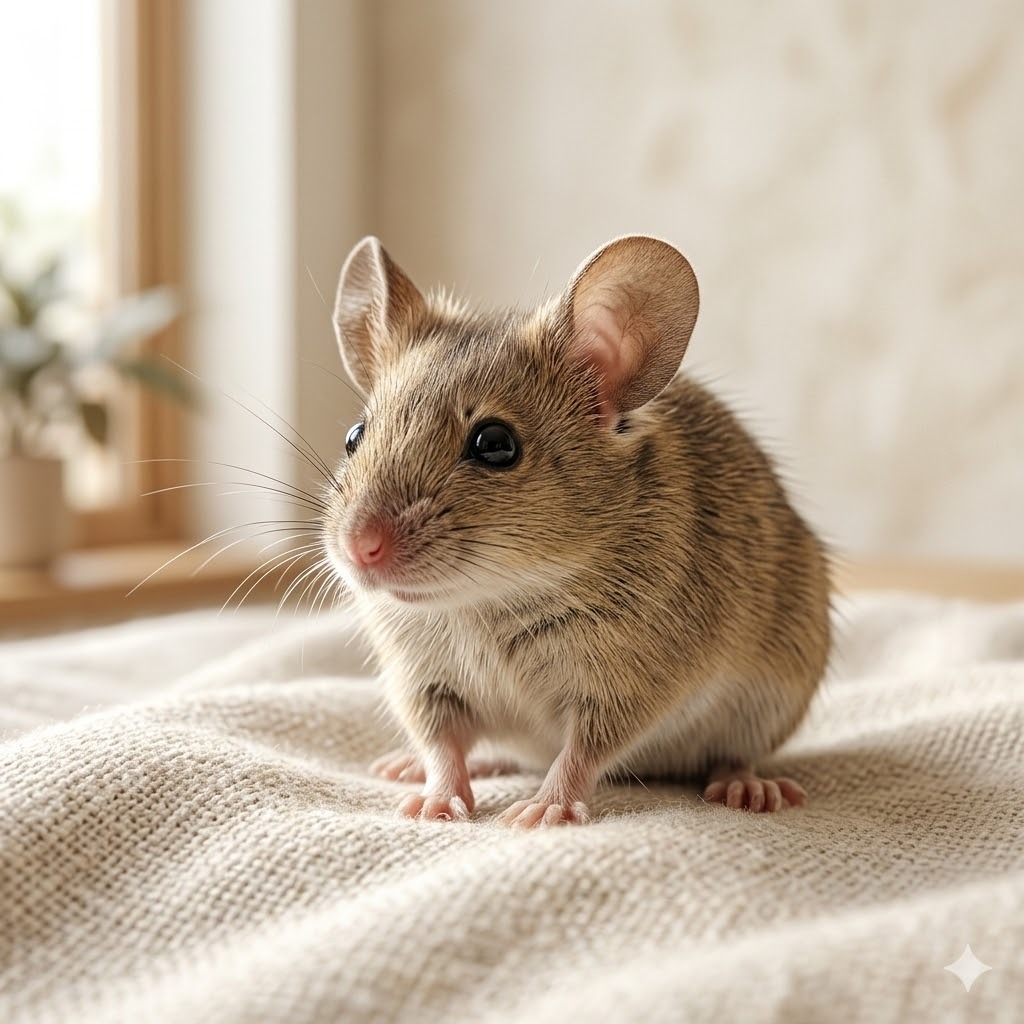
Their coat is short, dense, and remarkably soft - the source of the name "soft-fur rat" - and is usually greyish-brown to sandy on the back with a paler, lighter belly. They have a pointed muzzle, large rounded ears, prominent dark eyes, and a long, sparsely furred tail. Selective breeding has produced colour variations including lighter fawn and marked patterns. The defining anatomical trait is the female's large number of mammae, sometimes numbering well into the teens, which supports the very large litters this species produces.
Temperament & Handling
Multimammate mice are active, inquisitive, and social. Kept in groups and handled regularly from a young age, they can become confident and genuinely tame, climbing onto hands and exploring willingly. Animals bred purely as feeders and never handled tend to be skittish, so early, consistent, gentle interaction makes an enormous difference.
Handle calmly and low over a surface, scooping rather than snatching, and let them come to you. They are quick and agile, so a secure grip and a safe enclosed space are important. They can nip if frightened or mishandled, but rarely do so once accustomed to people. Because they are largely nocturnal and crepuscular, they are liveliest in the evening. Overall they reward patience with real personality and interactivity.
Housing
Provide a secure glass or plastic tank with a tight, well-ventilated lid - a barred cage is risky because these small, agile mice can squeeze through or chew gaps. A group needs generous floor space, and bigger is always better; aim well beyond the minimum for a small mouse.
Provide:
- Deep bedding for burrowing - paper-based or aspen, never pine or cedar.
- Multiple hides, tunnels, and climbing structures.
- A solid-surface exercise wheel sized to prevent back strain.
- Chew items to wear down growing incisors.
- Secure water and food stations, duplicated for groups.
Keep the enclosure out of direct sun and draughts at a stable room temperature. Because the species breeds so readily, house only single-sex groups unless deliberate, controlled breeding is intended - an unplanned mixed group multiplies alarmingly fast.
Diet
Feed a good-quality rodent or rat and mouse mix based on grains and seeds as the staple, supplemented with regular protein since this species is more omnivorous than many rodents - offer small amounts of cooked egg, mealworms, or plain cooked chicken.
Add small portions of fresh vegetables and occasional fruit in moderation, avoiding sugary excess. Provide gnawing material to keep the continuously growing incisors in check, and always supply fresh water. Feed measured amounts to prevent obesity, adjust protein for active or breeding animals, and remove perishable fresh food before it spoils. Avoid toxic foods such as chocolate, onion, and citrus in quantity.
Health & Lifespan
Multimammate mice generally live around 2 to 3 years, sometimes a little longer with good care.
Major concerns:
- Obesity - easy to overfeed; keep portions measured and provide exercise.
- Respiratory infection - common in rodents; ensure good ventilation and dust-free bedding.
- Dental overgrowth - manage with constant gnawing material.
- Tumours - relatively frequent in older animals.
- Bite wounds - from group disputes, especially in cramped housing.
- Zoonotic considerations - source responsibly and practise good hygiene, as the wild species is studied as a disease reservoir.
Locate a vet experienced with small rodents in advance, since not every clinic treats them.
Pros & Cons
Pros:
- Sociable and can become genuinely tame.
- Active, curious, and interactive.
- Soft coat and appealing appearance.
- Affordable and widely available.
- Thrive in companionable groups.
Cons:
- Breed extremely prolifically - single-sex housing essential.
- Need a secure tank, not a typical barred cage.
- Nocturnal - most active in the evening.
- Feeder-bred animals may start skittish.
- Require responsible sourcing and hygiene.
Best Suited For
- Owners wanting a social, interactive group rodent.
- People able to provide a secure tank and single-sex group.
- Patient keepers willing to tame animals gradually.
- Those seeking an affordable, personality-rich pet.
Not suited for anyone wanting a solitary pet, households unable to prevent uncontrolled breeding, or owners expecting a daytime-active, cage-friendly animal.
Multimammate Mouse (African Soft-fur Rat) - frequently asked questions
Are multimammate mice good pets or just snake food?
Both roles exist, but handled from a young age they become tame, curious, and genuinely rewarding companions.
Do they need to live in groups?
Yes. They are highly social and should be kept in single-sex groups, never alone.
Why is single-sex housing so important?
They breed extremely fast and produce large litters, so mixed groups multiply out of control.
How long do they live?
Usually about 2 to 3 years.
Can I keep them in a normal barred cage?
Not safely. A secure glass or plastic tank with a ventilated lid is best, as they can escape or chew through gaps.
🧠 Test yourself: guess the small mammal
Three clues from our quiz bank, each about another of our small mammals. Can you name them?
Clue 1.This tiny nocturnal marsupial has a membrane between its limbs that lets it glide between trees and a fondness for sweet sap.
It's the Sugar Glider - read the full profile →
Clue 2.Highly social, this long-tailed rodent gets lonely and depressed if kept entirely alone.
It's the Fancy Rat - read the full profile →
Clue 3.Hunted nearly to extinction for its ultra-soft pelt, this crepuscular South American mammal can leap remarkably high and live up to twenty years.
It's the Chinchilla - read the full profile →
Social Needs
Multimammate mice are highly social and should not be kept alone - a solitary individual becomes stressed and withdrawn. They thrive in single-sex groups, which allow natural grooming, play, and companionship. Groups established young tend to be stable and peaceful.
Because they breed so prolifically, mixing males and females leads to constant, overwhelming reproduction, so responsible keepers maintain single-sex colonies. Provide enough space and duplicated resources to prevent competition and fighting. They enjoy human interaction as a supplement to their group life, but their primary social needs are met by their own kind.