Prairie Dog
The Prairie Dog (Cynomys ludovicianus), specifically the black-tailed prairie dog, is a highly social burrowing rodent native to the grasslands of North America.
🗓️ Last reviewed: June 2026
Overview
The Prairie Dog (Cynomys ludovicianus), specifically the black-tailed prairie dog, is a highly social burrowing rodent native to the grasslands of North America. They are sometimes sold as exotic pets, but they are a serious long-term commitment - intensely social, strong-willed, loud, and prone to a dramatic seasonal personality change in adult males. A prairie dog obtained young and handled daily can bond deeply, but this is not a casual pocket pet, and legality varies widely.
Natural History & Origin
Wild black-tailed prairie dogs live on the short-grass and mixed-grass prairies of the central United States, from Montana down into Texas, and into parts of Canada and Mexico. They are a keystone species, living in vast underground colonies called "towns" that can stretch for miles. Within a town, family groups called "coteries" share burrow systems, groom one another, and communicate with an elaborate set of alarm calls. They are diurnal herbivores, grazing on grasses and forbs during the day and retreating underground at night and in bad weather.
Appearance
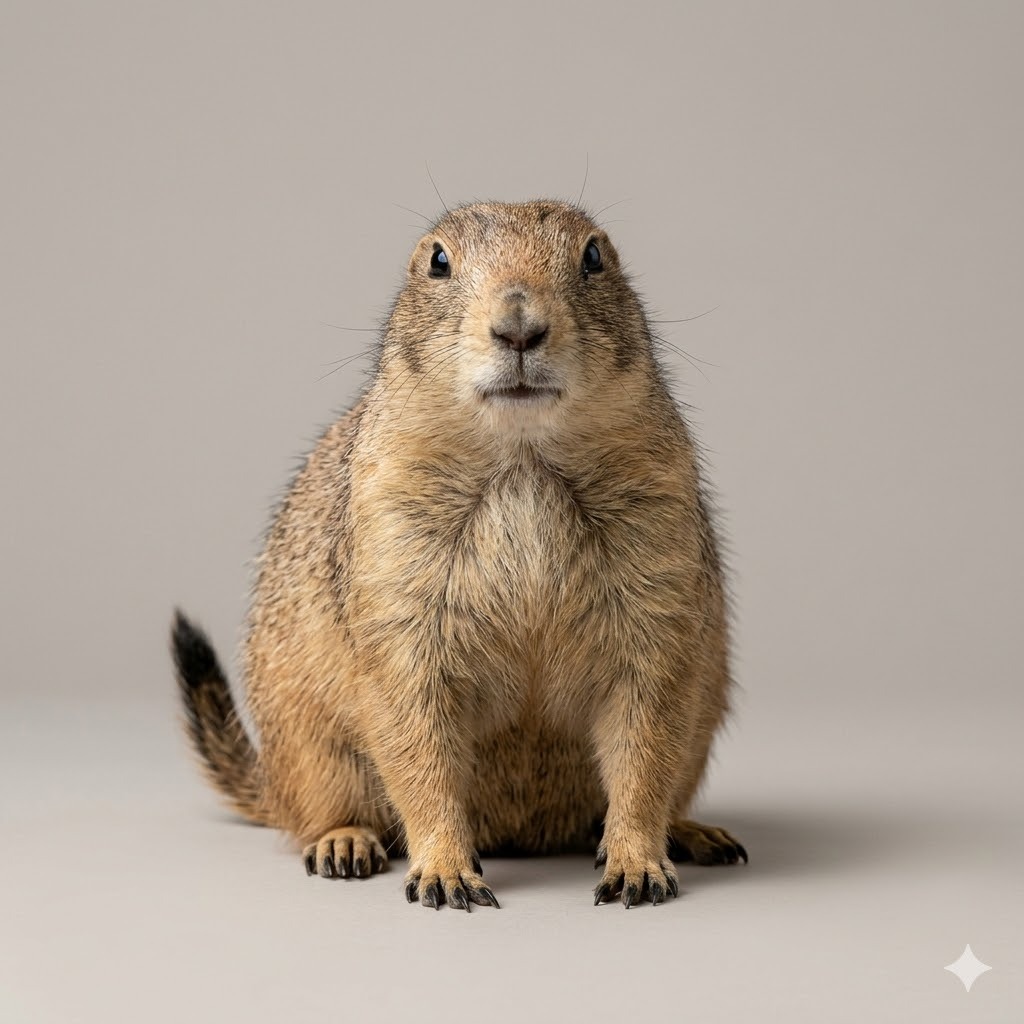
Adults weigh roughly 700-1,500 g (1.5-3 lb), with a stocky body 28-35 cm long plus a short black-tipped tail.
Coat: sandy tan to cinnamon-brown fur, paler underneath, with the characteristic black tail tip that gives the black-tailed species its name.
The compact, muscular build, short legs, and strong digging claws are the defining features of a ground-dwelling burrower.
Temperament & Handling
Highly social and intelligent, prairie dogs bond strongly with their owners - but mainly when obtained young (kits weaned in spring) and handled gently every single day. A well-bonded prairie dog treats its human as part of its coterie: it grooms, "kisses," chatters, and seeks contact constantly. Skipping handling for even a few weeks can erode that bond and the animal may become defensive.
The "rut" is the single biggest surprise for new owners. Intact adult males, and sometimes females, go through an intense seasonal hormonal change (roughly winter into early spring) when they can become territorial, moody, and prone to biting - even animals that were perfectly tame the rest of the year. Neutering and patient handling help, but owners must expect this annual swing.
Prairie dogs are also vocal. Their alarm "barks" and chattering are loud and frequent, and they are most active during the day, so noise is part of daily life.
Housing
Minimum enclosure: a large multi-level cage or custom enclosure, roughly 1.2 m × 0.6 m × 1.2 m as a floor-space starting point, with much larger being far better. Prairie dogs need horizontal floor space and digging depth more than height.
Provide:
- A deep digging substrate or a dedicated dig box (they must be able to burrow).
- Multiple hideouts, tunnels, and nest boxes.
- Heavy chew items and untreated wood (constantly growing incisors).
- Grass hay available at all times, both as food and bedding.
- Heavy ceramic dishes and a clean water source.
Many dedicated owners convert a spare room or build a custom enclosure, because standard cages rarely give enough room to dig and roam.
Diet
Grass-hay-based herbivore. Prairie dogs are grazers, and the foundation of the diet is unlimited grass hay (timothy, orchard grass, brome).
- Grass hay - the bulk of the diet, available 24/7, essential for gut health and tooth wear.
- Fresh grasses and leafy greens - a regular supplement.
- A small amount of prairie-dog or guinea-pig style pellets - in limited quantity, not the main food.
- Vegetables - in moderation.
Avoid: high-sugar fruit, sugary treats, nuts, seeds, and high-fat or high-protein foods. Obesity is a common and serious problem in pet prairie dogs, and an over-rich diet contributes to it. Sudden diet changes can cause digestive upset.
Health & Lifespan
Roughly 8-10 years in good captive care, sometimes longer.
Common concerns include:
- Obesity - very common; driven by overfeeding and too little space to move.
- Dental problems - overgrown or misaligned teeth without enough chewing material.
- Respiratory infections.
- Heart and liver disease in older or overweight animals.
- Odontoma - a tooth-root growth that can obstruct breathing.
Find an exotics vet experienced with rodents before you acquire one. Many general-practice vets will not see prairie dogs, and finding qualified care can be genuinely difficult depending on where you live. Do not rely on a single source for medical decisions - work with a qualified exotics vet.
Pros & Cons
Pros:
- Highly intelligent and engaging.
- Bonds deeply with a dedicated owner (when raised young).
- Diurnal - active during the day, unlike many exotic pets.
- Long-lived for a rodent.
Cons:
- Intense seasonal "rut" temperament change in adult males.
- Loud and vocal.
- Needs large space and lots of digging/chewing.
- Strong daily handling commitment to stay tame.
- Hard to find an exotics vet.
- Legality varies by US state and locality.
- An 8-10 year commitment.
Best Suited For
- Experienced exotic-pet owners.
- Households that can dedicate hours of daily attention.
- Homes with the space for a large enclosure and digging.
- Owners prepared for the annual rut and the noise.
Not suited for first-time or casual exotic-pet owners, people wanting a low-effort "pocket pet," apartment dwellers with noise restrictions, families expecting a hands-off children's pet, or anyone unable to find exotics veterinary care.
Prairie Dog - frequently asked questions
Are prairie dogs legal?
It varies widely. Some US states and localities ban or restrict them, and rules can change. Verify your state and local laws in writing before acquiring one.
Are they good for kids?
Not as a typical hands-off family pet. They can bite, especially during the rut, and need specialist care and gentle, consistent handling.
Can I keep just one?
Yes, but a single prairie dog needs heavy daily human interaction to replace its lost colony. If you cannot commit hours a day, this is not the right pet.
How long do they live?
Roughly 8-10 years - a serious long-term commitment.
Is this a beginner pet?
No. Prairie dogs are not a beginner pocket pet. They need space, daily handling, specialist care, and an owner ready for the seasonal rut.
🧠 Test yourself: guess the small mammal
Three clues from our quiz bank, each about another of our small mammals. Can you name them?
Clue 1.This gliding marsupial uses the patagium membrane and its tail as a rudder, sailing up to about 50 metres between trees.
It's the Sugar Glider - read the full profile →
Clue 2.Far smarter than its reputation, this domesticated brown rodent can learn its name and be litter-trained.
It's the Fancy Rat - read the full profile →
Clue 3.Curious and quick, this little nocturnal animal navigates largely by smell and whisker-touch, having poor eyesight.
It's the Fancy Mouse - read the full profile →
Social Needs
Prairie dogs are colony animals and need a great deal of social interaction. A single pet prairie dog depends entirely on its human for that companionship, which means hours of daily attention. Some owners keep more than one, which can satisfy social needs but adds cost, space, and complexity - and unfamiliar adults do not always accept one another. Whether kept alone with heavy human contact or in a small group, social engagement is not optional for this species.