Richardson's Ground Squirrel
The Richardson's Ground Squirrel (Urocitellus richardsonii), affectionately nicknamed the "dakrat," is a plump, diurnal, burrowing ground squirrel native to the northern prairies of North America.
🗓️ Last reviewed: July 2026
Overview
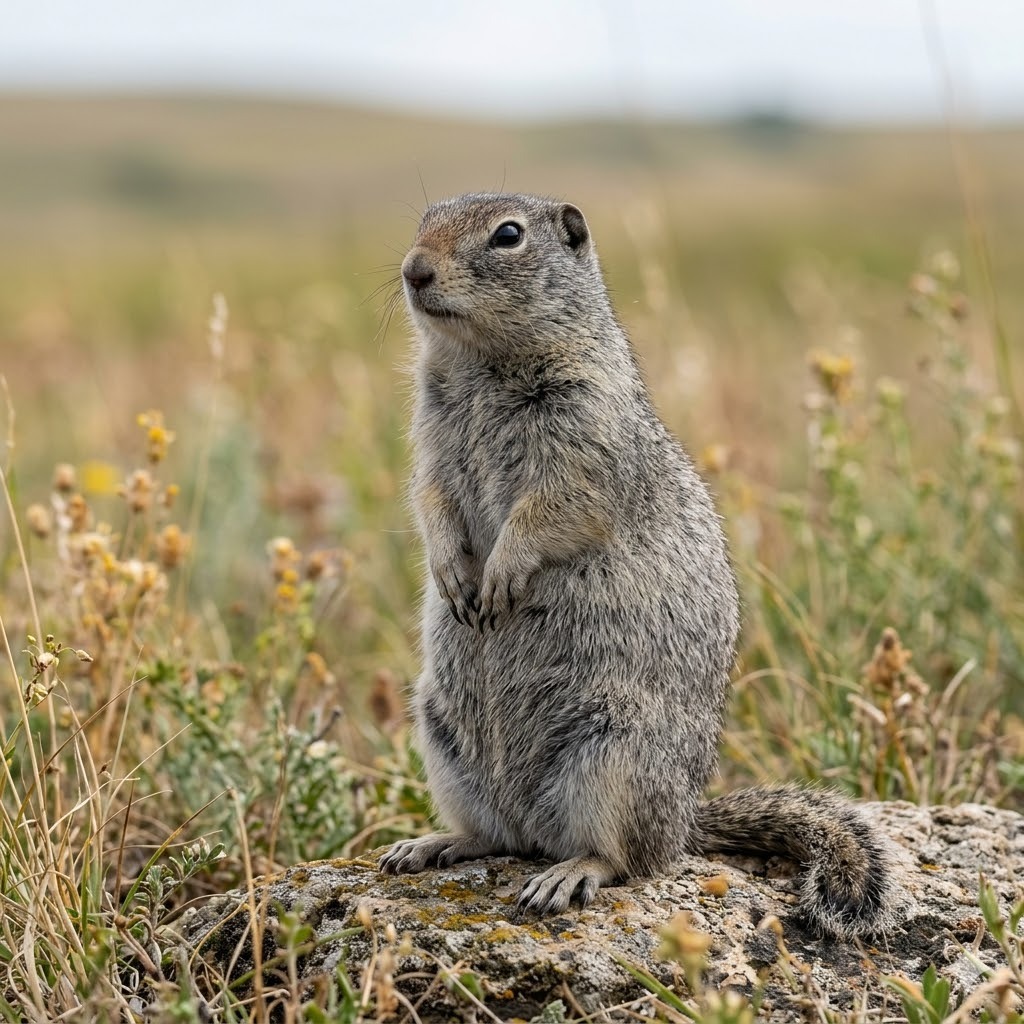
The Richardson's Ground Squirrel (Urocitellus richardsonii), affectionately nicknamed the "dakrat," is a plump, diurnal, burrowing ground squirrel native to the northern prairies of North America. Unlike its gliding tree-dwelling cousins, this is a busy daytime animal that lives in the earth, digging tunnels and standing upright to survey its world like a tiny sentinel. Tamed young, it becomes remarkably social and interactive, whistling, foraging, and burrowing with obvious personality. It is an exotic pet with specific needs - deep digging substrate, plenty of space, and an owner who understands that it hibernates for months each year. Legality varies by region, so anyone considering one should check local exotic-pet law first.
Natural History & Origin
Richardson's Ground Squirrels inhabit the short-grass and mixed-grass prairies of the northern United States and the Canadian Prairie provinces. They live in extensive underground burrow systems, often in loose colonies, and are active by day, foraging for seeds, grasses, and vegetation. They are famous for their upright "picket-pin" posture, standing bolt upright at the burrow mouth to watch for predators and sounding sharp alarm whistles.
A defining feature of their biology is true hibernation. In the wild, they may spend as much as half the year underground in a deep torpor, emerging only in spring. Captive animals retain this instinct and will typically slow down, gain weight beforehand, and enter a dormant period during the cold months. They are naturally social within colonies, which is why captive dakrats generally tame well and enjoy company when raised young. Captive stock is only lightly removed from wild animals, so early gentle handling is key to a friendly pet.
Appearance
A stout, compact ground squirrel. Adults typically measure around 28-33 cm in total length including the tail, and weigh roughly 300-750 grams depending on sex and season - they fatten considerably before hibernation.
The coat is a smoky greyish-brown, often with a faint dappling, paler on the underside, giving good camouflage against prairie soil. The tail is relatively short and slim compared with tree squirrels, and lightly fringed. The body is rounded, the legs short and strong for digging, and the small ears sit close to the head. Large eyes set high on the skull give a wide field of view - ideal for spotting danger while standing upright.
Temperament & Handling
Raised from a young age with frequent gentle handling, Richardson's Ground Squirrels tame well and become social, curious, and interactive. They recognise their owners, respond to routine, and often enjoy sitting up to take food from the hand. Their diurnal nature is a big advantage over nocturnal exotics - they are awake and active during the day, so they interact when you are.
Handling should be calm and low to the ground, since these are quick, strong-legged animals that can wriggle and leap. An un-tamed or startled adult can bite, and even tame animals may nip during the pre-hibernation weight-gain phase when hormones and appetite run high. Consistent daily interaction keeps them sociable. As with most small exotics, young children are not ideal handlers because the animal is fast and can be injured by rough grips.
Housing
Space and digging depth are the priorities. These are burrowing animals, so the enclosure must be large with a deep layer of safe digging substrate - the more they can tunnel, the happier and healthier they are. A big terrarium-style enclosure or a large, well-ventilated custom cage with a deep dig box is ideal.
Provide:
- A deep substrate layer for burrowing (a thick bed of safe soil or paper-based bedding several inches deep).
- Tunnels, hides, and a nest box for security and sleeping.
- A solid-surface exercise wheel large enough for the body.
- Chew items and untreated wood, since incisors grow continuously.
- Sturdy climbing and lookout perches to satisfy the upright sentinel instinct.
The enclosure must be escape-proof and secure, as ground squirrels are determined diggers and climbers. During the pre-hibernation season, provide extra bedding and a cool, quiet nesting area so the animal can slow down safely. Keep them away from household predators such as cats and dogs.
Diet
A grassland forager's diet built on plant matter with modest protein. A balanced approach:
- A base of a quality rodent or ground-squirrel pellet or seed mix.
- Plenty of fresh grasses, leafy greens, and vegetables.
- Small amounts of seeds and grains as part of the mix.
- Occasional small protein sources such as insects.
- Very limited fruit and treats, since these animals gain weight readily.
Fresh, clean water must always be available, even though prairie animals are efficient with water. During autumn the squirrel will naturally eat more and store fat for hibernation, so a slightly increased ration at that time is normal - but avoid year-round overfeeding, which causes obesity.
Health & Lifespan
In captivity a well-cared-for Richardson's Ground Squirrel commonly lives around 4-6 years, sometimes longer with excellent care - a lifespan extended in captivity compared with the harsh, predator-filled wild.
Major concerns:
- Obesity - easy to overfeed, especially with seeds and treats.
- Hibernation problems - improper temperature or an underweight animal entering torpor can be dangerous; the seasonal slowdown must be understood and supported.
- Dental overgrowth - continuously growing incisors need chew material.
- Stress and boredom - from cramped enclosures without room to dig.
- Injuries - from unsafe wheels or escape attempts.
An exotic veterinarian familiar with rodents and ground squirrels should be located before acquiring one, as few general practices treat these animals.
Pros & Cons
Pros:
- Diurnal - active and interactive during the day.
- Tames well and is social when raised young.
- Fascinating burrowing and sentinel behaviour.
- Robust, characterful little animal.
- Can be kept in compatible same-sex groups.
Cons:
- Hibernates for months, which owners must understand and manage.
- Needs a large enclosure with deep digging substrate.
- Prone to obesity if overfed.
- Exotic-pet legality varies by region.
- Can bite if untamed or during pre-hibernation season.
- Requires an experienced exotic vet.
Best Suited For
- Exotic keepers wanting a daytime-active burrowing pet.
- Owners able to provide a large, deep-substrate enclosure.
- People comfortable managing a seasonal hibernation cycle.
- Homes without free-roaming cats or dogs near the enclosure.
Not suited for owners wanting a cuddly lap pet, those without space for a big dig-friendly enclosure, anyone unwilling to check exotic-pet law, or keepers unprepared for months of hibernation each year.
Richardson's Ground Squirrel - frequently asked questions
Why is it called a "dakrat"?
It is a common nickname for the Richardson's Ground Squirrel among keepers, and has nothing to do with rats - it is simply an affectionate name for this prairie ground squirrel.
Does it really hibernate as a pet?
Yes. Captive animals retain the instinct and will typically fatten in autumn and enter a dormant, sleepy state through the cold months. Owners must support this cycle rather than fight it.
Is it awake during the day?
Yes - it is diurnal, which makes it much easier to interact with than nocturnal exotics.
Is it legal to keep?
It depends on your location. Exotic-pet rules for native ground squirrels vary widely, so confirm local law before acquiring one.
How long do they live?
Around 4-6 years in captivity, sometimes more with excellent diet, housing, and care.
🧠 Test yourself: guess the small mammal
Three clues from our quiz bank, each about another of our small mammals. Can you name them?
Clue 1.Closely related to chinchillas, this animal must avoid sugary food because it is highly prone to diabetes.
It's the Degu - read the full profile →
Clue 2.A strictly solitary nocturnal rodent that hoards food in cheek pouches reaching back to its shoulders.
It's the Syrian Hamster - read the full profile →
Clue 3.When startled, this small spiny mammal kept as an exotic pet curls into a tight, prickly ball.
It's the African Pygmy Hedgehog - read the full profile →
Social Needs
Richardson's Ground Squirrels are colony animals in the wild and are generally social when raised together, so keeping a same-sex pair or small compatible group can provide valuable companionship. A single animal can do well too, but only with generous daily human interaction to substitute for colony contact.
Introductions between unfamiliar adults should be gradual and supervised, as with any social rodent. Whether kept alone with an attentive owner or in a small group, the key is enough space, enrichment, and routine to keep the animal engaged and unstressed.