Striped Grass Mouse (Zebra Mouse)
The striped grass mouse (Lemniscomys species), often called the zebra mouse, is one of the most visually striking small rodents kept as a pet.
🗓️ Last reviewed: July 2026
Overview
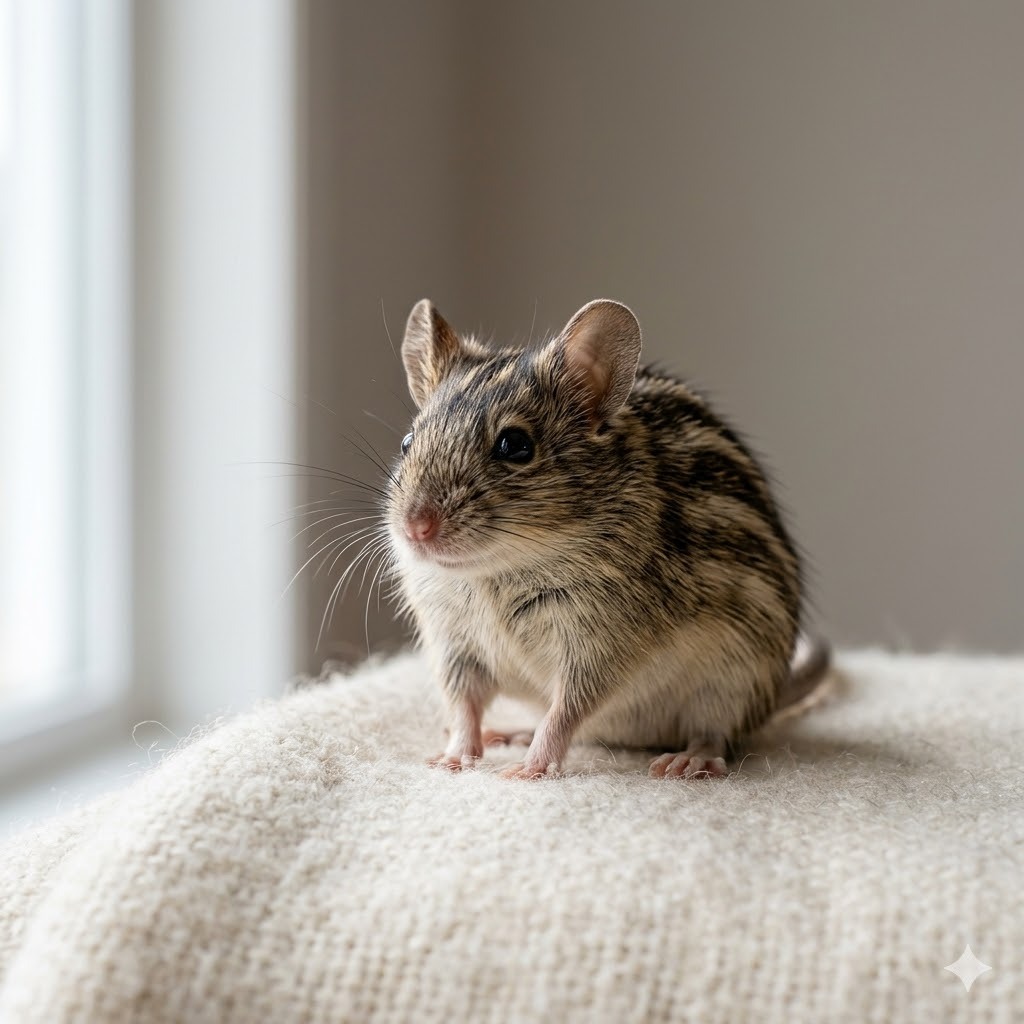
The striped grass mouse (Lemniscomys species), often called the zebra mouse, is one of the most visually striking small rodents kept as a pet. Marked with bold dark and light stripes running the length of its body, it looks like a miniature chipmunk crossed with a zebra. Unlike most pet rodents, it is diurnal - active during the day - which makes it far easier to enjoy than nocturnal hamsters and mice. It is also intensely energetic, highly social, and best appreciated as a watch-more-than-handle animal that lives in a large, richly furnished enclosure. For an owner who wants a lively, beautiful, group-living rodent to observe rather than cuddle, the striped grass mouse is a captivating choice.
Natural History & Origin
Striped grass mice are native to the grasslands, savannas, and scrublands of sub-Saharan Africa, where several closely related species range widely across the continent. They inhabit open, grassy country and are active foragers by day, feeding on seeds, grasses, roots, and insects.
In the wild they live in social groups and rely on speed and vigilance to avoid the many predators that hunt them, from birds of prey to snakes and small carnivores. Their bold striping provides camouflage among dry grass stems and dappled light. Because they are so active and so tuned to open space, captive striped grass mice need far more room and enrichment than a typical mouse, reflecting the busy, wide-ranging lives of their wild relatives.
Appearance
Striped grass mice are slender, athletic rodents, typically 9-14 cm in body length with a tail as long as or longer than the body, and weighing roughly 40-70 grams as adults depending on species.
Their most distinctive feature is the coat: a warm brown or tawny base marked with a series of pale and dark longitudinal stripes running from shoulders to rump, giving the "zebra" or "chipmunk" appearance. They have a pointed face, large bright eyes suited to daytime vision, prominent ears, and long hind legs built for rapid, darting movement. The long tail aids balance during their quick, agile scampering. Their build is lean and streamlined rather than round, reflecting a life of constant activity.
Temperament & Handling
Striped grass mice are extremely active, alert, and quick - they rarely sit still. They are social and curious but naturally wary, and most do not enjoy being restrained. They are best regarded as a watch-more-than-handle species: fascinating to observe as they leap, dash, forage, and interact, but not an animal that tolerates a lot of holding.
With patience they can become accustomed to their keeper's presence and may take treats from the hand, but chasing or grabbing stresses them and can provoke a nip or a panicked escape. Handling, when necessary, should be brief, low, gentle, and over a secure surface. Because they are diurnal, they are wonderfully engaging during normal waking hours, which is a major advantage over nocturnal rodents for many owners.
Housing
Provide the largest, most secure enclosure possible - a spacious glass tank or a tall, escape-proof cage with very narrow bar spacing. These fast, agile mice need vertical and horizontal room to run, climb, and leap, so a big, well-furnished habitat is essential rather than optional.
Provide:
- Deep bedding for digging - paper-based or aspen, never pine or cedar.
- Plenty of climbing branches, ropes, platforms, and tunnels.
- Multiple hides distributed around the enclosure.
- A large solid-surface exercise wheel and foraging opportunities.
- A sand bath and safe chew items.
- Secure water and food stations, duplicated for groups.
Keep the enclosure out of direct sun and draughts at a stable room temperature. Enrichment is critical - a bored, under-stimulated striped grass mouse in a small cage will suffer, so prioritise space and complexity.
Diet
Feed a varied, high-quality grain and seed mix as the staple, closely reflecting their natural foraging diet, and supplement with regular protein such as mealworms, a little cooked egg, or plain cooked chicken.
Offer small portions of fresh vegetables and greens, plus occasional fruit in strict moderation to avoid excess sugar. Scatter-feeding and hiding food around the enclosure provides valuable mental stimulation for these busy foragers. Provide gnawing material for the continuously growing incisors, and always keep fresh water available. Feed measured amounts to prevent obesity, and remove perishable fresh food before it spoils. Avoid toxic items such as chocolate, onion, and large amounts of citrus.
Health & Lifespan
Striped grass mice generally live around 4 to 5 years, which is notably long for a small rodent, sometimes reaching a little older with excellent care.
Major concerns:
- Obesity - a real risk with rich diets and too little space; ensure a large enclosure and measured feeding.
- Stress-related problems - from cramped housing, overhandling, or lack of enrichment.
- Respiratory infection - ensure good ventilation and dust-free bedding.
- Dental overgrowth - manage with constant gnawing material.
- Injuries - from unsafe wheels, falls, or panicked escape attempts.
- Tumours - possible in older animals.
Find a vet experienced with exotic small mammals before you need one, as this species is less commonly seen in general practice.
Pros & Cons
Pros:
- Striking, beautiful bold striping.
- Diurnal - active and visible during the day.
- Long-lived for a small rodent.
- Highly active and endlessly entertaining to watch.
- Social and thrive in groups.
Cons:
- Watch-more-than-handle - not a cuddly pet.
- Need a large, enriched, escape-proof enclosure.
- Quick and easily stressed by grabbing.
- Breed readily - single-sex housing needed.
- Less common, so a specialist vet may be required.
Best Suited For
- Owners who enjoy observing a lively, beautiful pet.
- People able to provide a large, enriched enclosure.
- Keepers wanting a daytime-active rodent.
- Those seeking a long-lived, social group animal.
Not suited for anyone wanting a cuddly, frequently handled pet, households with only small cage space, or owners expecting a calm, easily held animal.
Striped Grass Mouse (Zebra Mouse) - frequently asked questions
Are striped grass mice good for handling?
Not especially. They are quick and wary, and are best enjoyed as a watch-and-observe pet rather than one to hold often.
Are they active during the day?
Yes. Unlike most pet rodents they are diurnal, so they are lively and visible during normal waking hours.
Do they need to live in groups?
Yes. They are social and should be kept in single-sex groups, with ample space and duplicated resources.
How long do they live?
Often about 4 to 5 years, which is long for a small rodent.
What size enclosure do they need?
A large, tall, escape-proof habitat with lots of climbing, tunnels, and enrichment - far more than a standard mouse cage.
🧠 Test yourself: guess the small mammal
Three clues from our quiz bank, each about another of our small mammals. Can you name them?
Clue 1.This nocturnal insectivore performs 'self-anointing,' frothing saliva and spreading it over its quills.
It's the African Pygmy Hedgehog - read the full profile →
Clue 2.This big-eared Andean rodent has the densest fur of any land mammal and must bathe in volcanic dust, never water.
It's the Chinchilla - read the full profile →
Clue 3.This long, slinky carnivore is a domesticated polecat whose name comes from the Latin for 'little thief.'
It's the Ferret - read the full profile →
Social Needs
Striped grass mice are social and should be kept in compatible groups rather than alone; isolation causes stress in this active, group-oriented species. Same-sex groups introduced young tend to establish stable, cohesive colonies with plenty of interaction and shared activity.
As with other prolific rodents, keep single-sex groups unless deliberate, controlled breeding is planned, since mixed groups reproduce readily. Provide ample space and duplicated resources to reduce competition and prevent squabbles. They benefit from the company of their own kind far more than from human handling, so their social needs are best met by a well-matched group in a large, enriched home.