Winter White Dwarf Hamster
The winter white dwarf hamster (Phodopus sungorus), also called the Djungarian or Siberian hamster, is a small, soft, endearing rodent famous for a remarkable trick - in short winter daylight its coat can turn from grey-brown to nearly pure white.
🗓️ Last reviewed: July 2026
Overview
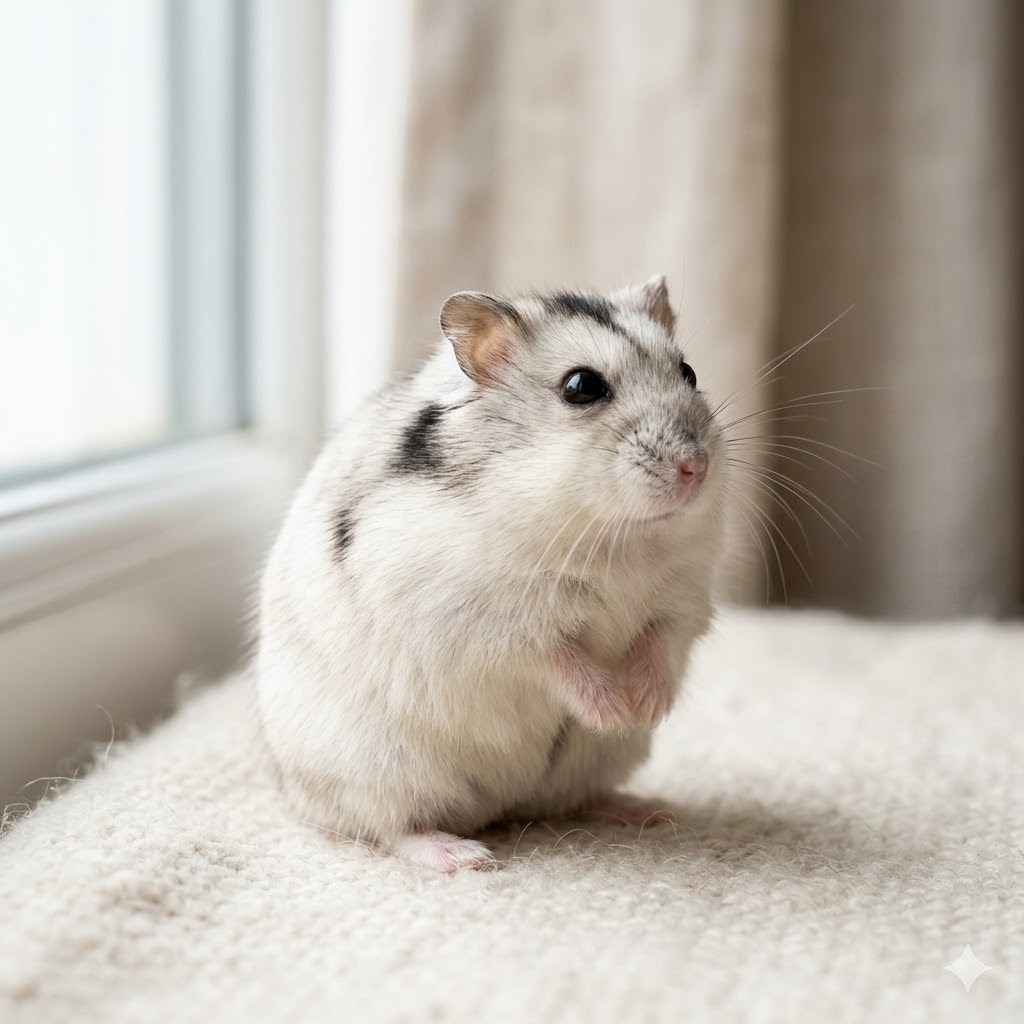
The winter white dwarf hamster (Phodopus sungorus), also called the Djungarian or Siberian hamster, is a small, soft, endearing rodent famous for a remarkable trick - in short winter daylight its coat can turn from grey-brown to nearly pure white. Slightly gentler and fluffier than its close cousin the Campbell's dwarf, it has become a favourite pocket pet for people who want a tiny, calm, watchable companion. Like the Campbell's, it is genetically prone to diabetes, so its diet must be kept low in sugar. It is also frequently hybridised with the Campbell's in the pet trade, which means many "winter whites" for sale are actually crosses. Understanding its true care needs helps owners give this delicate little animal a healthy life.
Natural History & Origin
The winter white hamster originates from the meadows, steppes, and semi-arid grasslands of Siberia, Mongolia, Kazakhstan, and northern China. In the wild it experiences dramatic seasonal change, and its winter colour shift is a survival adaptation - as daylight shortens, the coat pales toward white, camouflaging the hamster against snow and helping it avoid predators.
These hamsters dig shallow burrows and forage at dawn and dusk for seeds, insects, and plant material. They are somewhat social by hamster standards and may share territory with relatives. Because they are so closely related to the Campbell's dwarf, the two species readily interbreed, and this hybridisation is widespread in captivity. True purebred winter whites are increasingly uncommon in pet shops.
Appearance
Winter whites are small, rounded dwarves, typically about 7-9 cm long and weighing roughly 20-45 grams. They have a stocky body, a blunt face, small ears, furred feet, and a very short tail.
The summer coat is grey-brown or slate on the back with a distinctive dark dorsal stripe and a paler belly, and the boundary between the two is marked by three arches. Under short winter daylight the coat can lighten dramatically, sometimes turning almost entirely white while the dorsal stripe remains. This colour change happens reliably only with genuine natural light cycles. Their fur is notably soft and dense - fluffier than the Campbell's - and selectively bred varieties include sapphire, pearl, and combinations of the two.
Temperament & Handling
Winter whites are generally regarded as one of the calmer, gentler dwarf hamsters. Many are curious and tolerant of gentle handling, and while they can nip if startled, they tend to be less flighty than Campbell's dwarfs. They are still small, quick, and easily frightened, so careful handling remains important.
Handle low and slowly, scooping rather than grabbing, and always over a soft surface in case of a leap. Keep early sessions brief and use treats to build trust. Because they are nocturnal and crepuscular, they prefer to sleep through the day and should not be woken abruptly. They are wonderful to observe as they dig, forage, and run, and they suit owners who value a gentle, watchable pet over one that tolerates constant holding.
Housing
Give the largest home you can manage, aiming for a minimum floor area of around 4,000 cm² and ideally much more. A glass tank or a barred cage with extremely narrow bar spacing is essential, as these tiny hamsters can escape through surprisingly small gaps.
Provide:
- Deep, burrowable bedding (15 cm or more) of paper-based or aspen material - never pine or cedar.
- A solid-surface running wheel at least 20 cm in diameter.
- Hides, tunnels, bridges, and safe chew toys.
- A sand bath for coat maintenance.
- Secure water and food stations.
Position the enclosure away from direct sun, radiators, and draughts, at a steady room temperature. Because these hamsters can perceive daylight length, natural room light helps trigger the winter colour change, though this is cosmetic and not required for health.
Diet
Feed a good-quality dwarf hamster seed and grain mix as the staple, supplemented occasionally with a small protein source such as a mealworm, a little cooked egg, or plain cooked chicken.
As with the Campbell's, winter whites are prone to diabetes, so a low-sugar diet is critical. Avoid fruit, honey-coated treats, yogurt drops, and any mix containing added sugar or molasses. Small pieces of low-sugar vegetables such as cucumber, broccoli, or a little carrot make suitable fresh treats. Provide chew items to wear down the continuously growing incisors, and always keep fresh water available. Offer a small measured portion each day and remove perishable food before it spoils.
Health & Lifespan
Winter white dwarf hamsters usually live about 1.5 to 2.5 years, occasionally slightly longer with excellent husbandry.
Major concerns:
- Diabetes - a well-known risk in this species; keep sugar very low and watch for excessive thirst, urination, and weight change.
- Wet tail and digestive upset - stress-linked diarrhoea that can be fatal quickly and needs urgent care.
- Dental overgrowth - manage with constant gnawing material.
- Tumours - fairly common in older animals.
- Bite injuries - if group housing breaks down.
- Accidental injury - from wire wheels, falls, or wide bar spacing.
Identify a vet comfortable with small exotic mammals in advance, since not all clinics handle rodents.
Pros & Cons
Pros:
- Gentle and generally calm for a dwarf hamster.
- Soft, fluffy coat with a fascinating winter colour change.
- Small, affordable, and space-efficient.
- Can sometimes be kept in same-sex pairs.
- Low odour.
Cons:
- Diabetes-prone - strict low-sugar diet needed.
- Short lifespan.
- Often hybridised, so true purebreds are scarce.
- Pairs can fight and need monitoring.
- Nocturnal - most active when you may be asleep.
Best Suited For
- Owners wanting a gentle, watchable small pet.
- Older children and adults comfortable with careful handling.
- People with limited space seeking a tiny companion.
- Those willing to maintain a strict low-sugar diet.
Not suited for very young children expecting a cuddly toy, households unable to provide a large secure enclosure, or anyone wanting a daytime-active pet.
Winter White Dwarf Hamster - frequently asked questions
Do winter white hamsters really turn white?
They can. Under natural short winter daylight the coat may lighten dramatically, sometimes to near-white, while the dorsal stripe remains.
Are they friendlier than Campbell's dwarfs?
Often, yes. They tend to be gentler and less flighty, though they can still nip if startled.
Why do they need a low-sugar diet?
They are genetically prone to diabetes, so fruit and sugary treats should be avoided.
How long do they live?
Typically about 1.5 to 2.5 years.
Can I keep two together?
Sometimes - same-sex siblings in a large cage may cohabit, but be prepared to separate them if fighting starts.
🧠 Test yourself: guess the small mammal
Three clues from our quiz bank, each about another of our small mammals. Can you name them?
Clue 1.This small, long-tailed rodent is the domesticated form of a common household pest kept as a friendly pet.
It's the Fancy Mouse - read the full profile →
Clue 2.A strictly solitary nocturnal rodent that hoards food in cheek pouches reaching back to its shoulders.
It's the Syrian Hamster - read the full profile →
Clue 3.A soft grey high-altitude rodent kept as a pet, it overheats easily and needs a cool room plus a dust bath.
It's the Chinchilla - read the full profile →
Social Needs
Winter whites are somewhat social and same-sex pairs or small groups can sometimes coexist, especially siblings raised together in a large enclosure with duplicated resources. However, harmony is never guaranteed - fights can flare up without warning, so owners must be ready to separate them permanently if aggression appears.
Never house males and females together unless you intend to breed, as they reproduce readily. Keeping a single winter white is entirely acceptable and often the safest choice. They do not require human companionship but thrive with a spacious, enriched home and daily observation.