Pionus Parrot
The pionus parrot is one of the parrot world's best-kept secrets - a calm, quiet, undemanding medium-sized bird that offers much of the charm of a larger parrot without the volume, drama, or intense neediness.
🗓️ Last reviewed: July 2026
Overview
The pionus parrot is one of the parrot world's best-kept secrets - a calm, quiet, undemanding medium-sized bird that offers much of the charm of a larger parrot without the volume, drama, or intense neediness. Often overlooked in favor of flashier species, the pionus is the "understated" parrot: steady in temperament, gentle in disposition, and content to be part of the household without demanding to be the center of it. For people who want a real parrot companion but need a bird that fits a quieter home, the pionus is frequently the ideal choice. One quirk newcomers should know about in advance: pionus parrots wheeze when excited or frightened, a normal breathing sound that is often mistaken for illness.
Natural History & Origin
Pionus parrots belong to the genus Pionus, which includes several species such as the blue-headed, Maximilian's (scaly-headed), white-capped, and bronze-winged pionus. They are native to Central and South America, ranging from Mexico down through the Amazon basin, where they inhabit forests, woodlands, and mountain slopes. In the wild they feed on fruits, seeds, and blossoms, and travel in small, relatively quiet flocks - a calmer social style that carries over into their behavior as pets.
Appearance
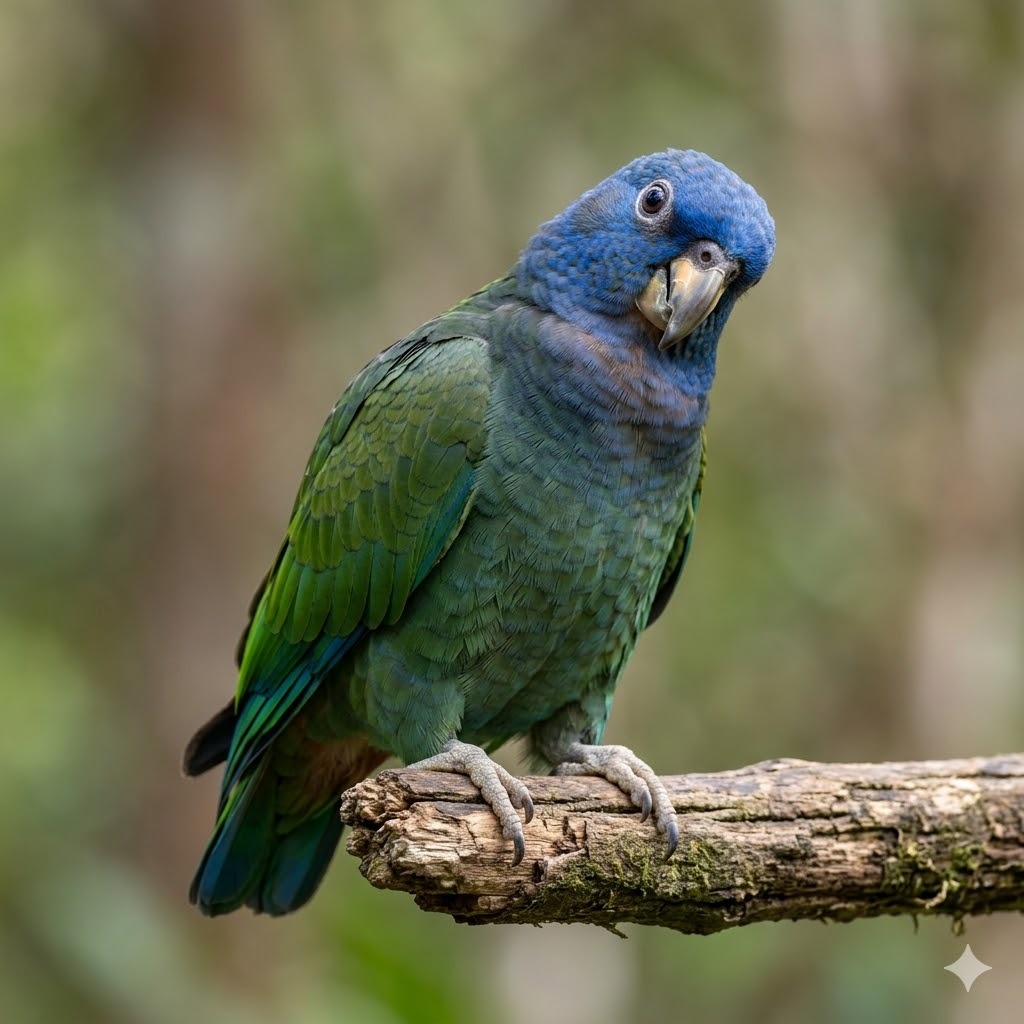
Medium-sized, stocky parrots roughly 28-31 cm long and weighing about 220-280 g depending on species. They have a characteristically short, square tail and a chunky build. Coloring varies by species but tends toward muted, sophisticated tones - blues, greens, bronzes, and dusky pinks - often with a patch of red under the tail (the vent) common across the genus. Up close, the plumage often reveals a subtle, scalloped, almost iridescent quality that rewards a second look. Their understated palette matches their understated personality.
Temperament & Noise
Pionus parrots are calm, even-tempered, and undemanding. They tend to be less cuddly and more independent than conures, happy to sit near their people and interact on their own terms rather than constantly demanding attention. Many are somewhat reserved with strangers but affectionate with their trusted family. They are not prone to the dramatic mood swings or hormonal aggression seen in some parrots.
On noise, the pionus is a standout: it is one of the quieter medium-sized parrots. It is not silent - it will call, chatter, and make some noise - but it lacks the ear-splitting scream of conures and Amazons, making it far more realistic for shared living spaces. One thing to expect: when excited, startled, or stressed, pionus parrots often make a distinctive wheezing or snorting sound. This is completely normal breathing behavior for the species and should not be confused with respiratory illness, though persistent wheezing at rest does warrant a vet check.
Housing & Flight
Minimum cage: around 60 x 60 x 90 cm, larger preferred, with bar spacing of about 2 cm. Though calmer than many parrots, pionus still need room to move and climb.
Provide:
- Sturdy perches of varied natural-wood diameters.
- Chewable toys and foraging puzzles, rotated regularly.
- Good ventilation and clean air, since pionus are sensitive to respiratory irritants.
- Daily out-of-cage time for exercise, which also helps prevent obesity.
Diet
- Quality pellets as the base of the diet (about 60-70%).
- Fresh vegetables and leafy greens daily.
- Fruit in moderation.
- Seeds and nuts sparingly - pionus are prone to obesity, so fatty treats must be limited.
Avoid avocado, chocolate, caffeine, alcohol, onion, garlic, and salty or sugary foods. Watch portion sizes closely; this is a species that gains weight easily.
Health & Lifespan
Pionus parrots typically live 25-40 years with good care, a serious long-term commitment.
Common concerns:
- Obesity, to which the species is especially prone - diet and exercise management are essential.
- Fungal infections, particularly aspergillosis, as pionus can be sensitive to poor air quality and mold.
- Vitamin A deficiency from seed-heavy diets.
- Respiratory issues and sensitivity to non-stick cookware fumes, aerosols, and smoke.
- Psittacosis (a bacterial infection).
Note that normal excitement-wheezing is not a health problem, but any labored or persistent breathing at rest should be examined by an avian vet. Establish care with an avian vet before acquiring the bird.
Training & Enrichment
Intelligent but gentle, pionus respond well to calm, patient, positive-reinforcement training. They can learn step-up, recall, and simple tricks, and some pick up a few words in a soft, unclear voice - they are modest talkers at best. Foraging toys and puzzle feeders keep them mentally engaged and, importantly, help manage their tendency toward weight gain by making them work for food. A steady, low-pressure approach suits their reserved nature.
Pros & Cons
Pros:
- Quiet for a medium-sized parrot.
- Calm, even-tempered, and undemanding.
- Independent - tolerates a working owner's schedule.
- Subtle, sophisticated coloring.
- Long lifespan and loyal companionship.
Cons:
- Prone to obesity - diet must be managed carefully.
- Susceptible to fungal and respiratory issues.
- Less cuddly and interactive than conures.
- Excitement-wheezing can alarm new owners.
- 25-40 year commitment.
Best Suited For
- Owners wanting a real parrot with modest noise.
- Quieter homes and those with neighbors nearby.
- People who work and need an independent bird.
- Keepers who appreciate understated beauty over flash.
Not suited for owners wanting a highly cuddly, attention-seeking bird, homes with poor air quality or non-stick cookware in use, or anyone unable to manage the species' obesity risk.
Pionus Parrot - frequently asked questions
Why does my pionus make a wheezing or snorting sound?
This is normal. Pionus parrots wheeze when excited, startled, or stressed - it is a breathing quirk of the species, not a sign of illness. However, wheezing or labored breathing while at rest should be checked by an avian vet.
Are pionus parrots quiet?
For a medium parrot, yes - they are among the quieter ones. They make some noise but lack the piercing scream of conures and Amazons, making them realistic for shared living spaces.
Do they talk?
Some learn a few words in a soft, unclear voice. They are modest talkers valued more for temperament than speech.
How long do they live?
Typically 25-40 years with good care.
Are they good for beginners?
Their calm nature makes them manageable, but their long lifespan, obesity risk, and respiratory sensitivity mean owners should research thoroughly first.
🧠 Test yourself: guess the bird
Three clues from our quiz bank, each about another of our birds. Can you name them?
Clue 1.Highly social and prone to boredom, this long-lived ash-feathered parrot can pluck out its own plumage if left without mental stimulation.
It's the African Grey Parrot - read the full profile →
Clue 2.A dust-producing companion bird from the outback, it raises or lowers its crest to signal mood and often whistles learned tunes.
It's the Cockatiel - read the full profile →
Clue 3.Selective breeding turned this little parrot into blues, whites, and a larger 'English' show type, though wild ones are always green.
It's the Budgerigar (Budgie) - read the full profile →
Social Needs
Pionus parrots are social but independent. They enjoy interaction and being part of the family's daily life, yet they are content with less constant attention than conures or cockatoos require. This makes them well suited to owners who work or cannot devote every hour to their bird. A single pionus does well with regular daily interaction; they can also be kept with compatible companions, though bonded birds may become more focused on each other. Because they are naturally somewhat reserved, pionus parrots benefit from a stable, predictable routine and gentle handling that lets them build trust at their own pace rather than being forced into contact.