Plum-Headed Parakeet
The plum-headed parakeet is one of the most elegant and gentle members of the parakeet family - a slim, graceful Asian bird with a soft, musical voice and a calm temperament that sets it apart from its louder relatives.
🗓️ Last reviewed: July 2026
Overview
The plum-headed parakeet is one of the most elegant and gentle members of the parakeet family - a slim, graceful Asian bird with a soft, musical voice and a calm temperament that sets it apart from its louder relatives. The male's rich plum-purple head is unmistakable and gives the species its name. Quieter than most parakeets and far less prone to the screeching of larger parrots, the plum-headed parakeet is a favourite of aviculturists who value beauty and a peaceful nature over talking ability. It is an aviary-loving bird at heart, thriving in flight space and gentle company, and it makes a lovely, low-noise companion for the right home. Keepers often say the plum-headed parakeet is a bird to be admired rather than fussed over: it will grow confident and relaxed around a calm owner, but it keeps a certain independence and dignity that many people find charming. For anyone who has been put off parrots by noise and mess, this graceful, quiet species can be a revelation.
Natural History & Origin
The plum-headed parakeet (Psittacula cyanocephala) is native to the Indian subcontinent, ranging across India, Sri Lanka, Nepal, Bangladesh, and Pakistan. It inhabits forest, woodland, and cultivated country, moving in small flocks and feeding on seeds, fruit, blossoms, and grain. Unlike some of its relatives, it has not become a widespread urban pest, remaining more a bird of woodland and farmland. It has a long history in aviculture and is prized for its graceful appearance and sweet whistling calls rather than for mimicry.
Appearance
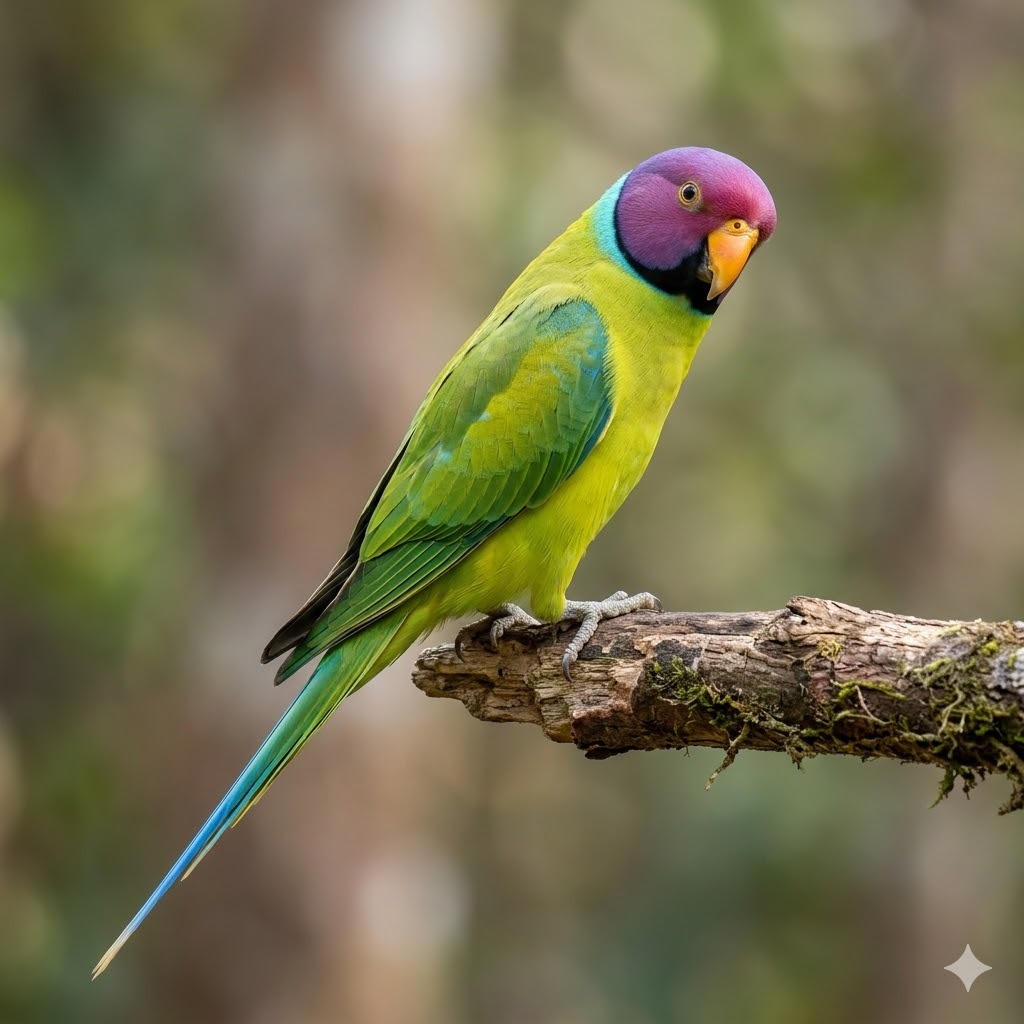
A slim, elegant parakeet: length about 33-37 cm including the long, slender tail, and a light build with weight around 55-70 g. The body is soft green, paler below. The adult male has a beautiful plum-purple to reddish head bordered by a narrow black-and-turquoise collar, a small maroon patch on the wing, and a yellow upper beak. The female is more subdued, with a bluish-grey head and no dark collar, giving pairs a clearly visible difference between the sexes. The long central tail feathers taper to fine blue-tipped points, adding to the bird's delicate, refined look.
Temperament & Noise
Gentle, calm, and undemanding by parakeet standards. Plum-headed parakeets are less nippy and less excitable than many of their relatives, and they tend to be a little shy, preferring quiet observation to constant handling. Their voice is one of their best features: a soft, pleasant, whistling chatter rather than harsh screeching. They are among the quietest of the parakeets, which makes them well suited to homes where noise is a concern. They are not strong talkers - a few may pick up a word or two - but people keep them for their looks and sweet voice, not for mimicry.
Housing & Flight
These are active fliers that do best with plenty of horizontal space. Minimum cage: 90 x 45 x 60 cm for a single bird, but they truly flourish in a flight cage or aviary where they can stretch their wings. Bar spacing of around 1.5 cm is appropriate.
Provide:
- Several natural-wood perches of varying thickness.
- A selection of toys and destructible wood, though they chew less aggressively than larger parakeets.
- Foraging opportunities to keep the mind busy.
- A cuttlebone or mineral block for calcium.
- Daily out-of-cage flight time in a bird-safe room, or a spacious aviary.
Diet
- Quality pellets as a dietary base (around 50%).
- A good seed mix as a significant supplement - this species enjoys and does well on varied seed alongside pellets.
- Fresh vegetables and greens daily - leafy greens, carrot, capsicum, peas.
- Fruit and blossoms - apple, berries, sprouted seed, offered regularly.
- Cuttlebone or mineral block for calcium.
- Fresh water daily.
Avoid: avocado (toxic to all birds), chocolate, caffeine, alcohol, onion, garlic, and salty foods.
Health & Lifespan
Plum-headed parakeets typically live 15-20 years, with some reaching 20 or a little more in excellent care. That is a substantial commitment, though shorter than the largest parakeets.
Common concerns:
- Psittacosis (a bacterial infection transmissible to people).
- Aspergillosis (a fungal respiratory infection).
- Intestinal parasites and worms, particularly in aviary birds on the ground.
- Vitamin and mineral deficiencies from an all-seed diet.
- Respiratory sensitivity to fumes, smoke, and aerosols.
- Chills - they dislike cold, damp, drafty conditions.
Set up an avian vet before acquiring the bird.
Training & Enrichment
Intelligent and capable of learning, though they are valued more for temperament than for tricks or talking. Gentle, patient handling from a young age produces the calmest, most confident birds. Provide enrichment through foraging toys, fresh branches, sprouted seed, and rotating novelty to keep them engaged. Because they are shy, training goes best with quiet, low-pressure, reward-based sessions rather than forceful handling.
Pros & Cons
Pros:
- Strikingly beautiful, especially the plum-headed male.
- One of the quietest parakeets - a soft, sweet voice.
- Gentle, calm, and undemanding temperament.
- Easy to sex by sight, useful for pairs and breeding.
- Thrives in a peaceful aviary setting.
Cons:
- Naturally shy - not a cuddly, hands-on pet.
- Not a talker.
- Needs good flight space to thrive.
- Dislikes cold and damp conditions.
- 15-20 year commitment.
Best Suited For
- Keepers who value beauty and a quiet voice over talking.
- Aviary enthusiasts and those keeping pairs or groups.
- Homes where noise must be kept low.
- Owners happy with a gentle, observational bird rather than a cuddler.
Not suited for people wanting a talking, hands-on cuddle-bird, cold or drafty housing, or homes with non-stick cookware in active use.
Plum-Headed Parakeet - frequently asked questions
Are plum-headed parakeets quiet?
Yes - they are among the quietest parakeets, with a soft, pleasant whistling chatter rather than harsh screeching.
Can I tell males from females apart?
Easily. Males have the plum-purple head with a dark collar; females have a bluish-grey head and no collar.
Do they talk?
Rarely and not well. A few learn a word or two, but they are kept for looks and voice, not mimicry.
How long do they live?
Typically 15-20 years with good care.
Are they good in an aviary?
Excellent - they are peaceful, gentle, and thrive with flight space and gentle company.
🧠 Test yourself: guess the bird
Three clues from our quiz bank, each about another of our birds. Can you name them?
Clue 1.This small Australian grass parakeet, wild-colored green and yellow with black scalloping, is the world's most popular pet bird.
It's the Budgerigar (Budgie) - read the full profile →
Clue 2.Hailing from the rainforests of central Africa, this ash-colored parrot can mimic human speech and household sounds with uncanny accuracy.
It's the African Grey Parrot - read the full profile →
Clue 3.Sold in bright peach-faced and masked varieties, this little hookbill can become nippy without daily attention.
It's the Lovebird - read the full profile →
Social Needs
Plum-headed parakeets are sociable but gentle, and they do very well kept in pairs or small groups in an aviary. A lone bird needs regular, calm interaction, but because they are naturally a little reserved they often prefer the company of their own kind to intensive handling. They generally coexist peacefully with their own species and are not aggressive by nature, making them good candidates for a mixed, well-planned aviary. A settled pair will often preen one another and roost close together, and watching that quiet companionship is one of the pleasures of keeping the species. Even a single pet bird benefits from being spoken to gently and given a predictable routine, since sudden noise and rough handling quickly undo the trust these sensitive birds build slowly.