Aphrodite Giant
The Aphrodite Giant is a large, semi-longhaired natural cat from the mountains of Cyprus - one of the island's ancient landrace cats, refined into a recognised breed.
🗓️ Last reviewed: July 2026
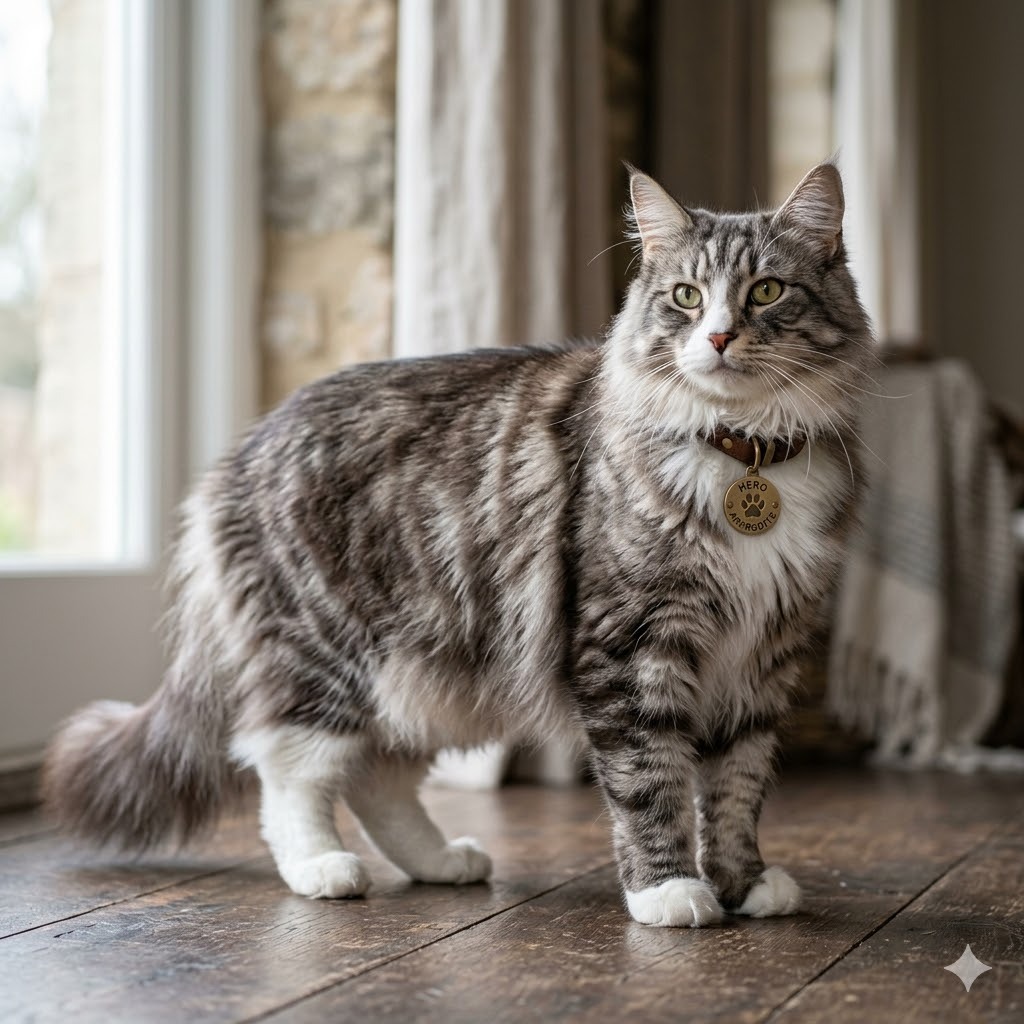
Overview
The Aphrodite Giant is a large, semi-longhaired natural cat from the mountains of Cyprus - one of the island's ancient landrace cats, refined into a recognised breed. Named after the Greek goddess said to have been born on Cyprus, these cats are big, slow-maturing, and impressively athletic, shaped by centuries of survival in rugged Mediterranean terrain rather than by human design. They typically weigh 4-7 kg, with large males reaching the upper end and beyond. As a natural landrace, the Aphrodite Giant is generally robust and healthy. It remains rare outside Cyprus, treasured for its friendly nature, striking size, and living link to some of the oldest domestic cats on earth.
History & Origins
Cyprus has one of the longest documented histories of cat domestication anywhere. A cat was found buried alongside a human at a Neolithic site on the island dating back roughly 9,500 years - among the earliest evidence of the human-cat bond. The island's free-roaming cats descend from this ancient population, adapting over millennia to the Cypriot climate and landscape.
The Aphrodite Giant (and its close relative, the smaller Aphrodite) was developed from the mountain cats of Cyprus in the 2000s, when breeders began formally documenting and standardising the island's native semi-longhaired landrace. The World Cat Federation granted recognition, establishing the breed as a distinct type.
Because it descends directly from naturally occurring landrace cats rather than from selective crossing, the Aphrodite Giant retains the hardiness of a working survivor. It is still uncommon outside its homeland, with most breeding cats found in or near Cyprus.
Appearance
Large, muscular, and semi-longhaired, the Aphrodite Giant is a substantial cat with a powerful, athletic build. Weight is typically 4-7 kg, with big males often larger. The breed is notably slow to mature, reaching full size and coat only at around 3 to 4 years.
Key features:
- Coat: semi-long, with a light undercoat that becomes fuller in winter and thinner in summer. Not as dense or plush as northern longhairs.
- Colour: many colours and patterns occur, with bicolour and tabby-and-white combinations common; pointed patterns are not typical.
- Head: moderately large, slightly rounded, with a strong muzzle.
- Ears: medium to large, set fairly upright.
- Eyes: large, expressive, often in shades of green, yellow, or amber.
- Body: long, muscular, and well-boned, built for climbing mountainous terrain.
- Legs: long and strong, ending in firm oval paws.
- Tail: long and moderately plumed.
Temperament & Character
The Aphrodite Giant is friendly, active, and affectionate - a sociable cat that bonds closely with its family. Descended from free-roaming survivors, it is confident and intelligent, comfortable exploring and problem-solving.
These cats are energetic and love to climb, jump, and patrol their territory. They stay playful well into adulthood, matching their slow physical maturity. Despite their athleticism, they are typically gentle and even-tempered with people.
Aphrodite Giants generally enjoy human interaction without being clingy. Many are talkative in a soft way, greeting owners and staying involved in household life. They usually get along with children, other cats, and dogs when socialised well. Their landrace background gives them a self-assured, adaptable character, and they tend to handle new situations, visitors, and changes in routine with calm curiosity rather than anxiety.
Care
Coat & Grooming
The semi-long coat is relatively low maintenance. Brush once or twice weekly to remove loose hair and prevent tangles, increasing frequency during seasonal coat changes when the winter coat is shed.
The lighter undercoat mats less than that of heavy-coated breeds. Clean ears as needed, trim claws every couple of weeks, and brush teeth regularly.
Exercise & Enrichment
This is an athletic, energetic breed that needs plenty of outlets. Provide tall, sturdy cat trees, high perches, climbing shelves, and interactive play. They excel at leaping and love vertical territory.
Puzzle feeders and rotating toys keep their intelligent minds busy. A bored Aphrodite Giant will find its own entertainment, so daily active play is important.
Health & Lifespan
Average lifespan is 12-16 years.
Common concerns:
- Generally robust - as a natural landrace, the breed has no widespread breed-specific genetic diseases and benefits from a broad gene pool.
- Standard feline health issues - routine risks such as dental disease and, in older cats, kidney disease apply as they do to any cat.
- Obesity - avoid overfeeding this active but food-motivated cat.
- Parasite and injury risk if allowed to roam, given its outdoor-adapted instincts.
Choose a breeder who keeps cats in healthy conditions and screens breeding animals responsibly, though breed-specific genetic testing needs are minimal.
Feeding & Nutrition
Feed a high-quality, protein-rich diet suited to an active, large cat. Growing kittens need ample nutrition to support their long, slow maturation to full size.
Offer measured meals rather than free-feeding to prevent obesity. A combination of wet and dry food supports hydration. Fresh water should always be available.
Living With
Litter
Standard provisions: 1 + 1 box per cat, scooped daily. Given the breed's size, provide large boxes with room to turn. Low-dust, unscented litter is generally preferred.
Multi-cat households
Aphrodite Giants are typically sociable and adapt well to other cats, especially with gradual introductions. Their confident, easygoing nature helps them share space peacefully.
Indoor vs outdoor
The breed adapts to indoor life provided it has vertical space and enrichment, but it retains strong outdoor instincts. A secure catio, cat-proofed garden, or harness walks satisfy its love of exploration far more safely than free roaming.
Pros & Cons
Pros
- Large, striking, athletic natural cat.
- Generally very healthy landrace with a broad gene pool.
- Friendly, affectionate, and intelligent.
- Semi-long coat is low maintenance.
- A living link to ancient Cypriot cats.
Cons
- Very rare outside Cyprus.
- High energy needs plenty of climbing and play.
- Slow to mature (3-4 years).
- Strong outdoor instincts require managed enrichment.
- Big appetite and size mean higher costs.
Best Suited For
- Active owners who can provide climbing and enrichment.
- Households wanting a large, healthy, natural breed.
- Families with children and other pets.
- Homes with vertical space and secure outdoor access.
- Enthusiasts drawn to rare landrace breeds.
Not suited for owners wanting a quiet, sedentary lap cat, cramped homes without climbing space, or anyone unable to find a reputable breeder.
Aphrodite Giant - frequently asked questions
How big do Aphrodite Giants get?
They are a genuinely large breed, with big males comfortably above the 4-7 kg range, reaching full size only around 3 to 4 years of age.
Are they healthy?
Yes - as a natural landrace from Cyprus, they benefit from a diverse gene pool and have no widespread breed-specific diseases.
Are they good with families?
Generally yes. They are friendly, sociable, and typically good with children, other cats, and dogs when well socialised.
Can they live indoors?
Yes, provided they get plenty of vertical space, climbing outlets, and play. A catio or harness walks help satisfy their outdoor instincts.
Why are they so rare?
The breed was only recently standardised from Cyprus's native mountain cats and remains concentrated near its island homeland.
🧠 Test yourself: guess the cat
Three clues from our quiz bank, each about another of our cats. Can you name them?
Clue 1.With ears that arch back toward the skull, this affectionate feline is nicknamed the Peter Pan of cats for never quite growing up.
It's the American Curl - read the full profile →
Clue 2.Looking like a miniature leopard, this energetic, muscular cat has bold rosettes or marbling and a love of climbing and play.
It's the Bengal - read the full profile →
Clue 3.Named after Turkey's capital, this fine-boned longhair has a shimmering coat with no woolly undercoat, giving it a graceful look.
It's the Turkish Angora - read the full profile →
💛 Adoptable Aphrodite Giants near you
Real cats of this breed (and close mixes) waiting in shelters and rescues right now, live from Petfinder. We have no affiliation and earn nothing - if someone catches your eye, the link goes straight to their shelter. New to adopting? Start with our adoption guide.
Widget not loading (some ad-blockers hide it)? Search directly on petfinder.com.