Burmilla
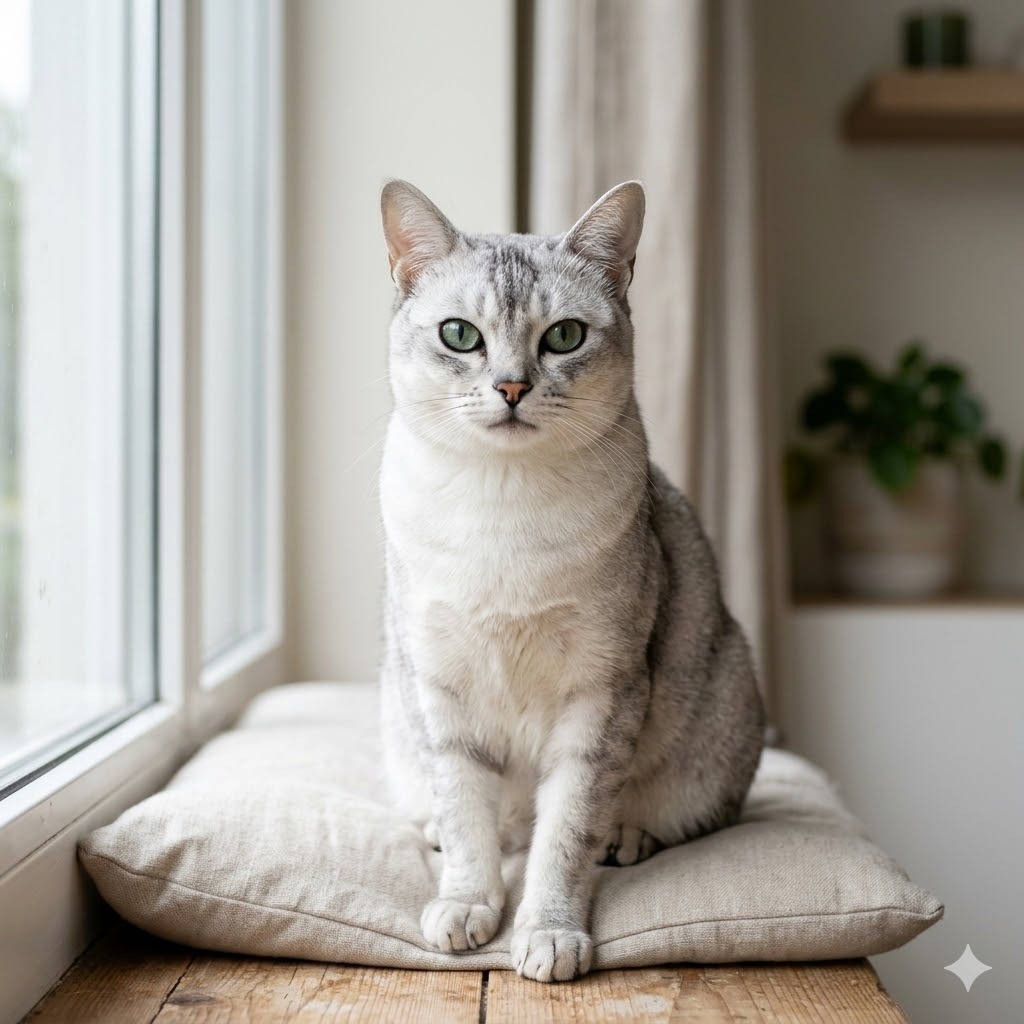
The Burmilla is an elegant medium-sized cat with a sparkling silver-shaded coat, dark-rimmed eyes that look delicately made-up, and a gentle, affectionate nature that blends the best of its two parent breeds.
🗓️ Last reviewed: July 2026
Overview
The Burmilla is an elegant medium-sized cat with a sparkling silver-shaded coat, dark-rimmed eyes that look delicately made-up, and a gentle, affectionate nature that blends the best of its two parent breeds. Created by an accidental cross between a Burmese and a Chinchilla Persian, the Burmilla typically weighs 3-6 kg and combines the playful, people-loving personality of the Burmese with a calmer, more laid-back streak. With a typical lifespan of 12-16 years, it is an easygoing companion that suits families and first-time owners alike.
History & Origins
The Burmilla was born by accident in the United Kingdom in 1981. A lilac Burmese female and a Chinchilla Persian male, both kept as pets in the same household, were due to be bred separately. Before their planned matings, the two cats met unexpectedly, and the Burmese produced a litter of four kittens with short, shaded silver coats and charming personalities.
The kittens were so appealing that their owner, Baroness Miranda von Kirchberg, decided to develop them into a new breed. A careful breeding programme followed, using further Burmese and Chinchilla crosses to fix the shaded silver coat and the sweet temperament while keeping the breed healthy.
The Burmilla gained a devoted following and was recognised by cat registries over the following decades, with the breed accepted in the UK and later by international bodies including TICA. It remains relatively uncommon compared with its parent breeds, prized by enthusiasts for its striking looks and reputation as an unusually good-natured cat.
Appearance
The Burmilla is a medium-sized, muscular cat with a rounded, gentle expression. Its most famous feature is the shaded or tipped silver coat, where each hair is coloured only at the tip over a pale silver-white base, giving a shimmering, sparkling effect.
Key features:
- Coat: short and dense in the shorthair, with a longhair variety that has a soft, silky, semi-long coat. Both are fine and close-lying.
- Colour: silver undercoat with tipping or shading in colours such as black, brown, blue, chocolate, lilac, and red. Both shaded (more colour) and tipped (lighter, sparkling) patterns occur.
- Head: gently rounded with a medium wedge, a short nose, and full cheeks - softer than the Burmese but not as flat as the Persian.
- Eyes: large and expressive, ranging from green to amber, outlined by dark "eyeliner" rims and often a dark nose liner, giving a distinctive made-up look.
- Body: medium, muscular, and well balanced, heavier than it looks.
- Tail: medium to long, in proportion to the body, tapering to a rounded tip.
Temperament & Character
The Burmilla is known for a delightful, balanced temperament. It inherits the sociable, affectionate, people-loving side of the Burmese but is generally calmer and more relaxed, without the constant demand for attention that some Burmese show.
These cats are affectionate and enjoy being near their people, often following them around the house and settling nearby or on a lap. They are playful and keep a kittenish sense of mischief well into adulthood, but they are also happy to relax quietly once playtime is over.
Burmillas are sociable and tend to be gentle with children and other pets. They are curious and intelligent without being overly demanding or destructive, making them one of the easier pedigree cats to live with.
They are moderately vocal - chattier than a Persian but far quieter than a Siamese or Burmese. Most communicate with soft, pleasant voices rather than loud, insistent calls.
Care
Coat & Grooming
The shorthair Burmilla is very low maintenance. A weekly brush or comb keeps the fine coat healthy and removes loose hair. The longhair variety needs a little more attention - brushing 2-3 times weekly prevents tangles, especially around the ruff and tail.
Neither coat mats as readily as a full Persian coat. Wipe the corners of the eyes gently if needed, trim claws every 2 weeks, clean ears as required, and brush teeth several times weekly to guard against dental disease.
Exercise & Enrichment
The Burmilla is playful but not hyperactive. Daily interactive play with wand toys, a cat tree or two, and a rotation of puzzle feeders and toys keep it satisfied. Many enjoy games of chase and fetch.
Because the breed is sociable and can dislike being alone, enrichment includes company. A second cat or plenty of human interaction prevents boredom. Its moderate energy makes it adaptable to both busy and quiet homes.
Health & Lifespan
Average lifespan is 12-16 years.
Common concerns:
- Polycystic kidney disease (PKD) - inherited from Persian ancestry; a DNA test is available, and responsible breeders screen for it.
- Allergies and skin sensitivity - some lines are prone to sensitivities.
- Dental disease - as with most cats, regular dental care helps.
- Weight gain - the breed enjoys food and can gain weight if overfed.
Choose a breeder who DNA-tests for PKD and is open about the health of their lines. The Burmilla is generally a robust, healthy breed when well bred.
Feeding & Nutrition
The Burmilla thrives on a balanced, good-quality diet appropriate to its age and activity level. A moderate-to-high protein food suits the breed. Feed measured meals rather than free-feeding, since Burmillas enjoy their food and can become overweight.
Wet food, or a mix of wet and dry, supports hydration and urinary health. Provide constant fresh water. Adjust portions to keep the cat lean, checking body condition regularly rather than relying on a fixed amount.
Living With
Litter
Standard provision: 1 + 1 litter box per cat, scooped daily. A medium to large box with low-dust, unscented litter suits most Burmillas. The breed is not fussy and adapts easily.
Multi-cat households
Burmillas are sociable and typically do well with other cats and with cat-friendly dogs, especially when introduced properly. Their gentle nature makes them easy additions to a calm multi-pet home, and many appreciate a companion when their owners are out.
Indoor vs outdoor
Indoor-only, ideally with a secure catio or supervised garden access, is safest. The striking silver coat and trusting nature can make a Burmilla vulnerable outdoors. Enrichment indoors keeps this sociable breed content.
Pros & Cons
Pros
- Gentle, affectionate, and easygoing temperament.
- Beautiful sparkling silver coat.
- Good with children and other pets.
- Low grooming needs (shorthair).
- Suits first-time owners.
Cons
- Relatively uncommon and can be expensive.
- Dislikes being left alone for long periods.
- Prone to weight gain without portion control.
- PKD risk from Persian ancestry.
- Longhair variety needs more grooming.
Best Suited For
- Families with children.
- First-time cat owners wanting an easy pet.
- Multi-pet households.
- People wanting an affectionate but not overly demanding cat.
- Homes where the cat will have company most of the day.
Not suited for people who are away long hours with no second pet, or anyone wanting a completely independent, aloof cat.
Burmilla - frequently asked questions
What breeds make a Burmilla?
The Burmilla is a cross between the Burmese and the Chinchilla Persian. It combines the Burmese personality with the shaded silver coat of the Chinchilla.
Are Burmillas good with children?
Yes. Their gentle, tolerant, and sociable nature makes them well suited to families with children and to homes with other pets.
Do they need a lot of grooming?
The shorthair needs only a weekly brush. The longhair variety needs brushing 2-3 times weekly to prevent tangles, but neither mats as heavily as a full Persian.
Are they vocal?
Moderately. They are chattier than a Persian but much quieter than a Siamese or Burmese, usually speaking in soft, pleasant voices.
Can they be left alone all day?
They prefer not to be. Burmillas are sociable and can become lonely, so a companion cat or plenty of human interaction is best.
Are they healthy?
Generally yes, though PKD can be inherited from Persian ancestry. Choose a breeder who DNA-tests for it.
🧠 Test yourself: guess the cat
Three clues from our quiz bank, each about another of our cats. Can you name them?
Clue 1.With a rounded rump and a rabbit-like hop, this breed is named for the Isle of Man.
It's the Manx - read the full profile →
Clue 2.Talkative and playful, this ancient breed often poses with one front paw raised in the air.
It's the Japanese Bobtail - read the full profile →
Clue 3.Originally a rich sable brown, this short-coated, golden-eyed breed is famed for being intensely people-oriented and dog-like.
It's the Burmese - read the full profile →
💛 Adoptable Burmillas near you
Real cats of this breed (and close mixes) waiting in shelters and rescues right now, live from Petfinder. We have no affiliation and earn nothing - if someone catches your eye, the link goes straight to their shelter. New to adopting? Start with our adoption guide.
Widget not loading (some ad-blockers hide it)? Search directly on petfinder.com.