Chausie
The Chausie is a large, athletic hybrid cat created by crossing the wild jungle cat (Felis chaus) with domestic cats, producing a lean, long-legged animal with a distinctly wild look and an active, dog-like personality.
🗓️ Last reviewed: July 2026
Overview
The Chausie is a large, athletic hybrid cat created by crossing the wild jungle cat (Felis chaus) with domestic cats, producing a lean, long-legged animal with a distinctly wild look and an active, dog-like personality. Most pet Chausies weigh 4-7 kg, though tall males can feel much bigger than the scale suggests thanks to their leggy, greyhound-like build. With a typical lifespan of 12-15 years, the Chausie is a high-energy companion best suited to owners who want an intelligent, demanding, and endlessly curious cat.
History & Origins
The Chausie descends from crosses between the jungle cat, a medium-sized wild cat native to the wetlands and grasslands of the Middle East, South Asia, and North Africa, and domestic cats. Occasional natural hybrids between jungle cats and village cats had occurred for centuries in the wild cat's home range, but deliberate breeding to create a stable domestic breed began in the United States in the 1990s.
Breeders wanted a cat that captured the striking look of a small wild cat while keeping a manageable domestic temperament. Domestic Abyssinians and non-pedigreed shorthairs were used alongside the jungle cat foundation to build type and even out temperament. The International Cat Association (TICA) accepted the Chausie for registration in the 1990s and later advanced it toward championship status.
Modern pet Chausies are several generations removed from the wild cat. Cats are described by filial generation - F1 is the first-generation offspring of a jungle cat, while F4 and later generations are considered fully domestic in temperament and are the ones sold as pets. Later-generation cats retain the wild look without the challenges of a truly wild ancestor close in the pedigree.
Appearance
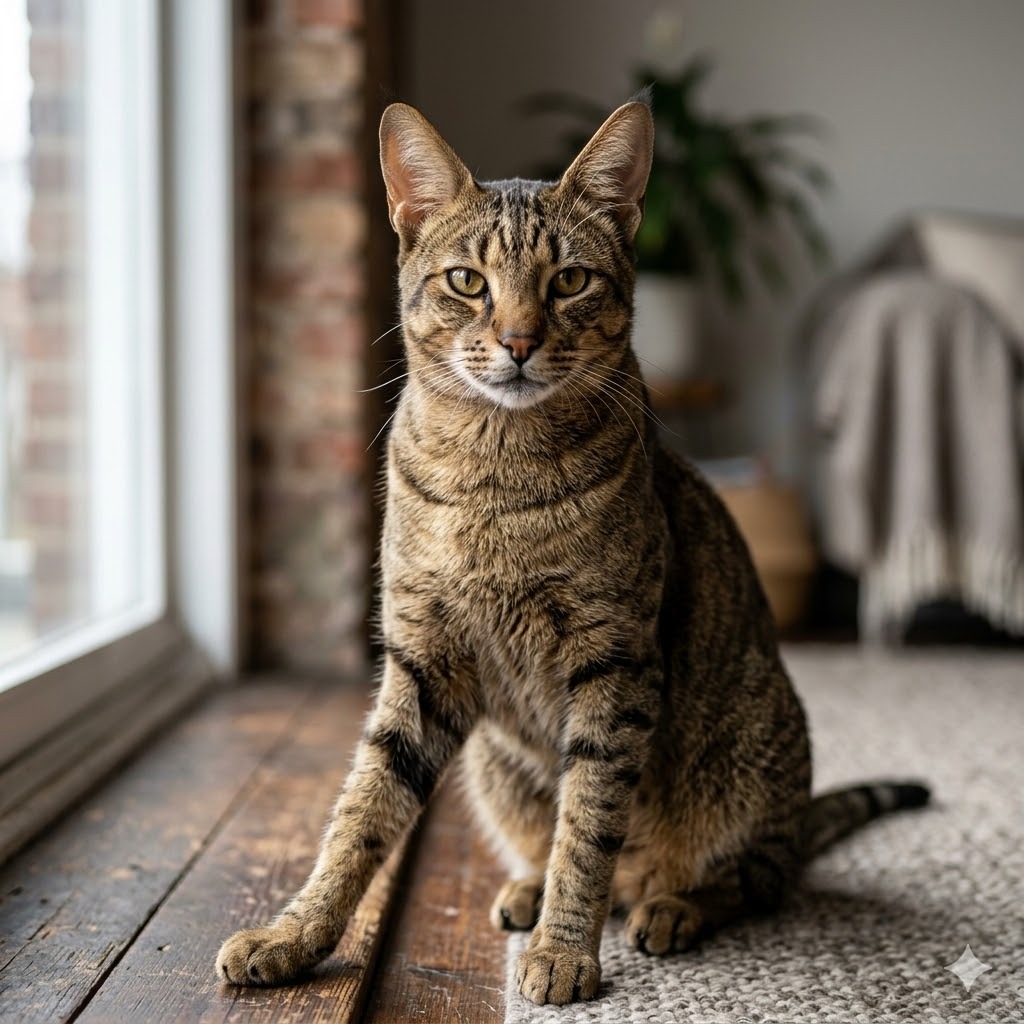
The Chausie is a large, rangy, athletic cat built for running and leaping. It is tall and long-legged with a deep chest, giving it a look often compared to a small cougar. Males are noticeably larger than females.
Key features:
- Coat: short to medium-short, dense, with a slightly coarse texture. Low to moderate maintenance.
- Colour: three accepted colours - solid black, black grizzled tabby (ticked hairs banded with lighter colour, a nod to the wild ancestor), and brown ticked tabby.
- Head: moderately long with a broad muzzle, prominent cheekbones, and a slightly concave profile.
- Ears: large, tall, set high, often tipped with small tufts (lynx-like) that echo the jungle cat look.
- Body: long, lean, and muscular with a deep, narrow chest and long legs. The hind legs are slightly longer, aiding powerful jumps.
- Tail: medium length, shorter than the body, often carried low.
- Eyes: gold, yellow, or light green, with a striking, alert expression.
Temperament & Character
The Chausie is intensely active, intelligent, and people-oriented. This is not a placid lap cat - it is a busy, athletic animal that needs a job to do and company to keep it engaged. Bored Chausies find their own entertainment, which usually means climbing furniture, opening cupboards, and knocking things off high shelves.
The breed is famously dog-like. Many Chausies play fetch, learn to walk on a harness, follow their owners from room to room, and greet visitors. They form strong bonds and can become anxious or destructive if left alone for long stretches.
Chausies are agile and love height. Expect them to be on top of the fridge, the door frame, and the tallest shelf in the house. They are also strong jumpers, easily clearing counters and tabletops.
Most retain a playful, kittenish streak well into adulthood. They are curious about water, quick to learn, and highly interactive - but they are demanding, and they are not the right cat for someone wanting a calm, low-effort pet.
Care
Coat & Grooming
The short to medium coat is easy to maintain. A weekly brush with a rubber grooming glove or short-bristle brush removes loose hair and keeps the coat glossy. Shedding is moderate and increases seasonally.
Bathing is rarely necessary. Trim claws every 2 weeks, clean ears as needed, and brush teeth several times weekly to prevent dental disease. Grooming is one of the easiest parts of Chausie ownership.
Exercise & Enrichment
This is where the Chausie demands the most. The breed needs far more exercise and stimulation than an average cat. Provide tall, sturdy cat trees, plenty of vertical space, puzzle feeders, and daily interactive play with wand toys. Many Chausies enjoy harness walks and clicker training.
Rotate toys to prevent boredom, and give the cat problems to solve. An under-stimulated Chausie will become destructive, vocal, and difficult to live with. Two cats can help entertain each other, but human interaction is not optional.
Health & Lifespan
Average lifespan is 12-15 years.
Common concerns:
- Digestive sensitivity - some Chausies, particularly earlier generations, have shorter digestive tracts and can be sensitive to plant-based ingredients and grains, leading to loose stools or food intolerance.
- Dental disease - as with most cats, regular dental care matters.
- Obesity - less common than in sedentary breeds but still possible with overfeeding.
Because the breed is relatively new and pet cats are later-generation, health data is limited. Choose a breeder who is transparent about the generation, socialises kittens well, and screens their breeding cats.
Feeding & Nutrition
The Chausie does best on a high-protein, meat-focused diet. Many individuals digest grains and heavy plant content poorly, so a high-quality, animal-protein-rich food suits the breed. Some owners feed wet food, a mix of wet and dry, or a properly balanced raw diet under veterinary guidance.
Active adults burn a lot of energy, so portion to the individual cat's condition rather than a fixed rule. Watch for loose stools, which often signal a food that does not agree with the cat. Provide constant fresh water; a fountain can encourage drinking.
Living With
Litter
Standard provision: 1 + 1 litter box per cat, scooped daily. Given the Chausie's size, use large boxes. Low-dust, unscented litter is generally preferred, and an uncovered box suits many active cats.
Multi-cat households
Chausies often do well with other active, confident cats and with cat-friendly dogs, especially when introduced young. They can overwhelm timid or elderly cats with their intensity, so match energy levels carefully.
Indoor vs outdoor
Indoor-only, ideally with access to a secure catio or harness walks, is safest. The breed is a superb jumper and escape artist, so homes need secure windows and doors. A dull indoor life will frustrate this cat, so enrichment is essential rather than optional.
Pros & Cons
Pros
- Striking, wild appearance without a truly wild temperament in later generations.
- Highly intelligent and trainable.
- Playful and dog-like; enjoys fetch and harness walks.
- Short coat is low maintenance.
- Athletic and entertaining.
Cons
- Very high energy; needs constant stimulation.
- Can be destructive if bored or lonely.
- Not a calm lap cat.
- Digestive sensitivity in some lines.
- Rare and expensive; ownership may be regulated in some regions.
Best Suited For
- Experienced, active owners who want an interactive cat.
- Households that can provide lots of vertical space and daily play.
- People wanting a dog-like, trainable cat.
- Homes where the cat will not be left alone all day.
Not suited for first-time owners wanting an easy cat, quiet households, people who are away for long hours, or anyone hoping for a placid, hands-off pet.
Chausie - frequently asked questions
Is a Chausie part wild cat?
Yes - the breed was created from the jungle cat (Felis chaus) crossed with domestic cats. Pet Chausies are usually F4 or later generations, which are fully domestic in temperament while keeping the wild look.
Are Chausies legal to own?
Later-generation Chausies are treated as domestic cats in most places, but ownership of early-generation hybrids is restricted or banned in some regions. Always check local laws before buying.
Do Chausies get along with dogs?
Often very well. Their active, playful, dog-like nature makes them good matches for cat-friendly dogs, particularly when raised together.
How big do they get?
Most pet Chausies weigh 4-7 kg. Their tall, long-legged build makes them look and feel larger than their weight suggests.
Are they good for first-time cat owners?
Generally no. Their high energy, intelligence, and need for stimulation make them challenging. They suit experienced owners who can meet their demands.
Do they need special food?
Many do better on high-protein, low-grain diets because of digestive sensitivity. Loose stools are a common sign a food does not suit them.
🧠 Test yourself: guess the cat
Three clues from our quiz bank, each about another of our cats. Can you name them?
Clue 1.One of the oldest natural longhair breeds, this elegant cat from a Turkish capital region is often pure white with a silky single coat.
It's the Turkish Angora - read the full profile →
Clue 2.This domestic cat was created by crossing house cats with a small wild Asian feline, producing a pet with a strikingly spotted or marbled coat.
It's the Bengal - read the full profile →
Clue 3.The tri-color 'mi-ke' pattern of this Asian breed inspired the waving lucky-cat figurine.
It's the Japanese Bobtail - read the full profile →
💛 Adoptable Chausies near you
Real cats of this breed (and close mixes) waiting in shelters and rescues right now, live from Petfinder. We have no affiliation and earn nothing - if someone catches your eye, the link goes straight to their shelter. New to adopting? Start with our adoption guide.
Widget not loading (some ad-blockers hide it)? Search directly on petfinder.com.