Havana Brown (Felis catus)
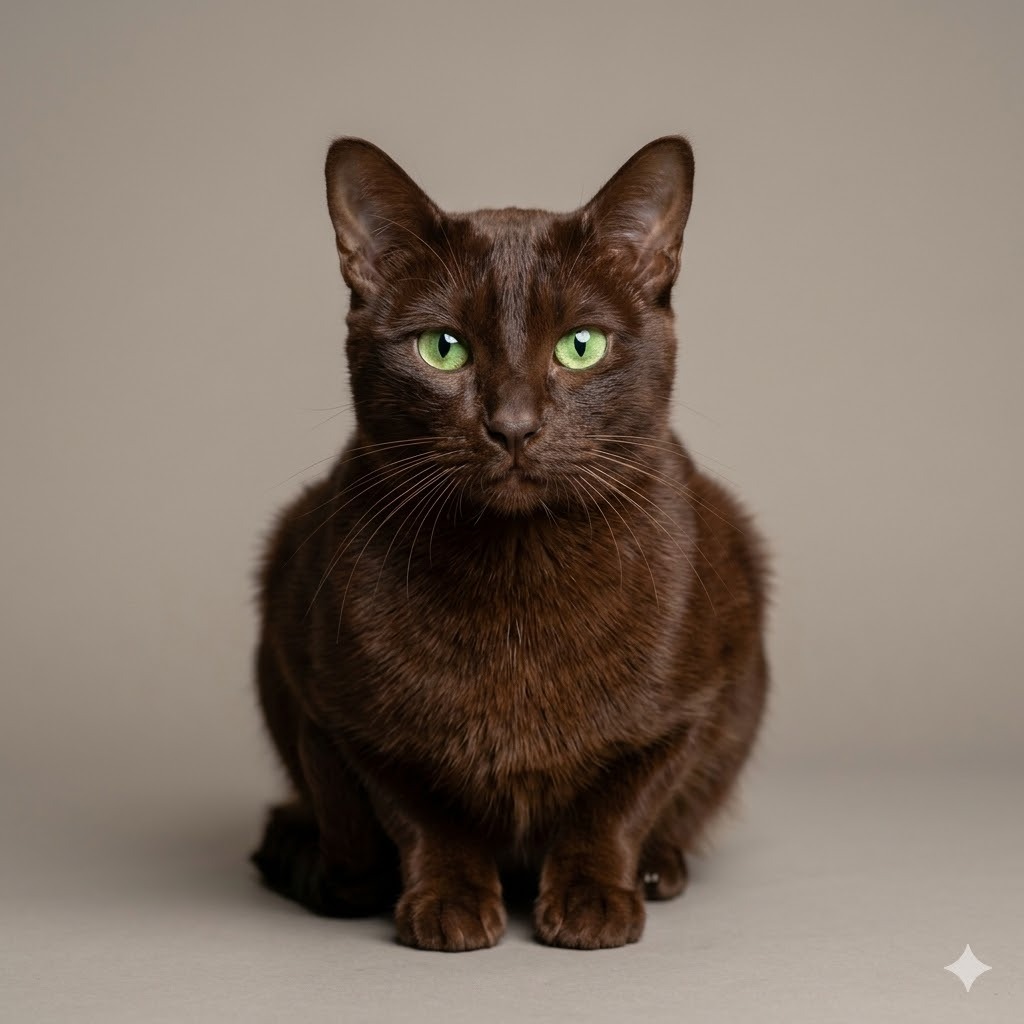
The Havana Brown is a rare and distinctive breed defined by one thing above all: a rich, warm, mahogany-brown coat found in no other pedigreed cat.
🗓️ Last reviewed: June 2026
Overview
The Havana Brown is a rare and distinctive breed defined by one thing above all: a rich, warm, mahogany-brown coat found in no other pedigreed cat. Mid-sized, muscular, and elegant, with expressive green eyes and a uniquely corncob-shaped muzzle, the Havana Brown is also famous for its whiskers, which are brown to match the coat rather than the usual white. Intelligent, people-oriented, and gently playful, it is a devoted companion that uses its paws like little hands to investigate everything around it.
History & Origins
The Havana Brown was deliberately created in 1950s England by a small group of breeders determined to produce a self-coloured brown cat. Solid brown cats had existed in the Siamese world for centuries - early records mention "all-brown" cats imported from Siam - but they had fallen out of favour, and the breed standards of the day actively discouraged them.
The founding breeders crossed a black domestic cat with a chocolate-point Siamese, with some Russian Blue contributing to early lines. The result was a chestnut-brown kitten that became the foundation of the breed. Because the colour resembled the leaf of a Havana cigar, or perhaps a rabbit breed of the same name, the cat was called the Havana Brown.
The breed was exported to the United States, where it developed along slightly different lines from its British counterpart. It earned CFA championship status in 1964. The Havana Brown remains one of the rarest breeds in the world, with a small gene pool that breeders have worked carefully to preserve through approved outcross programmes.
Appearance
Medium-sized, firm, and muscular with a surprisingly solid feel for its moderate size. Males weigh 3.5-4.5 kg (8-10 lb); females 2.7-3.5 kg (6-8 lb). The build is the elegant semi-foreign type - neither cobby nor extreme.
Key features:
- Coat: short to medium-short, smooth, and lustrous, lying close to the body with a glossy sheen.
- Colour: a rich, even, warm mahogany-brown - reddish-brown rather than blackish - is the hallmark. A lilac (frost) variety also exists in some registries. The brown should be uniform from root to tip.
- Whiskers: distinctively brown, the only breed required to have whiskers that match the coat colour rather than being white.
- Head: longer than wide with a distinctive muzzle that has a narrowed pinch and a squared-off, corncob shape - one of the breed's signature traits.
- Eyes: vivid, expressive green, oval-shaped, and medium-sized; the more brilliant the green, the better.
- Ears: large, rounded at the tips, tilted forward to give an alert, attentive look.
- Nose: the leather has a rosy-brown tone in keeping with the warm coat.
- Body: firm and muscular with a level back and slender, dainty paws.
Temperament & Character
The Havana Brown is highly people-oriented, gentle, and quietly affectionate. The breed thrives on companionship and forms close bonds with its family, often choosing one favourite person to shadow throughout the day.
This is a curious, hands-on cat in the most literal sense. Havana Browns are known for reaching out with a paw to touch and investigate objects and people, using their paws almost like fingers. They are intelligent, playful, and enjoy interactive games and puzzle toys well into adulthood.
The breed is moderately active and not as loud as its Siamese ancestors, communicating in a soft, gentle voice. Havana Browns dislike being left alone for long stretches and do best in homes where they receive regular attention and company.
Adaptable and sociable, they generally get along with children, other cats, and cat-friendly dogs, preferring to be in the middle of family life rather than observing from a distance.
Care
Coat & Grooming
The short, glossy coat is very low maintenance. A weekly stroke-through with a rubber brush or grooming mitt removes loose hair and keeps the mahogany sheen at its best. The breed sheds modestly.
Some owners finish with a soft cloth or chamois buffed over the coat to enhance the glossy lustre. Bathing is rarely necessary.
Clean ears as needed, trim claws every 2 weeks, and brush teeth several times weekly. The smooth coat makes routine grooming quick and easy.
Exercise & Enrichment
The Havana Brown is moderately active and intelligent, needing daily play and mental stimulation. Provide cat trees, puzzle feeders, and interactive wand toys, and rotate toys to keep the inquisitive breed engaged.
Because the breed loves to use its paws, toys that reward batting, pawing, and problem-solving are especially satisfying. Many Havana Browns enjoy fetch and learn simple tricks. A bored, under-stimulated Havana can become mischievous.
Health & Lifespan
Average lifespan is 12-15 years.
Common concerns:
- Limited gene pool - the breed's rarity is its greatest health challenge, and breeders use approved outcrosses to maintain genetic diversity.
- Calcium oxalate bladder stones - reported in the breed; a diet supporting urinary health and good hydration helps.
- Upper respiratory sensitivity - some lines can be prone to mild respiratory issues.
- Dental disease.
- Routine feline cardiac concerns - worth normal veterinary monitoring.
Choose a breeder who participates in approved outcross programmes and is open about the lines and health of their cats.
Feeding & Nutrition
Adults typically eat 45-60 g of quality cat food per day, adjusted for the breed's moderate size and activity.
A balanced, high-quality diet keeps the coat glossy and the muscular body in good condition. Because the breed can be prone to bladder stones, a diet that promotes urinary health and ample water intake is beneficial.
Fresh water should always be available; a mix of wet and dry food supports hydration and urinary health.
Living With
Litter
Standard provisions: 1 + 1 box per cat, scooped daily. Good hydration and clean boxes support the breed's urinary health. Low-dust unscented litter is generally preferred.
Multi-cat households
The sociable Havana Brown generally enjoys feline company and does well with compatible cats, especially when it has a companion to prevent loneliness while the family is out. It also tends to accept cat-friendly dogs.
Indoor vs outdoor
Indoor-only is safest. The breed is rare, valuable, and trusting, and ill-suited to outdoor dangers. Catios, window perches, and supervised harness walks satisfy the breed's curiosity safely.
Pros & Cons
Pros
- Unique rich mahogany coat and brown whiskers.
- Affectionate, people-oriented, and gentle.
- Intelligent, playful, and engaging.
- Low grooming needs.
- Soft-voiced and good with families and other pets.
Cons
- Dislikes being left alone for long.
- Very rare and can be hard to find and expensive.
- Limited gene pool requires careful breeder selection.
- Prone to calcium oxalate bladder stones.
- Needs daily play and company to stay content.
Best Suited For
- Owners seeking a devoted, interactive companion cat.
- Families with children and cat-friendly pets.
- Homes where someone is around much of the day, or a second cat is present.
- People who appreciate a rare, distinctive breed.
- Owners wanting an affectionate cat with low grooming demands.
Not suited for people away long hours with no companion cat, owners wanting an aloof independent pet, or those unwilling to seek out a responsible specialist breeder.
Havana Brown (Felis catus) - frequently asked questions
What makes the Havana Brown unique?
Its rich mahogany-brown coat found in no other breed, its distinctive corncob-shaped muzzle, and its brown whiskers - the only breed required to have whiskers matching the coat colour.
Are Havana Browns affectionate?
Very - they are people-oriented, bond closely with their family, and famously reach out with a paw to touch and investigate everything.
Do they need a lot of grooming?
No - the short glossy coat needs only a weekly brush and sheds modestly.
Are Havana Browns rare?
Yes - they are among the rarest pedigreed breeds in the world, with a small carefully managed gene pool.
Are they hypoallergenic?
No - they shed and produce dander and are not hypoallergenic.
🧠 Test yourself: guess the cat
Three clues from our quiz bank, each about another of our cats. Can you name them?
Clue 1.This large cat from eastern Turkey is unusual for enjoying water, and its body is mostly white with colored markings only on head and tail.
It's the Turkish Van - read the full profile →
Clue 2.An ancient natural breed, this cat's heart-shaped face and single silver-tipped coat are prized as a 'luck' cat.
It's the Korat - read the full profile →
Clue 3.This semi-longhair carries the same agouti ticking as the Abyssinian, with each hair banded in multiple colors.
It's the Somali - read the full profile →
💛 Adoptable Havana Brown (Felis catus)s near you
Real cats of this breed (and close mixes) waiting in shelters and rescues right now, live from Petfinder. We have no affiliation and earn nothing - if someone catches your eye, the link goes straight to their shelter. New to adopting? Start with our adoption guide.
Widget not loading (some ad-blockers hide it)? Search directly on petfinder.com.