Kurilian Bobtail
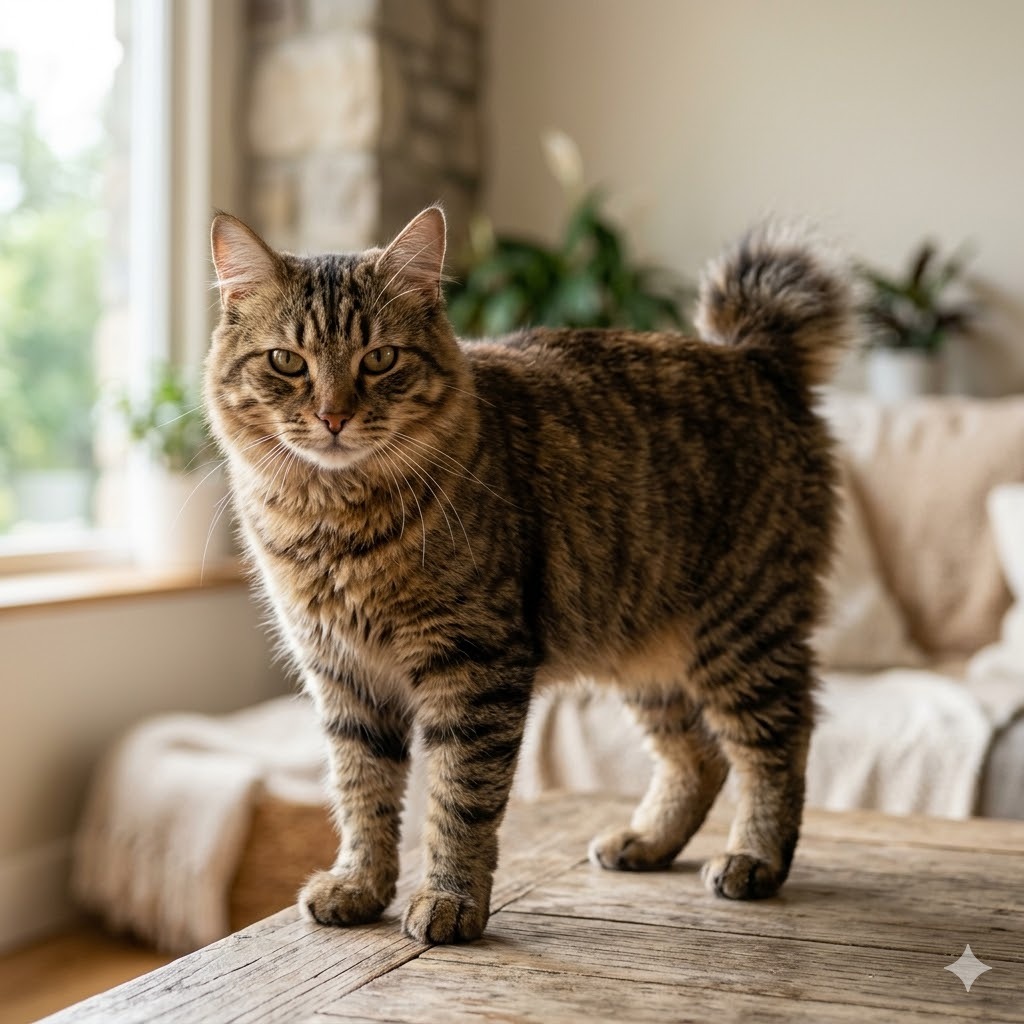
The Kurilian Bobtail is a naturally short-tailed cat from the Kuril Islands off the coast of Russia, instantly recognisable by its distinctive pom-pom tail and wild, muscular appearance.
🗓️ Last reviewed: July 2026
Overview
The Kurilian Bobtail is a naturally short-tailed cat from the Kuril Islands off the coast of Russia, instantly recognisable by its distinctive pom-pom tail and wild, muscular appearance. Despite looking like a small forest wildcat, the breed is famously gentle, intelligent, and dog-like in its devotion to people. Adults typically weigh 4-7 kg, with an average lifespan of 15-18 years, making this a robust, long-lived companion.
History & Origins
The Kurilian Bobtail is a genuinely wild-developed natural breed, not a designed one. It evolved over centuries on the Kuril Islands, a volcanic chain stretching between the Russian mainland and northern Japan. The harsh island climate, rocky terrain, and self-sufficient lifestyle shaped a hardy cat that was an excellent hunter of rodents, birds, and even fish from streams and shallows.
The short tail is the result of a natural dominant genetic mutation that arose and stabilised in the isolated island population, quite separate from the mutation behind the Japanese Bobtail. No two Kurilian tails are exactly alike; each is a unique arrangement of kinks, curves, and angles.
Soviet military personnel and researchers stationed on the islands took some cats back to the mainland in the mid-20th century, where enthusiasts began documenting and stabilising the breed. Russian cat federations recognised the Kurilian Bobtail in the 1990s, and international recognition followed. The breed remains relatively rare outside Russia and Eastern Europe, though it has a growing following worldwide.
Appearance
Medium to large, compact, and heavily muscled, the Kurilian Bobtail gives an impression of substance and power. Males typically weigh 5-7 kg; females 4-5 kg. The breed comes in both semi-longhair and shorthair coat varieties.
Key features:
- Tail: the defining feature - short, kinked, and flexible, from 3 to 8 cm, resembling a pom-pom or fluffy stub. Each is unique in its combination of bends and vertebrae.
- Coat: dense and water-resistant, either shorthair or semi-longhair with a fuller ruff, breeches, and plumed tail hair.
- Colour: a wide range of colours and patterns, with various tabby and bicolour combinations being common; pointed and other artificial colours are not typical.
- Head: large, trapezoidal, with a slightly curved profile and full cheeks.
- Ears: medium, wide-set, slightly tilted forward, often with light furnishings.
- Eyes: rounded to slightly oval, set at a slight angle, in colours harmonising with the coat.
- Body: compact and rectangular with a slightly raised rump, strong bone, and hind legs longer than the front, giving an athletic, wildcat-like stance.
Temperament & Character
The Kurilian Bobtail is intelligent, affectionate, and remarkably people-oriented. Owners often describe the breed as dog-like: it follows its humans from room to room, greets them at the door, and forms deep bonds with the whole family rather than fixating on one person.
The breed is confident and adaptable, generally taking new people, children, and other animals in stride. Kurilians are calm and even-tempered but far from lazy; they retain strong hunting instincts and love interactive play.
These cats are exceptional jumpers and climbers thanks to their powerful hindquarters, easily reaching high shelves and the tops of doors. Many enjoy water and will paddle in bowls, fountains, or even join you at the sink, a legacy of their fish-hunting island ancestry.
Kurilians are quiet compared with many breeds, communicating in soft chirps and trills rather than loud meows. They are trainable, enjoy fetch, and can learn tricks and harness walking.
Care
Coat & Grooming
Grooming needs are modest. Brush the shorthair variety once weekly and the semi-longhair variety two to three times weekly to control shedding and prevent tangles in the ruff and breeches. The water-resistant coat resists matting better than many longhaired breeds.
Expect heavier shedding twice a year during seasonal coat changes; increase brushing frequency then. Clean ears as needed, trim claws every couple of weeks, and brush teeth several times weekly. Handle the short tail gently during grooming, as it contains fused and kinked vertebrae.
Exercise & Enrichment
This is an athletic, intelligent breed that needs outlets for both body and mind. Provide tall, sturdy cat trees and shelves to satisfy the powerful urge to climb and perch high. Puzzle feeders, wand toys, and daily interactive play sessions keep the hunting instinct satisfied.
Many Kurilians enjoy harness walks, fetch, and clicker training. A bored Kurilian will invent its own entertainment, so structured enrichment prevents mischief.
Health & Lifespan
Average lifespan is 15-18 years.
The Kurilian Bobtail is one of the healthiest cat breeds, benefiting from a large natural gene pool and generations of survival-driven selection. There are no widespread breed-specific genetic diseases strongly associated with the breed.
General concerns to monitor:
- Dental disease - as with most cats, routine care matters.
- Obesity - the breed is food-motivated and needs portion control.
- Standard feline health issues - kidney, thyroid, and heart conditions that affect cats generally.
Importantly, the short tail is a natural, healthy structure and, unlike the Manx tail mutation, is not linked to spinal or neurological defects. Choose a breeder who health-screens breeding cats and keeps litters in clean, socialising home environments.
Feeding & Nutrition
Adults typically eat 50-80 g of quality cat food per day, adjusted for size, age, and activity. Feed measured meals rather than free-feeding, as the breed enjoys its food and can gain weight.
High-protein diets suit this active, muscular cat well. Fresh water should always be available; many Kurilians love a fountain. A mix of wet and dry food supports hydration and urinary health.
Living With
Litter
Follow the standard rule of one box per cat plus one extra, scooped daily. Provide roomy boxes to accommodate the breed's solid, muscular body. Most Kurilians prefer low-dust, unscented litter.
Multi-cat households
The Kurilian Bobtail is generally excellent in multi-cat homes, being confident and non-aggressive. It also tends to do well with cat-friendly dogs. Introduce new animals gradually, and the breed's easygoing nature usually smooths the process.
Indoor vs outdoor
Indoor living with safe enrichment is the recommendation, especially given the breed's rarity and value. The strong hunting drive and climbing skill mean a secure catio or supervised harness walks are ideal for satisfying outdoor curiosity without the risks of free roaming.
Pros & Cons
Pros
- Exceptionally healthy and long-lived.
- Gentle, dog-like, family-oriented personality.
- Great with children, other cats, and dogs.
- Intelligent and trainable.
- Modest grooming needs for such a striking cat.
Cons
- Rare and often expensive to acquire.
- Needs plenty of climbing space and enrichment.
- Strong hunting drive can mean lively play.
- Semi-longhair variety needs regular brushing.
- Limited breeder availability outside Russia and Eastern Europe.
Best Suited For
- Families with children of any age.
- Multi-pet households.
- Owners wanting an interactive, dog-like cat.
- Active homes able to provide climbing structures and play.
- People who appreciate a rare, natural breed.
Not suited for owners wanting a purely sedentary lap cat, homes with no vertical space, or those unwilling to seek out a reputable specialist breeder.
Kurilian Bobtail - frequently asked questions
Is the short tail painful or unhealthy?
No. The Kurilian's bobtail is a natural, stable mutation that is not linked to the spinal problems seen in some other tailless breeds. It is a healthy, functional feature.
Are Kurilian Bobtails good with children and dogs?
Yes. The breed is confident, gentle, and sociable, generally getting along well with respectful children and cat-friendly dogs.
Do they really like water?
Many do. Their island, fish-hunting heritage produces cats that often enjoy playing in water bowls, fountains, and sinks.
How high can they jump?
Very high. Powerful hind legs make them excellent jumpers and climbers, easily reaching tall shelves and the tops of doors.
Are they vocal?
Not especially. They tend to be quiet, using soft chirps and trills rather than loud meowing.
Are they hypoallergenic?
No. They shed and produce dander like other cats and should not be considered hypoallergenic.
🧠 Test yourself: guess the cat
Three clues from our quiz bank, each about another of our cats. Can you name them?
Clue 1.This large Scandinavian breed has a thick, waterproof double coat that helped it survive harsh northern winters.
It's the Norwegian Forest Cat - read the full profile →
Clue 2.With ears that arch back toward the skull, this affectionate feline is nicknamed the Peter Pan of cats for never quite growing up.
It's the American Curl - read the full profile →
Clue 3.A natural forest breed from Russia, this agile cat is a surprisingly strong jumper despite its heavy, water-resistant fur.
It's the Siberian - read the full profile →
💛 Adoptable Kurilian Bobtails near you
Real cats of this breed (and close mixes) waiting in shelters and rescues right now, live from Petfinder. We have no affiliation and earn nothing - if someone catches your eye, the link goes straight to their shelter. New to adopting? Start with our adoption guide.
Widget not loading (some ad-blockers hide it)? Search directly on petfinder.com.