Lambkin
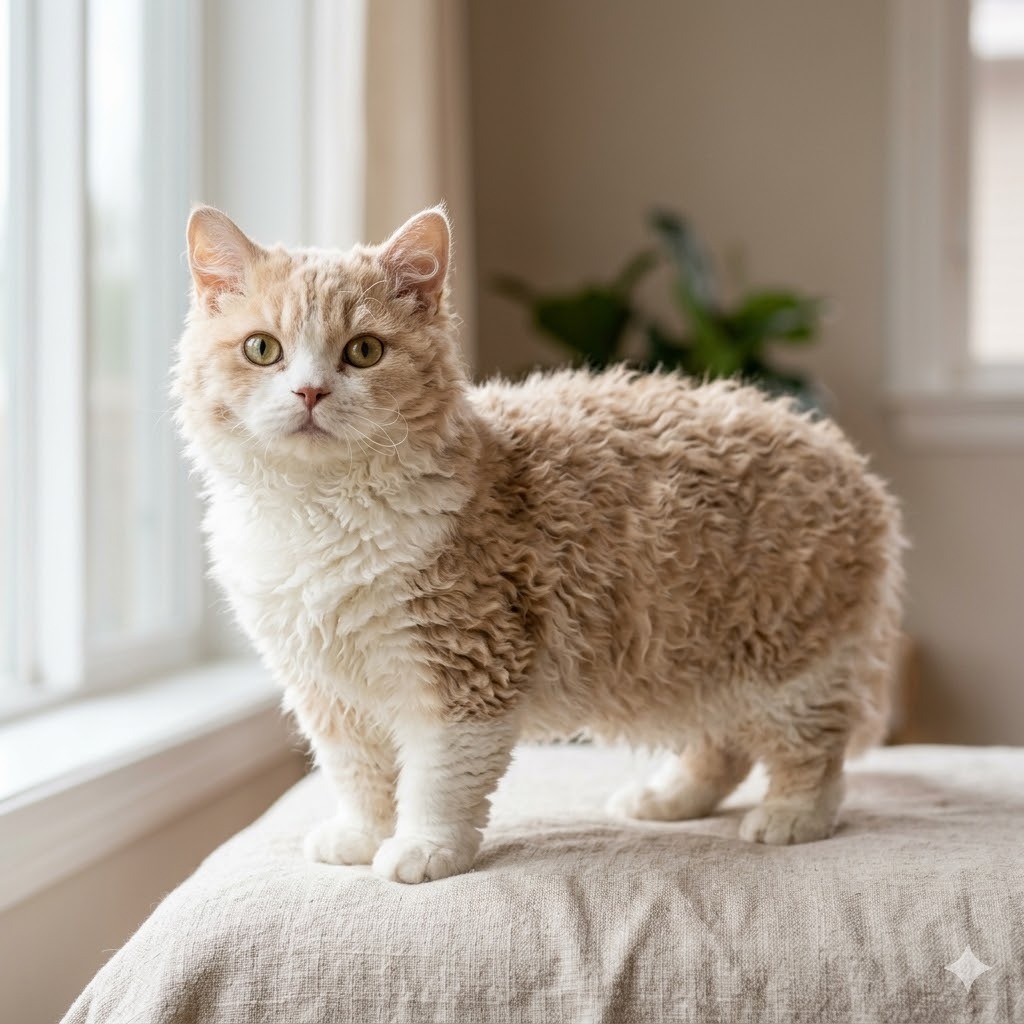
The Lambkin - sometimes called the Nanus Rex - is a rare designer cat created by crossing the short-legged Munchkin with the curly-coated Selkirk Rex.
🗓️ Last reviewed: July 2026
Overview
The Lambkin - sometimes called the Nanus Rex - is a rare designer cat created by crossing the short-legged Munchkin with the curly-coated Selkirk Rex. The result is a small, low-slung cat wrapped in soft, plush, sheep-like curls, hence the name. Lambkins combine two of the cat world's most eye-catching mutations: dwarfism (short legs) from the Munchkin and the tousled rex coat from the Selkirk. They weigh roughly 4-7 kg for a mid-size example, though many are smaller. Affectionate, playful, and undemanding, they are prized by a small circle of enthusiasts. Prospective owners should understand honestly that the short-legged trait is a dwarfism mutation with real welfare debate attached.
History & Origins
The Lambkin is a modern experimental breed, developed in the United States in the 1980s and 1990s as breeders began combining the newly stabilised Munchkin (short-legged, recognised in the early 1990s) with the Selkirk Rex (curly-coated, discovered in Montana in 1987). The goal was purely aesthetic - a small cat with curly fur.
Because both parent breeds are themselves young, the Lambkin has no ancient lineage or working purpose. It exists as a "designer" cross, and it remains extremely rare. Very few registries recognise it, and it is generally listed only as an experimental or unrecognised breed. Numbers worldwide are tiny, and reputable breeders are hard to find.
Honesty matters here: the short-legged gene is a form of chondrodysplasia (dwarfism). Several major cat associations have declined to recognise dwarf breeds on welfare grounds, and responsible breeders never mate two short-legged cats together, as that combination can be lethal or severely deforming. Anyone considering a Lambkin should seek breeders who prioritise health over novelty.
Appearance
Small, curly-coated, and short-legged, the Lambkin is instantly recognisable. Weight ranges from about 4-7 kg, though many individuals are on the lighter, smaller end due to their compact frame.
Key features:
- Coat: soft, plush, curly to wavy rex coat inherited from the Selkirk Rex. Can be short or semi-long, with loose ringlets most pronounced around the neck and belly.
- Colour: any colour or pattern is possible.
- Legs: noticeably short, giving a low, ground-hugging stance (the Munchkin dwarfism trait). The body itself is normal-sized.
- Head: rounded with full cheeks and large, expressive eyes.
- Ears: medium, sometimes with slightly curled furnishings.
- Body: normal-length torso set low on short legs, producing the characteristic "corgi cat" silhouette.
- Tail: proportionate, often carried curved.
Temperament & Character
Lambkins are typically sweet-natured, gentle, and sociable. They inherit the friendly, people-oriented temperament of both parent breeds and generally enjoy human company, following owners around and settling on laps. The Selkirk Rex is often described as patient and cuddly, while the Munchkin is confident and outgoing, and the Lambkin tends to blend these traits into a mellow, companionable personality.
Despite their short legs, Lambkins are playful and surprisingly agile at ground level. They run, chase toys, and scamper, though they jump less impressively than long-legged cats. Most are calm rather than frantic, making them easy companions.
They tend to get along well with children, other cats, and cat-friendly dogs. The breed is neither especially vocal nor demanding, and many owners describe them as affectionate, easygoing lap cats with a comic, waddling charm. Their curiosity and playfulness make them entertaining housemates, and they usually adapt well to the routines of a busy family home.
Care
Coat & Grooming
The curly rex coat needs gentle, careful handling. Brush once or twice weekly with a soft brush; over-brushing can straighten or damage the delicate curls. Avoid heavy combing.
Because rex coats can hold oils, an occasional bath helps keep the fur fresh, but avoid over-bathing. Clean ears as needed, trim claws every couple of weeks, and brush teeth regularly.
Exercise & Enrichment
Lambkins enjoy ground-based play - wand toys, balls, and puzzle feeders suit their short-legged build. Provide low, easy-access perches and ramps rather than tall towers, since jumping is harder for them.
Keep them mentally engaged with interactive toys. They are playful but not hyperactive, so moderate daily play sessions are plenty.
Health & Lifespan
Average lifespan is 12-15 years.
Common concerns:
- Chondrodysplasia (dwarfism) - the defining short-legged trait. Ethical breeders never pair two short-legged cats. Some short-legged cats can experience spinal or joint strain, so keep them lean.
- Lordosis and pectus excavatum - spinal and chest deformities occasionally seen in dwarf lines.
- Joint stress - the low build can add wear over time.
- Obesity - extra weight is especially hard on short-legged cats.
- Dental disease.
Choose a breeder who health-tests, breeds short-legged cats only to standard-legged cats, and prioritises soundness over extreme proportions.
Feeding & Nutrition
Feed a high-quality, protein-rich diet in measured portions. Because excess weight strains the short-legged frame and spine, portion control is especially important - avoid free-feeding.
A mix of wet and dry food supports hydration. Keep treats modest and monitor body condition closely, as even small weight gains are significant on a compact cat.
Living With
Litter
Standard provisions: 1 + 1 box per cat, scooped daily. Choose boxes with low entry sides so short legs can climb in easily. Low-dust, unscented litter is generally preferred.
Multi-cat households
Lambkins usually mix well with other cats when introduced gradually. Their gentle temperament makes them good companions, and same-sex or opposite-sex pairs can both work with proper introductions.
Indoor vs outdoor
Indoor-only is strongly recommended. Short legs limit their ability to escape danger, climb to safety, or run from predators, making the outdoors especially risky. A catio or supervised harness time offers safe enrichment.
Pros & Cons
Pros
- Unusual, endearing curly coat and low stance.
- Sweet, affectionate, people-oriented nature.
- Good with children and other pets.
- Calm and easygoing.
- Compact size suits smaller homes.
Cons
- Dwarfism trait carries real welfare debate.
- Very rare - hard to find ethical breeders.
- Curly coat needs careful, gentle grooming.
- Prone to joint and spinal strain if overweight.
- Limited jumping ability.
Best Suited For
- Enthusiasts drawn to unusual breeds who research ethics carefully.
- Calm households wanting an affectionate lap cat.
- Homes with low, accessible furniture and perches.
- Owners committed to weight management.
- Indoor-only living situations.
Not suited for buyers wanting a common, easy-to-find breed, homes expecting an athletic jumper, or anyone uncomfortable with the ethics of dwarf breeding.
Lambkin - frequently asked questions
Are Lambkins healthy?
Many live full lives, but the short-legged dwarfism trait carries welfare concerns. Ethical breeding (never pairing two short-legged cats) and lean body weight are essential.
Why are they so rare?
The Lambkin is a young designer cross, recognised by very few registries and bred by only a handful of dedicated enthusiasts worldwide.
Can they jump?
Less than typical cats. They manage low furniture but struggle with high leaps, so provide ramps and low perches.
Are they good with children?
Yes - they are generally gentle and tolerant, though children should be taught to handle them carefully given their build.
Do their curls need special care?
Yes - brush gently and sparingly to preserve the delicate rex curls, and avoid over-bathing.
🧠 Test yourself: guess the cat
Three clues from our quiz bank, each about another of our cats. Can you name them?
Clue 1.This ancient Turkish breed can carry a gene linking a white coat and blue eyes to deafness on the blue-eyed side.
It's the Turkish Angora - read the full profile →
Clue 2.An ancient natural breed, this cat's heart-shaped face and single silver-tipped coat are prized as a 'luck' cat.
It's the Korat - read the full profile →
Clue 3.This nearly bald breed arose from a natural genetic mutation in Canada and craves warmth, often seeking blankets or laps.
It's the Sphynx - read the full profile →
💛 Adoptable Lambkins near you
Real cats of this breed (and close mixes) waiting in shelters and rescues right now, live from Petfinder. We have no affiliation and earn nothing - if someone catches your eye, the link goes straight to their shelter. New to adopting? Start with our adoption guide.
Widget not loading (some ad-blockers hide it)? Search directly on petfinder.com.