Ocicat (Felis catus)
The Ocicat is a spotted domestic cat that looks like a small wild ocelot but carries no wild blood whatsoever - the entire wild appearance is an accident of selective breeding among fully domestic cats.
🗓️ Last reviewed: June 2026
Overview
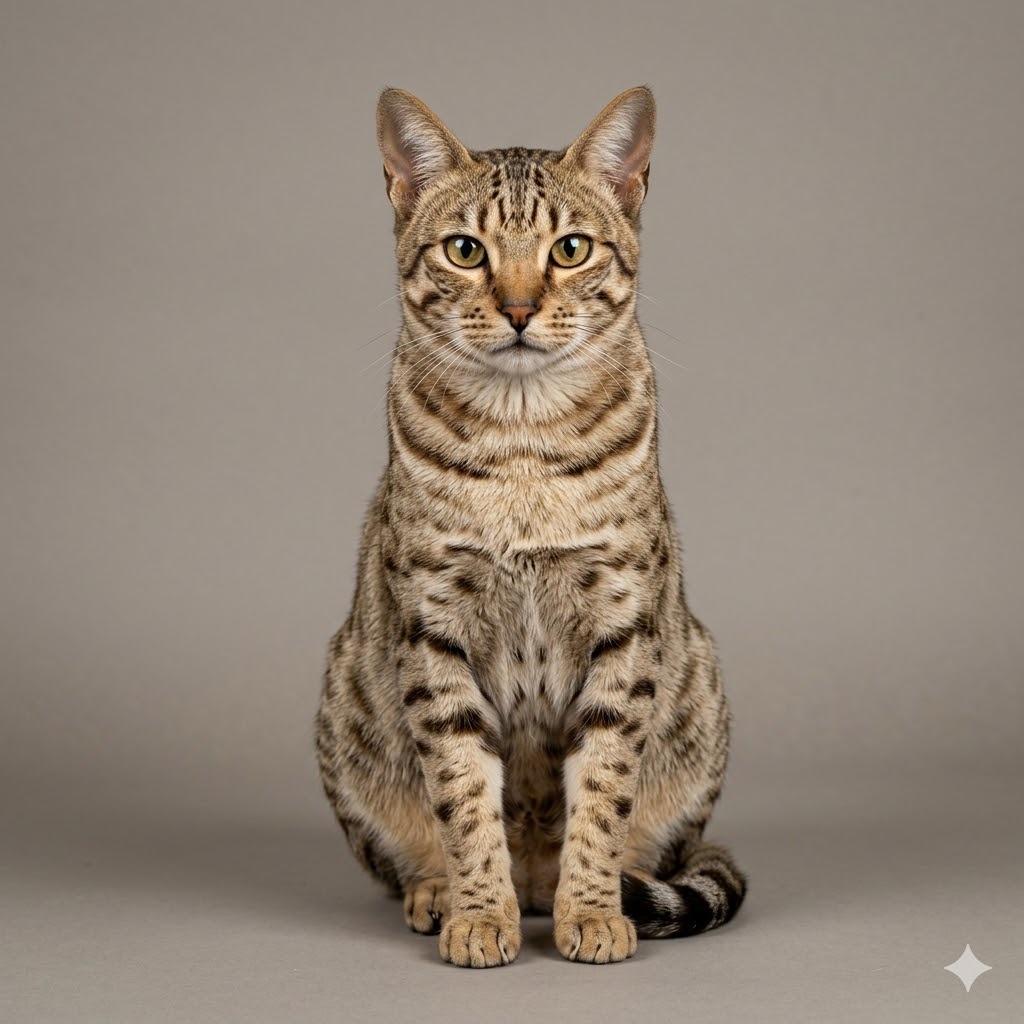
The Ocicat is a spotted domestic cat that looks like a small wild ocelot but carries no wild blood whatsoever - the entire wild appearance is an accident of selective breeding among fully domestic cats. Athletic, muscular, and large for a shorthair, the Ocicat combines a strikingly exotic coat of thumbprint-shaped spots with one of the most outgoing, dog-like personalities in the cat fancy. It offers the look of a jungle cat with the temperament of a devoted companion.
History & Origins
The Ocicat is the result of a happy accident. In 1964, Michigan breeder Virginia Daly was attempting to produce an Abyssinian-pointed Siamese by crossing the two breeds. One kitten in a later litter, named Tonga, emerged with golden spots on an ivory coat. Daly's daughter remarked that he looked like a baby ocelot, and the name stuck.
Tonga himself was neutered and sold as a pet, but the breeding that produced him was repeated, and a deliberate spotted breed was begun. The genetic recipe combines Abyssinian (for the ticked agouti background and athletic build), Siamese (for body type and a range of colours), and later American Shorthair (which added the silver colours and greater bone and substance).
The breed earned CFA recognition for championship status in 1987 and is now recognised by all major registries. Despite the wild appearance, the Ocicat is and always has been one hundred percent domestic cat, with no ocelot, margay, or other wild feline in its ancestry.
Appearance
Medium to large, athletic, and surprisingly heavy - a well-muscled Ocicat is denser than it looks. Males weigh 4.5-6.8 kg (10-15 lb); females 2.7-4.5 kg (6-10 lb). The build is solid and powerful rather than dainty.
Key features:
- Coat: short, smooth, tight, and satiny, lying close to the body with a lustrous sheen. Low maintenance.
- Spots: the defining trait - large, well-scattered thumbprint-shaped spots over the sides and body, with each guard hair tipped in the agouti pattern. A clear "bullseye" or scarab marking sits on the forehead, and the spots align in rows along the spine.
- Colour: twelve recognised colours, including tawny, chocolate, cinnamon, blue, lavender, fawn, and their silver variants. The contrast between spot and ground colour is prized.
- Head: modified wedge with a gentle curve, a broad muzzle, and a slight rise from nose to brow.
- Eyes: large, almond-shaped, angled slightly upward, in any colour except blue. Gold, green, and hazel are common.
- Ears: moderately large, alert, set at a 45-degree angle, sometimes with lynx-like tipping.
- Body: long, solid, hard, and muscular with substantial bone and depth of chest.
Temperament & Character
The Ocicat looks wild but behaves like the friendliest of pets. The breed is famously dog-like, social, and confident - bonding strongly with its people and disliking long periods alone.
Ocicats are highly intelligent and trainable. Many learn to fetch, walk on a harness, respond to their name, and even obey simple commands. They are notorious for following their owners from room to room and inserting themselves into every activity.
These cats are extroverts. They greet visitors at the door rather than hiding, and they generally welcome new people, children, cats, and cat-friendly dogs. An Ocicat left without company or stimulation can become bored, vocal, and mischievous.
Active and athletic, the Ocicat is a champion jumper and climber that uses every vertical surface in the home. It is talkative but not as piercingly loud as its Siamese ancestors.
Care
Coat & Grooming
The short, tight coat is exceptionally low maintenance. A weekly once-over with a rubber grooming mitt or soft brush removes loose hair and brings up the satin shine. The breed sheds modestly.
Bathing is rarely needed, though the breed tolerates it well thanks to its confident nature. A chamois or silk cloth buffed over the coat enhances the gloss before shows.
Clean ears as needed, trim claws every 2 weeks, and brush teeth several times weekly. The smooth coat makes routine grooming a quick task.
Exercise & Enrichment
The Ocicat is one of the more active shorthairs and needs genuine outlets for its energy and intellect. Provide tall cat trees, climbing shelves, puzzle feeders, and daily interactive play with wand toys or fetch.
Many Ocicats thrive on clicker training and harness walks. Because the breed is so people-oriented, scheduled play and training sessions double as bonding time. A bored Ocicat will find its own entertainment, often involving cupboards and counters.
Health & Lifespan
Average lifespan is 12-18 years - the breed is generally robust thanks to its broad genetic base.
Common concerns:
- Hypertrophic cardiomyopathy (HCM) - the most significant breed-relevant heart condition; responsible breeders screen breeding cats by echocardiogram.
- Pyruvate kinase deficiency (PK-Def) - an inherited anaemia for which a reliable DNA test exists.
- Progressive retinal atrophy (PRA) - inherited from Abyssinian lines; a DNA test is available.
- Renal amyloidosis and periodontal disease - reported in some lines.
- Dental disease.
Choose a breeder who DNA-tests for PK-Def and PRA and screens for HCM.
Feeding & Nutrition
Adults typically eat 50-75 g of quality cat food per day, adjusted for the breed's solid muscle mass and high activity level.
A high-protein, meat-first diet supports the breed's athletic build. Measured meals are wiser than free-feeding, as inactive indoor Ocicats can gain weight despite their energy.
Fresh water should always be available; a mix of wet and dry food supports hydration and urinary health.
Living With
Litter
Standard provisions: 1 + 1 box per cat, scooped daily, in roomy boxes that suit a solid, large shorthair. Low-dust unscented litter is generally preferred.
Multi-cat households
The Ocicat is highly social and usually delighted by feline company - in fact a second active cat is often recommended to keep a lone Ocicat from getting bored. It also tends to accept cat-friendly dogs readily.
Indoor vs outdoor
Indoor-only is safest. The striking spotted coat attracts attention and theft, and the breed's trusting, confident nature offers little self-protection against traffic or predators. Catios and supervised harness walks satisfy its curiosity safely.
Pros & Cons
Pros
- Exotic wild-cat looks with a fully domestic, friendly temperament.
- Highly intelligent, trainable, and dog-like.
- Very low grooming needs.
- Excellent with children, cats, and cat-friendly dogs.
- Generally healthy with a broad gene pool.
Cons
- Demands attention and company; dislikes being left alone.
- High energy needs plenty of enrichment.
- Can be mischievous and counter-surfing when bored.
- HCM and PK-Def warrant breeder screening.
- Striking coat can command premium prices.
Best Suited For
- Active households that want an interactive, dog-like cat.
- Families with children and other pets.
- Owners willing to provide training, play, and vertical space.
- Homes where someone is around much of the day, or a second cat is present.
- People wanting the wild look without the ethics or difficulty of a hybrid breed.
Not suited for people who are away long hours with no second pet, owners wanting a calm hands-off cat, or those unable to provide daily enrichment.
Ocicat (Felis catus) - frequently asked questions
Is the Ocicat part wild cat?
No - despite the ocelot-like spots, the Ocicat is one hundred percent domestic. It descends from Abyssinian, Siamese, and American Shorthair lines with no wild ancestry.
Are Ocicats good with children and dogs?
Yes - the breed is confident, social, and tolerant, typically excellent with respectful children and cat-friendly dogs.
Do Ocicats need a lot of attention?
Very much so. They are people-oriented and dislike long hours alone. Many owners keep a second cat to provide company.
Are they hard to groom?
No - the short satiny coat needs only a weekly wipe-down and sheds modestly.
Are Ocicats hypoallergenic?
No - they shed and produce dander like any cat and are not hypoallergenic.
🧠 Test yourself: guess the cat
Three clues from our quiz bank, each about another of our cats. Can you name them?
Clue 1.Named for the snowy patches on its paws, this blue-eyed pointed cat is known for an affectionate, dog-like attachment to owners.
It's the Snowshoe - read the full profile →
Clue 2.Often cited as one of the smallest cat breeds in the world, this brown-ticked cat takes its name from a Southeast Asian island city-state.
It's the Singapura - read the full profile →
Clue 3.This cat is famous for being born tailless, the result of a natural mutation on a British island.
It's the Manx - read the full profile →
💛 Adoptable Ocicat (Felis catus)s near you
Real cats of this breed (and close mixes) waiting in shelters and rescues right now, live from Petfinder. We have no affiliation and earn nothing - if someone catches your eye, the link goes straight to their shelter. New to adopting? Start with our adoption guide.
Widget not loading (some ad-blockers hide it)? Search directly on petfinder.com.